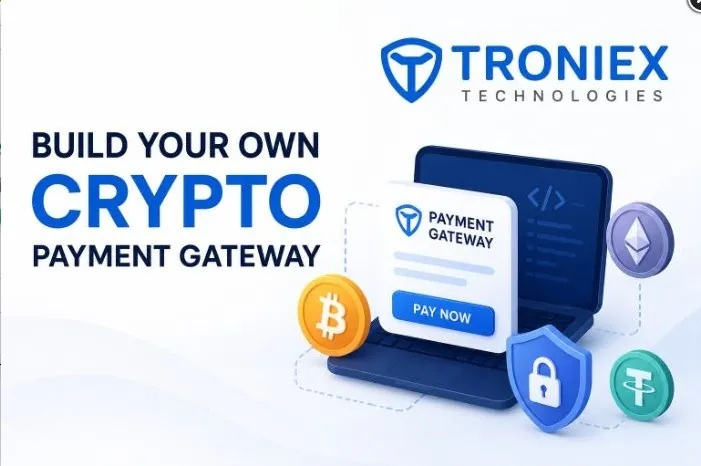

As cryptocurrency adoption continues to grow, businesses are looking for faster, more secure, and borderless ways to accept digital payments. Whether you operate an eCommerce store, SaaS platform, marketplace, gaming website, or fintech application, a scalable crypto payment gateway can help you process transactions efficiently while reducing dependency on traditional banking systems.
However, building a crypto payment gateway isn't just about enabling Bitcoin or Ethereum payments. It requires a secure infrastructure, seamless blockchain integration, compliance measures, and the ability to handle increasing transaction volumes without compromising performance.
In this guide, we'll walk through the essential steps involved in developing a scalable crypto payment gateway and the key factors businesses should consider before launching one.
Crypto Payment Gateway Development: Understanding the Basics
Crypto payment gateway development involves creating a platform that allows businesses to accept, process, and manage cryptocurrency payments securely. Similar to traditional payment processors, a crypto gateway verifies transactions, records payment details on the blockchain, and confirms successful transfers before completing the payment process.
A modern crypto payment gateway typically supports multiple cryptocurrencies, including Bitcoin, Ethereum, USDT, and other popular digital assets. It also integrates with wallets, exchanges, merchant dashboards, and accounting systems to simplify payment management.
For businesses expanding globally, a crypto payment gateway offers several advantages:
- Faster international transactions
- Lower transaction fees
- 24/7 payment processing
- Enhanced payment security
- Borderless customer reach
Custom Crypto Payment Gateway Development: Why It Matters
Many businesses initially consider third-party payment providers. While these solutions are quick to implement, they often come with limitations such as higher transaction fees, restricted customization, and limited control over user data.
Custom crypto payment gateway development gives businesses complete ownership of their payment infrastructure. This approach allows organizations to customize features, security policies, supported cryptocurrencies, and transaction workflows according to their business model.
A custom solution is especially beneficial for:
- Crypto exchanges
- Online marketplaces
- Gaming platforms
- NFT marketplaces
- Subscription-based businesses
- Fintech companies
With a tailored platform, businesses can scale operations without depending on external providers.
Cryptocurrency Payment Gateway Development: Key Features for Scalability
A scalable cryptocurrency payment gateway development project should focus on both performance and user experience. As transaction volumes increase, the platform must continue processing payments smoothly.
Essential features include:
- Multi-currency support
- Secure crypto wallet integration
- Automated payment verification
- QR code payment generation
- Real-time blockchain monitoring
- Multi-signature wallet security
- Merchant dashboard
- Payment history and reporting
- Refund management
- Role-based admin access
- API integrations
- Smart notification system
These features help businesses manage growing customer demand while maintaining operational efficiency.
Crypto Payment Gateway Solutions: Building the Right Architecture
Scalability begins with choosing the right system architecture. A well-designed payment gateway should separate core services into independent modules that can be upgraded without affecting the entire platform.
The architecture generally includes:
- User Interface
- Merchant Dashboard
- API Layer
- Authentication Service
- Wallet Management System
- Blockchain Nodes
- Transaction Processing Engine
- Database
- Security Layer
- Analytics Module
Using cloud-native infrastructure and microservices allows businesses to expand resources automatically during peak transaction periods.
Cryptocurrency Payment Processing Solutions: Security Best Practices
Security remains one of the most critical aspects of cryptocurrency payment processing solutions. Since blockchain transactions cannot be reversed, businesses must implement strong protection mechanisms.
Best practices include:
- Multi-factor authentication (MFA)
- End-to-end encryption
- Cold wallet storage
- Multi-signature authorization
- Anti-money laundering (AML) checks
- Know Your Customer (KYC) verification
- DDoS protection
- Secure API authentication
- Regular penetration testing
- Smart contract security audits
Investing in security not only protects business assets but also builds customer confidence.
Crypto Payment Gateway Development Services: Step-by-Step Development Process
Professional crypto payment gateway development services typically follow a structured development lifecycle to ensure quality and scalability.
1. Business Requirement Analysis
Identify your target audience, supported cryptocurrencies, transaction volume, and compliance requirements.
2. UI/UX Design
Create intuitive merchant dashboards, payment interfaces, and admin panels that simplify transaction management.
3. Blockchain Integration
Connect the platform with blockchain networks such as Bitcoin, Ethereum, BNB Chain, Polygon, or Solana based on your business goals.
4. Wallet Development
Implement secure hot and cold wallet systems for payment processing and fund management.
5. Payment Engine Development
Develop a high-performance transaction engine capable of validating and processing thousands of transactions efficiently.
6. Security Implementation
Add encryption, authentication, fraud detection, wallet protection, and compliance measures.
7. Testing and Quality Assurance
Perform functional testing, performance testing, security audits, and blockchain transaction verification.
8. Deployment and Ongoing Support
Launch the platform on secure cloud infrastructure while continuously monitoring performance and applying updates.
Choosing the Right Crypto Payment Gateway Development Company
Selecting the right technology partner can significantly impact your project's success. An experienced crypto payment gateway development company understands blockchain architecture, payment workflows, regulatory considerations, and cybersecurity requirements.
When evaluating a development partner, consider:
- Proven blockchain expertise
- Experience with payment gateway development
- Strong security implementation
- Multi-blockchain integration capabilities
- Custom development services
- Transparent development process
- Post-launch maintenance and support
- Scalable cloud deployment experience
Working with an experienced company helps reduce development risks while accelerating time to market.
Final Thoughts
As digital payments continue evolving, businesses need payment systems that are secure, scalable, and ready for future growth. Building a custom crypto payment gateway enables organizations to gain full control over payment processing, improve customer experience, and support global cryptocurrency transactions.
A successful platform combines robust architecture, advanced security, seamless blockchain integration, and flexible scalability. Whether you're launching a startup or expanding an established enterprise, investing in professional crypto payment gateway development services ensures your platform is prepared to handle increasing transaction volumes and changing market demands.





























Sign in to leave a comment.