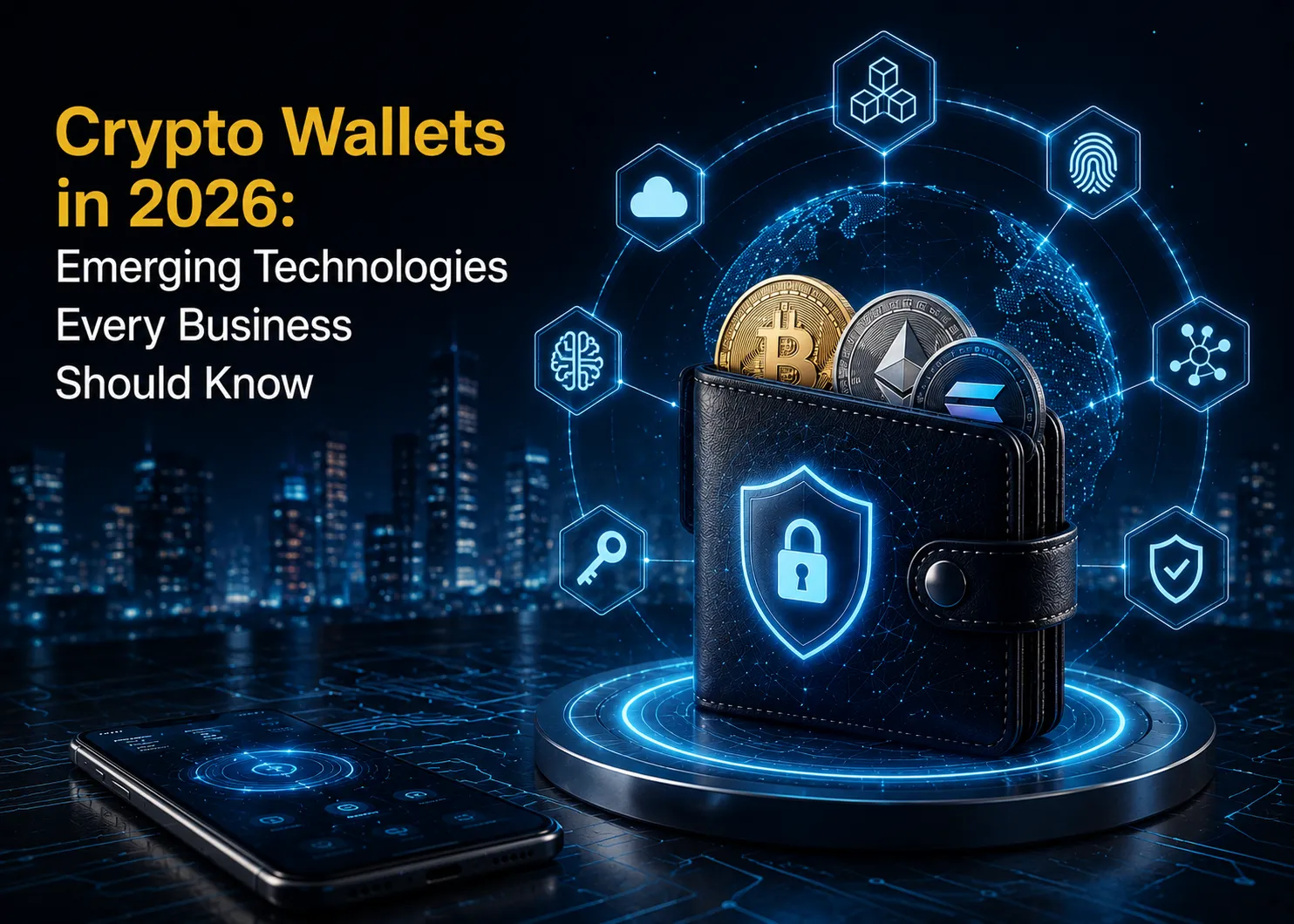

The role of cryptocurrency wallets has changed significantly over the past few years. What began as a simple tool for storing private keys has evolved into a sophisticated digital infrastructure that supports payments, decentralized finance (DeFi), tokenized assets, identity verification, and enterprise-grade security. In 2026, businesses entering the blockchain ecosystem are no longer evaluating wallets solely on their ability to send and receive digital assets. Instead, they are looking for intelligent platforms that improve security, simplify compliance, and provide seamless user experiences.
As blockchain adoption expands across financial services, gaming, healthcare, logistics, and real estate, wallet technology has become a strategic component of digital transformation. Organizations that understand the latest wallet innovations are better positioned to build scalable blockchain applications while reducing operational and security risks. This article explores the technologies that are redefining crypto wallets in 2026 and why they matter for modern businesses.
The Shift from Asset Storage to Digital Identity Infrastructure
Modern crypto wallets have evolved into comprehensive digital identity platforms. Instead of acting only as repositories for cryptocurrencies, they now manage multiple digital credentials, tokenized assets, and permission-based interactions across blockchain ecosystems.
This transformation is largely driven by the growth of decentralized identity frameworks, where users maintain ownership of their identity rather than relying on centralized databases. Businesses benefit from this model by reducing the amount of sensitive customer information stored on their servers, lowering exposure to data breaches while improving privacy compliance.
Key developments include:
- Support for decentralized identity credentials alongside digital assets.
- Secure authentication without exposing private user information.
- Permission-based data sharing between businesses and customers.
- Cross-platform identity verification for blockchain applications.
For enterprises, this means wallets are becoming trusted gateways for secure digital interactions instead of simple cryptocurrency management tools.
Multi-Party Computation Is Becoming the Enterprise Security Standard
Private key management remains the most critical challenge in digital asset security. Traditional wallets depend on a single private key, making them vulnerable to theft, accidental loss, or insider threats. In 2026, Multi-Party Computation (MPC) has become one of the preferred security architectures for institutional-grade wallet solutions.
Rather than storing one complete private key, MPC distributes cryptographic operations across multiple independent parties. The complete key never exists in a single location, dramatically reducing attack surfaces without affecting transaction speed.
Businesses are adopting MPC because it enables:
- Distributed transaction authorization across departments.
- Reduced dependence on seed phrases.
- Secure treasury management for institutional funds.
- Protection against single-point security failures.
- Flexible approval workflows for enterprise transactions.
Organizations investing in Cryptocurrency Wallet Development Solutions increasingly prioritize MPC integration because it aligns with enterprise governance requirements while maintaining operational efficiency.
AI Is Making Wallets Smarter Without Controlling User Assets
Artificial intelligence is becoming an important enhancement layer for crypto wallets, although it does not replace cryptographic security. Instead, AI analyzes user behavior, transaction history, and blockchain activity to improve decision-making and reduce operational risks.
Advanced wallets now identify unusual transaction patterns before users approve transfers. They can recognize suspicious smart contract interactions, detect phishing attempts, and provide contextual security warnings based on real-time blockchain intelligence.
AI is also improving transaction management by estimating optimal network fees, identifying inactive digital assets, and offering predictive insights into wallet activity. For businesses managing thousands of blockchain transactions daily, intelligent automation reduces manual oversight while improving operational efficiency.
Importantly, these AI capabilities operate as advisory systems rather than custodians, ensuring users maintain complete ownership and control of their assets.
Cross-Chain Wallet Architecture Is Eliminating Blockchain Fragmentation
One of the biggest limitations of earlier cryptocurrency wallets was their dependence on individual blockchain networks. Businesses operating across multiple ecosystems often needed separate wallets, bridges, and asset management tools.
In 2026, cross-chain wallet architecture is reducing this complexity through interoperability protocols and standardized communication layers. Users can manage assets across multiple blockchain ecosystems from a unified interface without constantly switching between applications.
This evolution is particularly valuable for enterprises working with tokenized assets, decentralized finance protocols, and global payment networks. Unified wallet infrastructure simplifies treasury management while reducing operational friction.
Cross-chain functionality also supports emerging tokenization initiatives where businesses interact with multiple blockchain environments simultaneously. Whether managing digital securities, stablecoins, NFTs, or enterprise tokens, organizations benefit from consolidated asset visibility and streamlined transaction workflows.
As interoperability standards continue to mature, wallets are becoming central management platforms rather than blockchain-specific applications.
Compliance, Privacy, and User Experience Are Driving Wallet Innovation
Technology alone no longer determines wallet adoption. Businesses increasingly evaluate wallet platforms based on regulatory readiness, usability, and long-term scalability.
Modern wallet development focuses on balancing compliance requirements with user privacy. Instead of collecting excessive personal information, many platforms adopt selective disclosure mechanisms that verify required attributes while protecting confidential data. This approach supports evolving regulatory frameworks without compromising decentralization principles.
At the same time, user experience has improved dramatically. Wallet onboarding now emphasizes intuitive interfaces, guided recovery mechanisms, adaptive authentication, and simplified transaction approvals. These improvements reduce barriers for first-time users while maintaining enterprise-level security standards.
The next generation of wallets is also designed with modular architecture, allowing organizations to integrate payment systems, staking services, decentralized applications, tokenized assets, and compliance tools without rebuilding their entire infrastructure. This flexibility enables businesses to adapt quickly as blockchain technology continues to evolve.
Conclusion
Crypto wallets in 2026 are no longer standalone applications for storing digital currencies. They have become intelligent digital infrastructure supporting identity management, enterprise security, interoperability, compliance, and advanced automation. Emerging technologies such as Multi-Party Computation, decentralized identity, AI-assisted security, and cross-chain interoperability are reshaping how businesses interact with blockchain ecosystems.
Organizations that recognize these technological shifts today will be better prepared to build secure, scalable, and future-ready blockchain solutions. As digital assets become increasingly integrated into mainstream business operations, choosing the right wallet architecture will be a strategic decision that influences security, operational efficiency, and long-term innovation.





























Sign in to leave a comment.