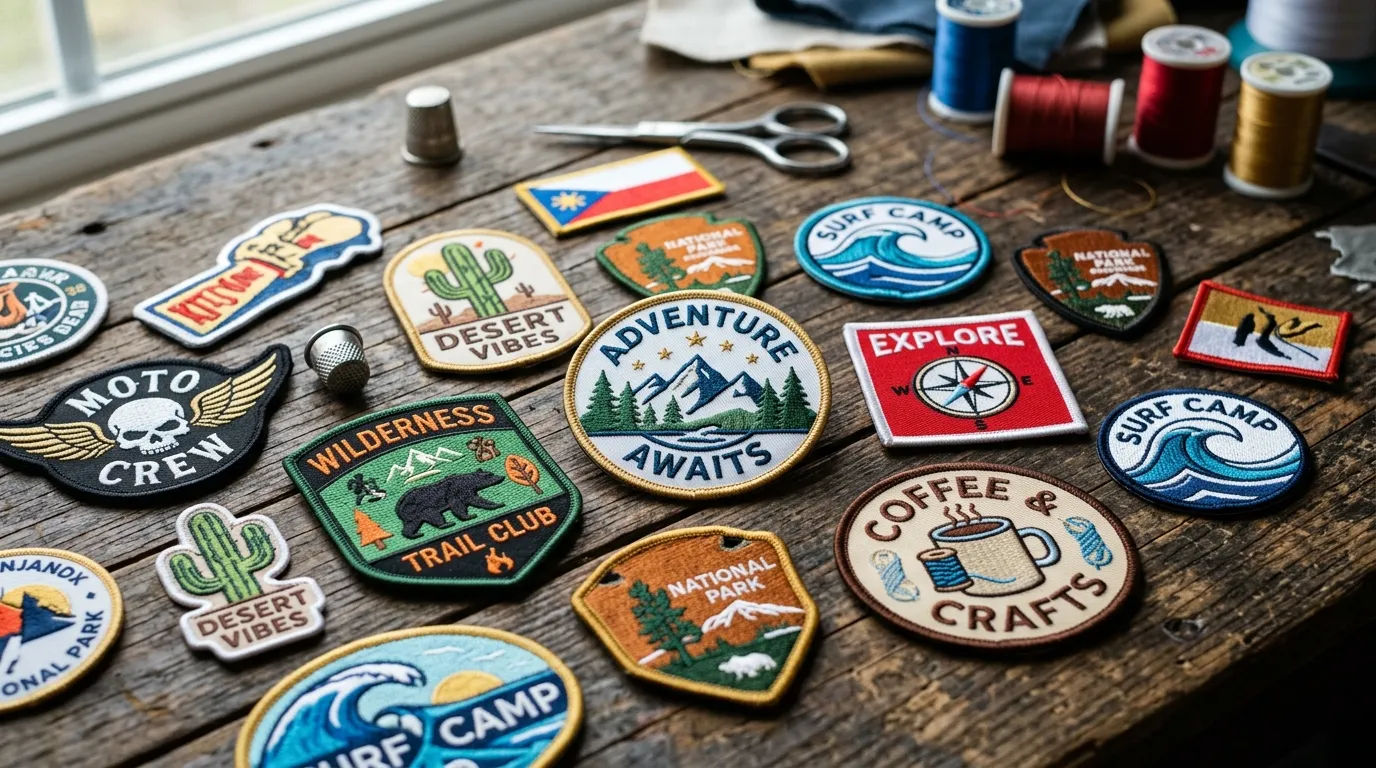

Custom embroidered patches are fabric-backed insignia produced by stitching thread onto a base material using computerized embroidery machines, with stitch counts ranging from 2,000 to over 15,000 per patch. Businesses, military units, sports teams, and scout organizations use them to display logos, ranks, and insignia on garments and accessories.
What Are Custom Embroidered Patches?
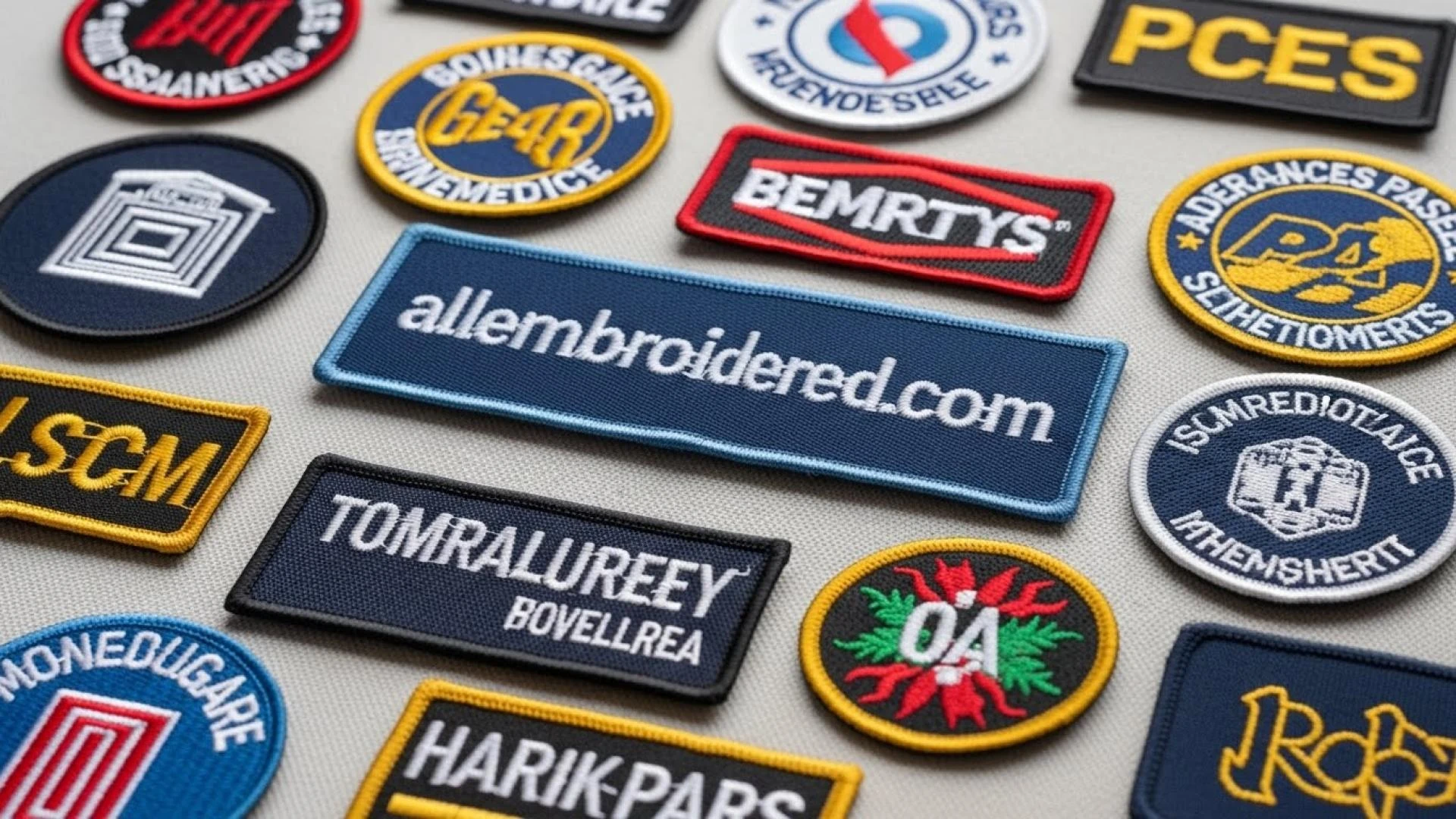
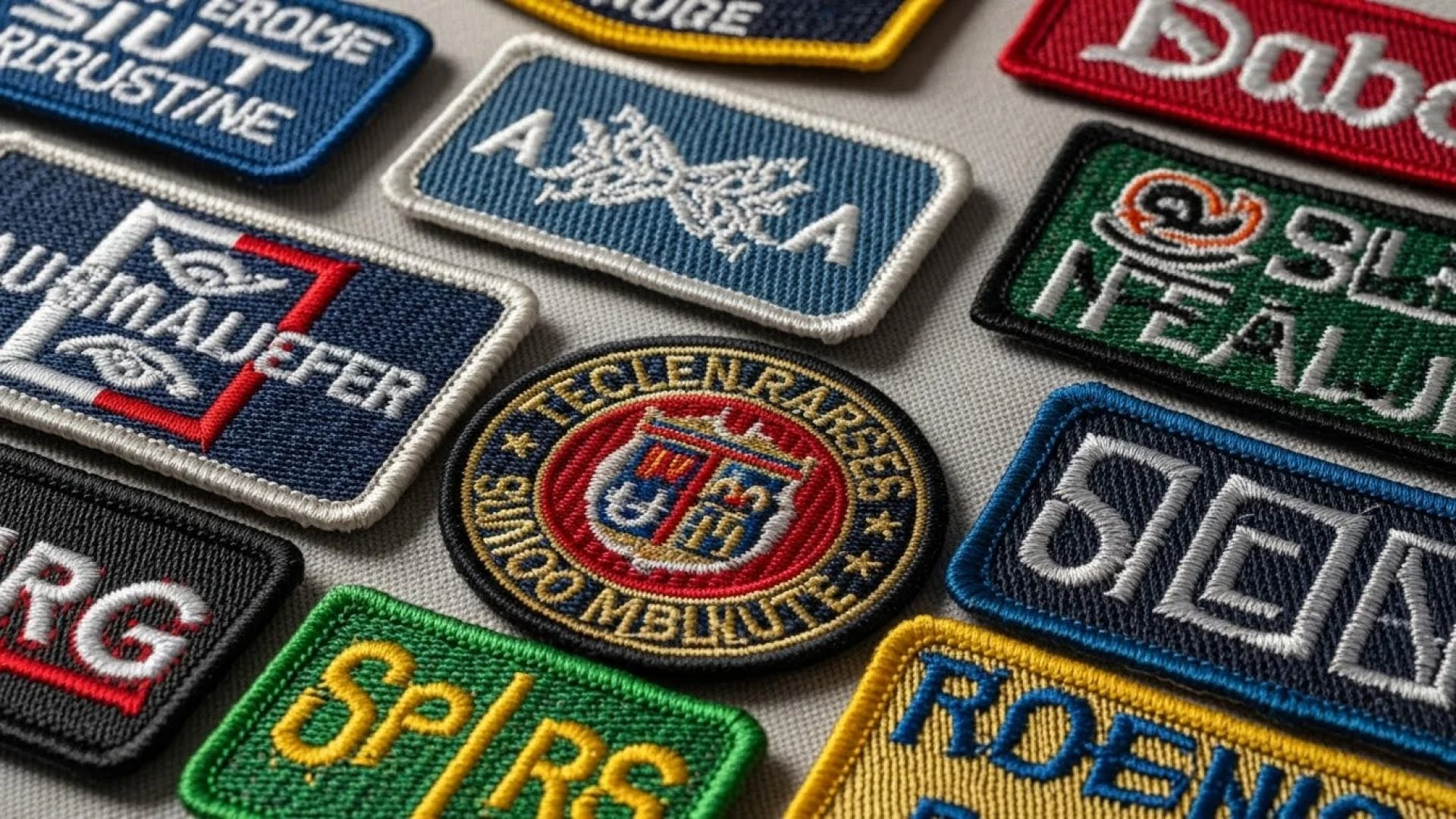
Custom embroidered patches are textile decorations created by stitching polyester or rayon thread onto a twill, felt, or canvas base, then finished with a border stitch called a merrow edge, hot-cut edge, or laser-cut edge. Each patch is digitized from a vector or raster artwork file before production begins.
A standard embroidered patch measures between 2 inches and 5 inches in its longest dimension. Thread coverage — expressed as the percentage of the patch surface filled with embroidery — runs from 50% (partial fill) to 100% (full embroidery). 100% thread coverage patches carry a price premium of 15–30% over 75% coverage equivalents due to stitch volume and production time.
Types of Custom Embroidered Patches
Custom embroidered patches fall into 6 primary categories based on construction method and attachment type.
1. Iron-On Embroidered Patches
Iron-on patches use a heat-activated adhesive backing bonded to the patch during finishing, allowing attachment to fabric using a household iron at 300–320°F for 25–30 seconds. They suit cotton and polyester garments — denim jackets, canvas bags, and team jerseys — but do not bond permanently to nylon or waterproof fabrics.
2. Sew-On Embroidered Patches
Sew-on patches carry no adhesive backing and require stitching through the patch border to attach to a garment permanently. Military branches, including the U.S. Army and Navy, mandate sew-on patches for uniform insignia because adhesive backings degrade under frequent laundering at 140°F+ temperatures.
3. Velcro-Backed Embroidered Patches
Velcro-backed patches use a hook-and-loop fastener system, with the hook side bonded to the patch and the loop panel sewn onto the garment. Tactical gear manufacturers, including 5.11 Tactical and Condor Outdoor, design their vests and bags with integrated loop panels specifically for interchangeable patch systems.
4. PVC and Hybrid Embroidered Patches
Hybrid patches combine a standard embroidered center with a PVC or woven border, producing a dimensional profile 2–4mm thicker than flat embroidered alternatives. Motorcycle clubs and outdoor apparel brands use hybrid patches for weather resistance on leather and synthetic materials.
5. Chenille Embroidered Patches
Chenille patches use looped yarn construction over a felt base, creating a raised, textured surface associated with varsity letterman jackets in U.S. high schools and universities. Chenille patches typically measure 4–8 inches and incorporate felt underlays in school colors.
6. Bullion Wire Patches
Bullion wire patches use gold or silver metallic wire hand-stitched onto a felt or wool base, producing high-relief insignia used on military dress uniforms, diplomatic blazers, and luxury corporate gifts. Production time for bullion patches runs 3–5 hours per piece, compared to under 30 minutes for machine-embroidered equivalents.
Custom Embroidered Patch Materials and Thread Types
The base material and thread type determine a patch's durability, color range, and laundering resistance.
Base materials used in custom embroidered patches include:
- Twill fabric — the standard base for 80% of commercial patches; accepts up to 15 thread colors per design
- Felt — used for chenille and school patches; available in 25 stock colors
- Canvas — chosen for heavy-duty work uniform patches requiring abrasion resistance
- Organza — a sheer mesh used for translucent patches on fashion garments
Thread types and their properties:
- Rayon thread — highest sheen, 450+ color options, suited for decorative and corporate patches
- Polyester thread — colorfast to 60 washes at 140°F, the standard for workwear and military patches
- Metallic thread — gold, silver, and copper options available; increases stitch tension requirements by 10–15%
- Wool yarn — used exclusively in chenille and varsity patch construction
How Custom Embroidered Patches Are Manufactured
Custom embroidered patch production follows a defined 7-step process from artwork to finished product.
- Artwork submission — The client provides vector files (AI, EPS, SVG) or high-resolution raster files (PNG, TIFF at 300 DPI minimum).
- Digitizing — A digitizer converts the artwork into a DST or EMB machine file, mapping stitch type, direction, density, and color sequence.
- Sample production — The factory runs 1 physical sample on the target base material for client approval.
- Base cutting — Twill, felt, or canvas is cut to the patch outline using die-cutting or laser-cutting equipment.
- Embroidery — Multi-head Tajima, Barudan, or ZSK embroidery machines stitch the design at 400–1,000 stitches per minute.
- Border finishing — A merrow machine applies the merrowed border in 2–4mm widths, or a laser cutter produces a clean hot-cut edge.
- Backing application — Iron-on adhesive, Velcro, or plastic backing is heat-pressed onto the patch reverse at 280–320°F.
Industry data shows that digitizing errors — incorrect stitch density or pull compensation — account for 67% of first-sample rejections, making the digitizing step the most critical quality checkpoint in the production sequence.
Pricing Factors for Custom Embroidered Patches
Custom embroidered patch pricing depends on 5 measurable variables.
| Variable | Effect on Price |
|---|---|
| Patch size (per 0.5-inch increase) | +8–12% per unit |
| Thread color count (per additional color) | +$0.10–$0.25 per unit |
| Embroidery coverage (50% vs 100%) | +15–30% per unit |
| Quantity (100 vs 1,000 units) | –40–60% per unit |
| Backing type (iron-on vs Velcro) | +$0.15–$0.50 per unit |
A standard 3-inch, 6-color, 75% coverage iron-on patch costs $1.20–$2.50 per unit at 100 pieces and $0.60–$1.10 per unit at 1,000 pieces. Setup and digitizing fees range from $0 to $75, depending on the manufacturer and order volume.
Applications of Custom Embroidered Patches
Custom embroidered patches serve functional and decorative roles across 8 primary industries.
Industries using custom embroidered patches at scale include:
- Military and law enforcement — rank insignia, unit crests, and service branch identifiers on uniforms
- Corporate workwear — company logos on employee uniforms in hospitality, security, and retail sectors
- Scouting organizations — merit badge systems, including the 135+ badge categories in the Boy Scouts of America program
- Sports teams — jersey numbers, league logos, and championship commemorative patches on professional and amateur kits
- Fashion and streetwear — decorative patches on denim, bomber jackets, and tote bags in retail collections
- Motorcycle clubs — back patches (also called "cuts") identifying club name, chapter, and rank
- Educational institutions — varsity letters and club insignia on letterman jackets
- Promotional merchandise — branded patches distributed at trade shows, corporate events, and product launches
Allembroidered: Custom Patch Manufacturing Since 2007
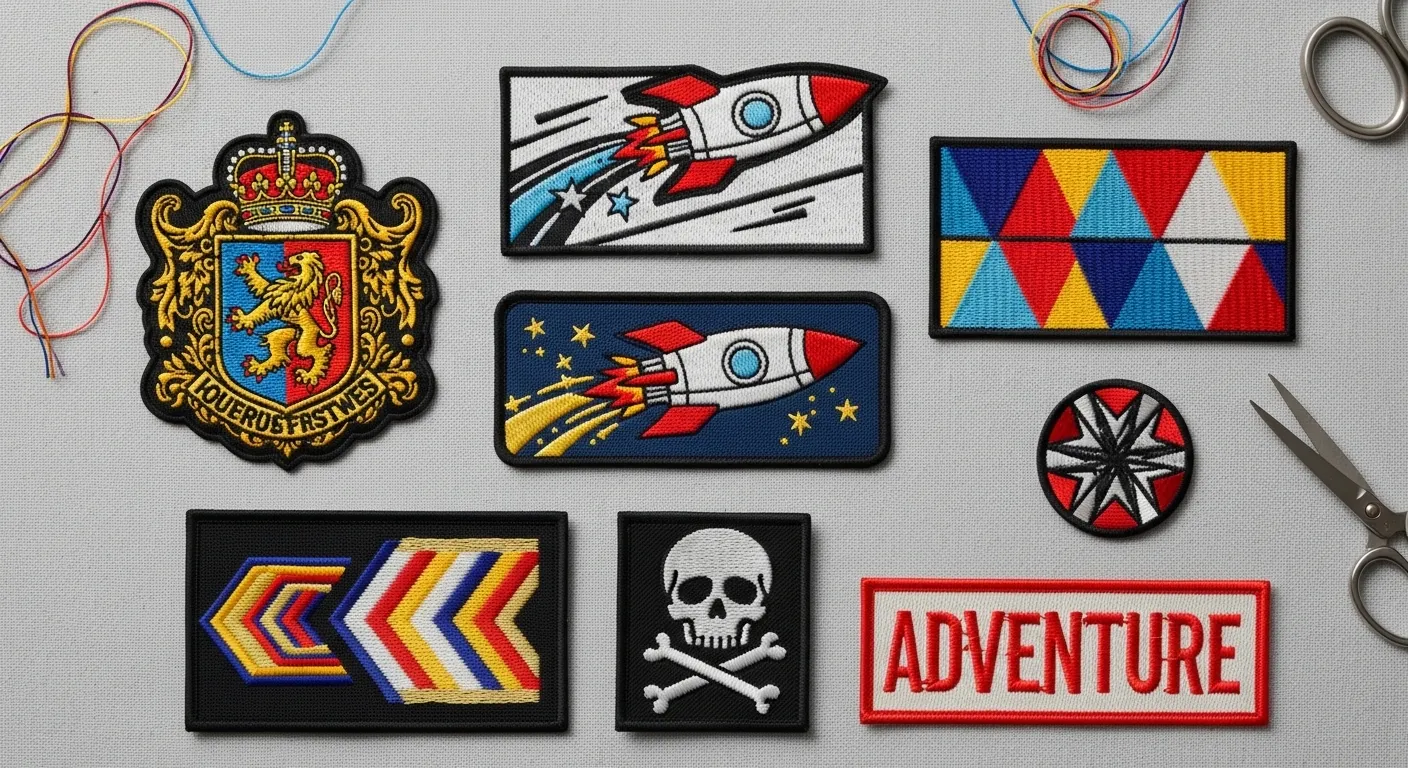
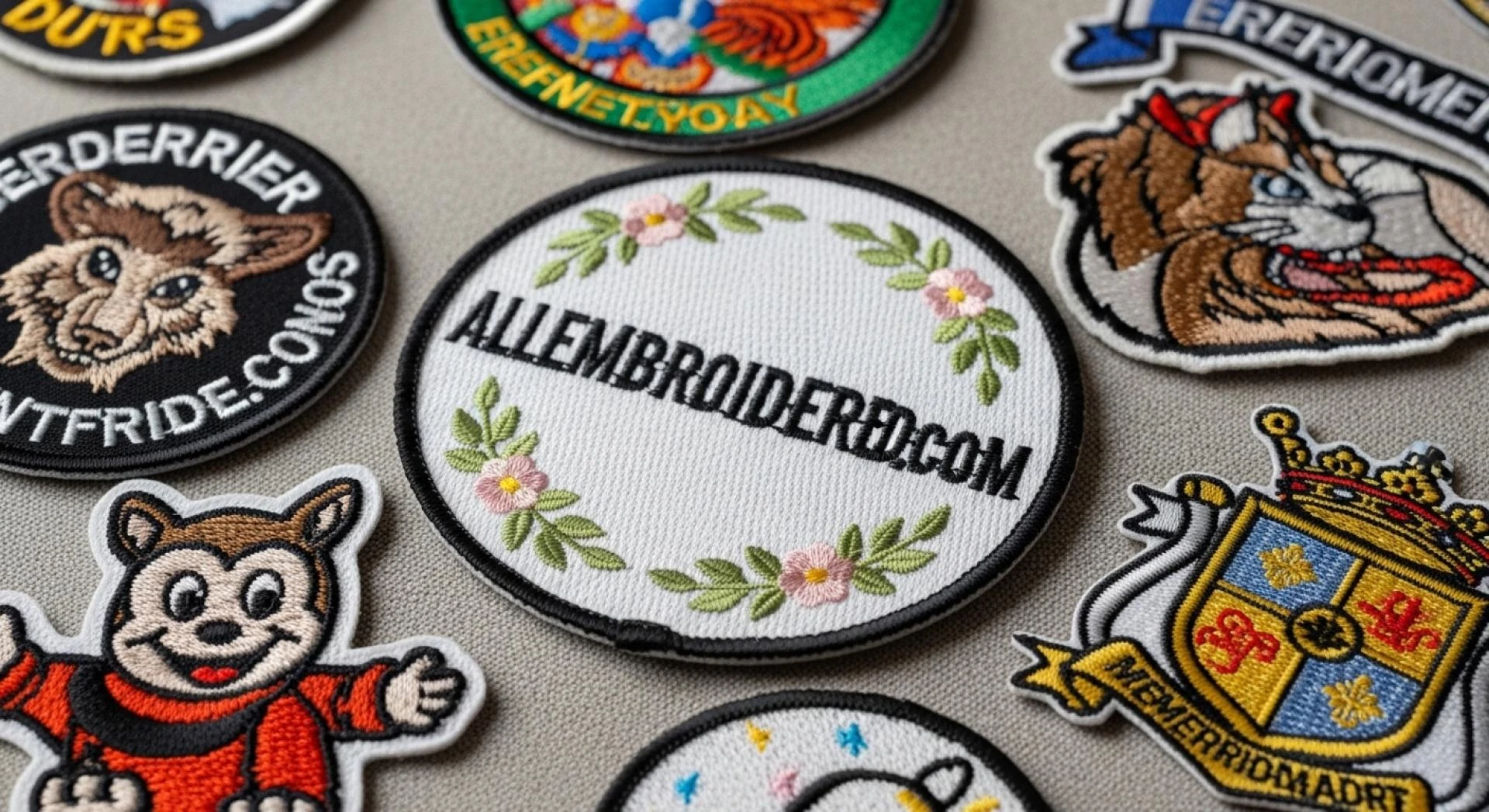
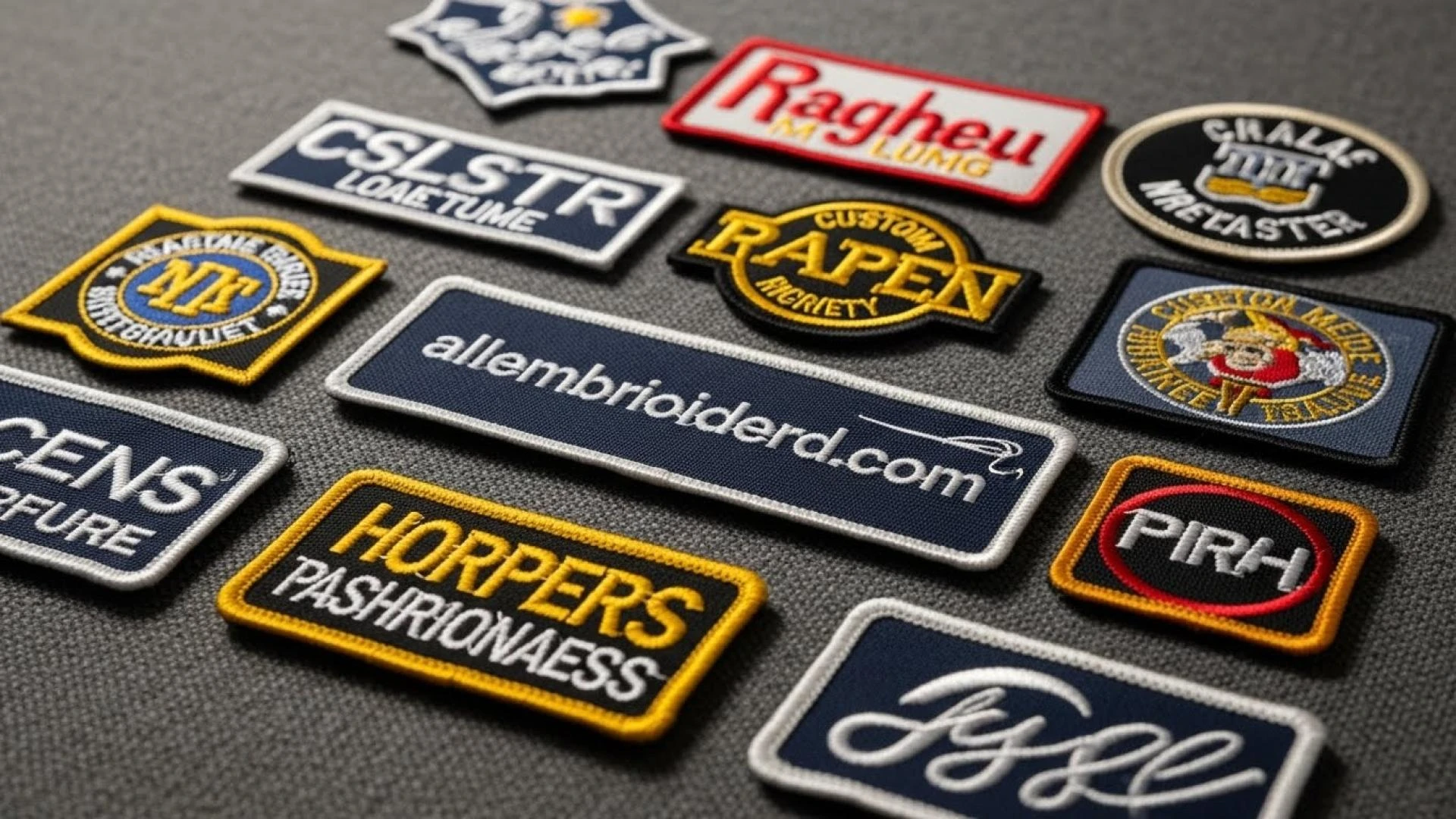
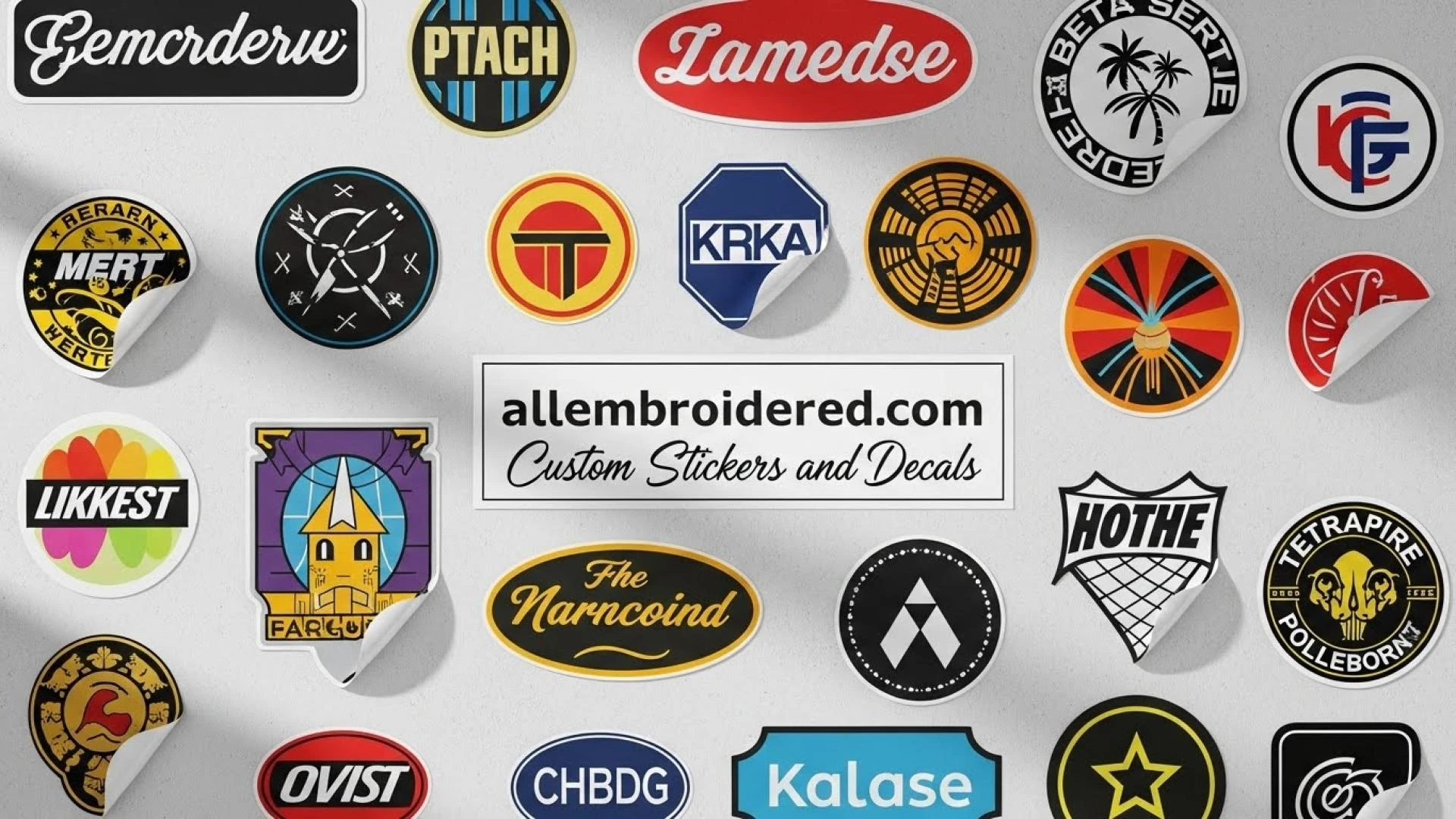
Allembroidered has produced custom embroidered patches, keychains, scout neckerchiefs, and stickers for clients across North America, Europe, and Asia-Pacific since 2007. Orders ship with a standardized quality inspection covering stitch density, color accuracy against Pantone references, and border consistency before dispatch.
How to Order Custom Embroidered Patches
Ordering custom embroidered patches requires 4 decisions before submitting a production request.
- Define the patch size — measure the target garment area and select a size between 1 inch and 12 inches.
- Prepare the artwork — supply vector files (AI or EPS) with outlined fonts; raster files accepted at 300 DPI minimum.
- Select backing type — iron-on for casual garments, sew-on for uniforms, Velcro for tactical and interchangeable applications.
- Set the quantity — minimum order quantities typically start at 50 pieces; bulk pricing tiers begin at 100, 500, and 1,000 units.
Turnaround time for standard orders runs 10–14 business days from sample approval to shipment. Rush production — 5–7 business day turnaround — carries a 20–35% surcharge.
FAQ: Custom Embroidered Patches
How are custom embroidered patches different from woven patches?
Embroidered patches use raised thread stitched onto a fabric base, while woven patches use interlocked threads on a loom, producing a flat, low-profile surface. Embroidered patches accommodate bold logos and designs with fewer than 8 colors; woven patches reproduce fine text and complex gradients with thread counts up to 200 per inch.
What file format is required for custom embroidered patch artwork?
Vector files in AI, EPS, or SVG format are the required standard for patch digitizing. PNG or TIFF files at 300 DPI minimum are accepted but incur a redraw fee of $15–$50 if the design contains gradients, shadows, or fine detail below 1mm stroke width.
Why do custom embroidered patches use merrow borders?
A merrow border is an overlock stitch applied to the patch perimeter that seals the fabric edge against fraying and defines the patch outline with a raised thread ridge. Standard merrow borders measure 2–4mm wide and add structural stability, extending average patch lifespan to 200+ wash cycles at 104°F.
How many thread colors can a custom embroidered patch include?
Standard machine embroidery supports up to 15 thread colors per patch in a single production run. Designs requiring more than 15 colors use color blending techniques — halftone stitching or gradient layering — which add 15–25% to per-unit production cost.
What is the minimum order quantity for custom embroidered patches?
Most manufacturers set a minimum order quantity of 50 pieces per design. Single-piece or prototype orders are produced at sample pricing, typically $25–$75 per patch, and require a digitizing setup fee separate from unit cost.
Why do iron-on patches fail on nylon and waterproof fabrics?
Iron-on adhesive bonds by melting into fabric fiber at 300–320°F, but nylon and waterproof-coated fabrics melt, delaminate, or repel adhesive at those temperatures, preventing a permanent bond. Sew-on attachment or a combination of fabric glue plus sewing is the correct method for nylon, Gore-Tex, and similar performance textiles.
All specifications, pricing ranges, and production timelines reflect current industry standards across commercial embroidery manufacturing. Individual manufacturer terms may vary by order volume and design complexity.




















Sign in to leave a comment.