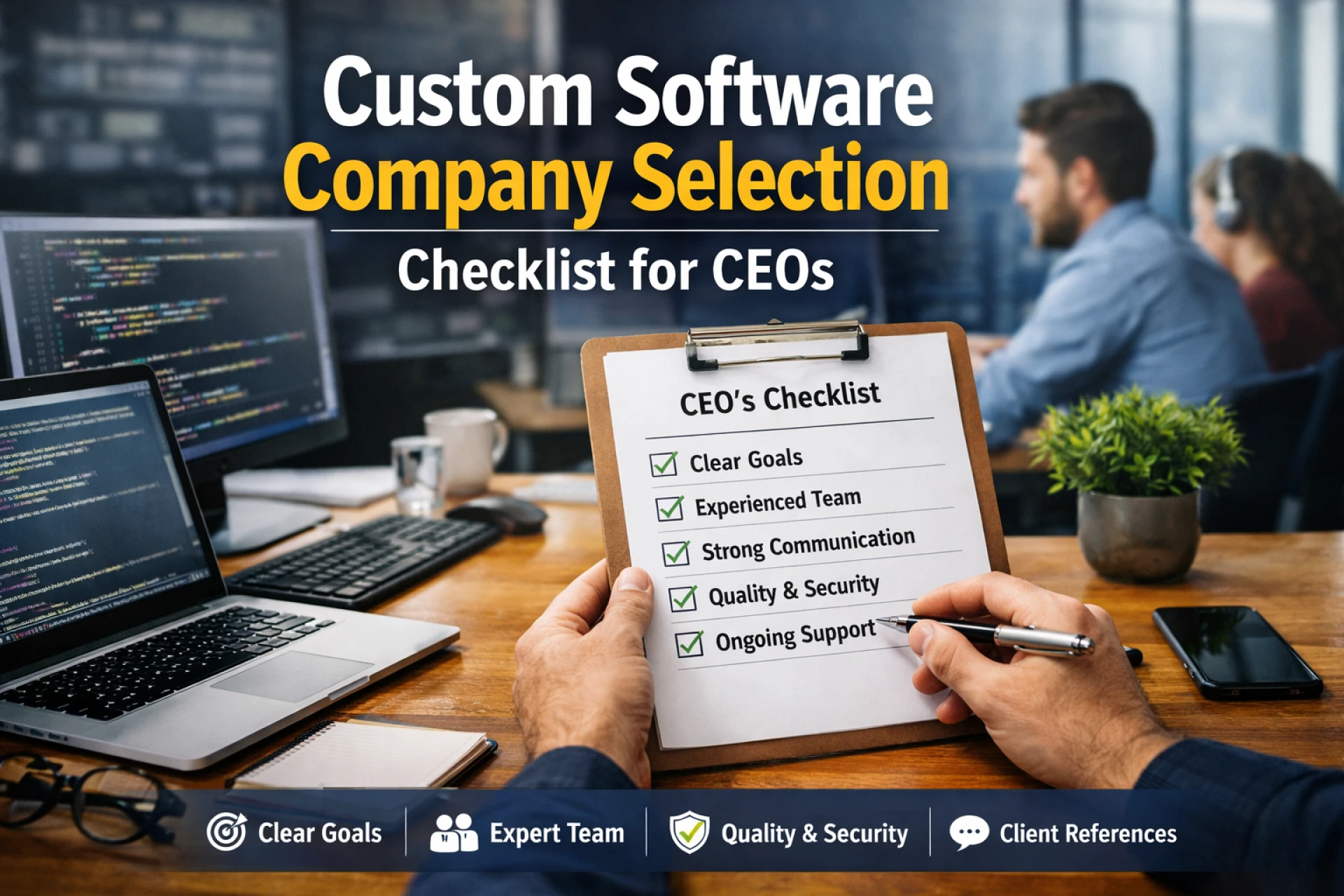

Choosing the right custom software development company is one of the most important decisions a CEO can make. The right partner helps your business grow. The wrong partner costs time, money, and morale. With so many options, it’s easy to feel overwhelmed. This checklist will help you make smart choices. It focuses on practical factors that matter most in real projects.
1. Clarify Your Goals and Scope First
Before you talk to any vendor, you need clarity on what you want to build:
- What problem are we solving?
- What features matter most?
- What outcomes do we expect?
- What timeline do we have in mind?
Clear goals help you compare proposals fairly. You avoid vague quotes and misaligned expectations.
2. Look for Relevant Experience
Not all technology partners are equal. Some excel in specific industries or use cases. When evaluating software development agencies, pay attention to:
- Past projects similar to yours
- Experience with your tech stack
- Case studies with measurable results
- References you can speak with
Relevant experience reduces risk. It also shortens the learning curve after kickoff.
3. Evaluate Technical Skills and Team Structure
You want a partner with the right mix of skills and structure. Ask these questions:
- Do they have developers for backend, frontend, and mobile?
- Can they handle DevOps, QA, and security?
- What is the team size and seniority mix?
- How do they manage knowledge transfer?
A balanced team keeps momentum and quality high. Avoid groups that lack specialists or rely only on junior staff.
4. Check Communication and Cultural Fit
Good communication is non‑negotiable. You want a partner that:
- Responds quickly
- Explains technical concepts clearly
- Shares progress regularly
- Listens to your feedback
Cultural fit matters. If personalities clash, projects stall. Choose a team that works in sync with your leadership style.
5. Review Processes and Development Methodology
A reliable partner should follow structured methods. Ask about:
- Agile or hybrid delivery models
- Sprint planning and review cadences
- Tools for task tracking and documentation
- How change requests are handled
Strong processes reduce surprises. They keep deliveries predictable and transparent.
6. Focus on Quality and Testing
High‑quality software doesn’t happen by accident. Make sure the company:
- Has dedicated QA resources
- Uses automated testing where appropriate
- Performs security checks early and often
- Tracks bugs and resolves them systematically
Quality affects your users’ experience and your brand reputation. Don’t compromise here.
7. Understand Their Approach to Security
Security must be integrated into every phase of development. Ask:
- How do they ensure secure coding practices?
- Do they conduct threat modeling and audits?
- How do they handle data protection and compliance?
Security issues cost far more to fix after launch than during development.
8. Ask About Maintenance and Support
Software needs care long after launch. Clarify:
- Post‑launch support terms
- Bug‑fix and update response times
- Support availability (hours, days)
- Costs for ongoing maintenance
Without a clear support plan, you may face long waits and unplanned bills.
9. Compare Pricing Models and Value
Price alone should not be the decision driver. Consider:
- Fixed price vs. time and materials
- What’s included in the quote
- How changes are priced
- Total cost over the software’s lifetime
Low initial costs can hide ongoing expenses. Focus on value delivered, not the lowest bid.
10. Assess Transparency and Accountability
A good partner owns outcomes. Look for companies that:
- Share realistic timelines
- Admit risks and constraints upfront
- Provide clear contracts with deliverables
- Offer regular reporting on progress
Transparency builds trust. Trust enables quicker decisions and smoother execution.
11. Validate with References and Reviews
Third‑party feedback is invaluable. Ask for:
- Customer references from recent projects
- Examples of before‑and‑after results
- Testimonials or case studies
- Public reviews on industry sites
Talking to real clients gives you insight into how the company works under pressure.
12. Ensure Scalability and Future‑Proofing
Your software should grow with your business. Evaluate whether the partner:
- Uses modular, maintainable architecture
- Plans for future integrations
- Supports migration to new platforms
- Designs for easy feature expansion
Future readiness saves time and cost later.
13. Confirm Legal and IP Safeguards
Protect your investments with clear terms:
- Who owns the source code?
- How is intellectual property handled?
- Are NDAs and data protection clauses in place?
- Do contracts specify deliverables and warranties?
Legal clarity prevents disputes and protects your rights.
14. Pilot or Trial Engagements Can Help
If you’re unsure about a partner, start small:
- Run a discovery sprint
- Build a prototype
- Test communication and delivery processes
- Evaluate quality and speed
A trial reveals strengths and gaps before full commitment.
Conclusion
Selecting the right custom software development company shapes your digital success. Use this checklist to compare proposals, ask the right questions, and make informed decisions. The right partner will deliver quality, support your goals, and help your business thrive well into the future.



























Sign in to leave a comment.