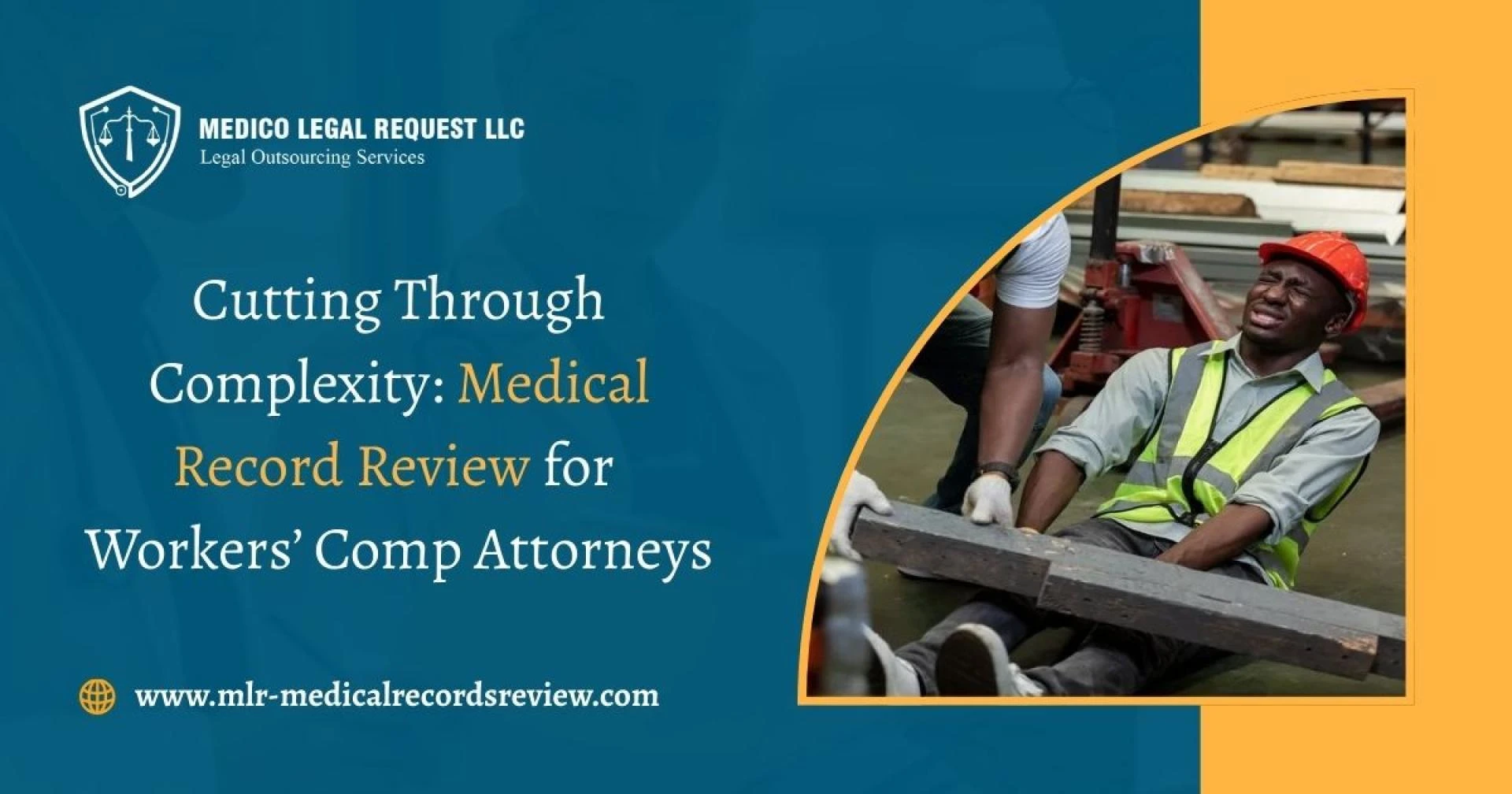

Medical evidence drives every critical decision in workers’ compensation litigation, from compensability and disability determinations to settlement valuation and trial strategy. Yet medical records are created for treatment, not for legal analysis. As a result, attorneys are often left sorting through dense, technical documentation to extract legally relevant facts.
Medical record review bridges this gap by transforming treatment-focused records into clear, structured insight that supports informed legal decision-making.
Why Workers’ Comp Medical Records Are Especially Complex
Workers’ compensation cases frequently involve prolonged treatment, multiple providers, and evolving diagnoses. Records may span years and include emergency care, occupational health visits, specialists, physical therapy, IMEs, FCEs, and diagnostic imaging.
Common challenges include:
- Conflicting provider opinions
- Inconsistent injury descriptions
- Overlapping treatment for work-related and non-work-related conditions
- Poorly documented functional limitations
Without an expert medical record review, these issues can cloud case evaluation and increase litigation risk.
Medical Record Review Goes Beyond Summarization
Medical record review is not a simple summary of documents. It is an analytical process that evaluates the medical evidence in a legal context. The goal is to identify what matters most to the case, not just what appears in the records.
A comprehensive review focuses on:
- Injury mechanism and medical consistency
- Treatment progression and compliance
- Objective findings versus subjective complaints
- Alignment with workers’ compensation standards
This analysis provides attorneys with actionable insight rather than raw information.
Establishing Causation and Work-Relatedness With Confidence
Causation is often the most contested issue in workers’ compensation claims. Medical record review helps attorneys clearly assess whether the injury arose out of and in the course of employment.
Through careful review, attorneys can:
- Distinguish pre-existing conditions from new injuries
- Identify aggravation versus natural disease progression
- Evaluate consistency between reported injury and medical findings
- Analyze temporal relationships between work activity and symptoms
Clear causation analysis strengthens both claim acceptance and denial strategies.
Identifying and Defending Maximum Medical Improvement (MMI)
MMI marks a turning point in workers’ compensation cases, directly impacting benefit entitlement and impairment evaluation. Workers' compensation medical record review helps attorneys determine whether MMI has been appropriately declared.
Key considerations include:
- Consistency of MMI opinions across providers
- Evidence of continued treatment or improvement after MMI
- Recommendations for future care
- Medical justification supporting MMI determinations
This insight is essential when MMI is disputed or prematurely assigned.
Evaluating Permanent Impairment and Disability Ratings
Permanent impairment ratings significantly influence case value and long-term liability. Medical record review allows attorneys to assess whether impairment ratings are medically and procedurally sound.
A detailed review examines:
- Use of appropriate impairment guidelines
- Documentation supporting assigned ratings
- Objective findings supporting functional loss
- Consistency between impairment, restrictions, and work capacity
This medical case analysis helps attorneys support or challenge impairment determinations with confidence.
Assessing Work Restrictions and Functional Capacity
Permanent and temporary work restrictions affect return-to-work decisions, wage loss exposure, and vocational analysis. Medical record review clarifies:
- Whether restrictions are medically supported
- Changes in restrictions over time
- Compliance with restrictions by the injured worker
- Functional limitations impacting job duties
These details are critical in disputes involving disability status and earning capacity.
Detecting Inconsistencies, Gaps, and Red Flags Early
Medical records often contain inconsistencies that can weaken a case if left unaddressed. Medical record review brings these issues to light before they become litigation problems.
Attorneys can identify:
- Contradictory medical opinions
- Gaps in treatment or documentation
- Unsupported diagnoses or restrictions
- Inconsistencies between medical records and testimony
Early detection allows attorneys to develop proactive strategies rather than reactive defenses.
Enhancing Collaboration With Medical and Vocational Experts
Organizing and analyzing medical records improves collaboration with experts. When experts receive clear chronological timelines, their opinions are more focused, credible, and defensible.
Medical record review supports experts by:
- Providing complete and organized medical histories
- Highlighting key issues requiring expert analysis
- Reducing reliance on incomplete or misleading records
This strengthens expert reports and testimony.
Supporting Settlement Strategy and Hearing Preparation
Medical clarity directly impacts negotiation leverage and hearing outcomes. Medical record review enables attorneys to:
- Accurately evaluate settlement value
- Prepare focused cross-examination questions
- Develop persuasive hearing arguments
- Align medical facts with legal standards
Clear medical insight improves confidence and credibility before judges and opposing counsel.
Improving Efficiency in High-Volume Workers’ Comp Practices
Workers’ compensation practices often handle large caseloads under tight timelines. Medical record review streamlines workflows by reducing time spent reviewing raw records and allowing attorneys to focus on legal strategy.
This efficiency supports:
- Faster case evaluation
- Better resource allocation
- Improved client communication
Turning Medical Complexity Into Strategic Advantage
Medical records should inform strategy, not overwhelm it. Medical record review services transform dense, technical documentation into clear, actionable insight that supports better outcomes. For workers’ comp attorneys, this clarity is a competitive advantage, one that reduces risk, improves efficiency, and strengthens advocacy from intake through resolution.
Conclusion:
Workers’ compensation cases are rarely decided by a single document; they are decided by how well the medical evidence is understood and presented. With records often spanning multiple providers, evolving diagnoses, and long treatment timelines, clarity is not optional; it is essential. Professional medical case review allows workers’ comp attorneys to move beyond information overload and focus on what truly drives outcomes: causation, disability, impairment, and credibility. By organizing complex medical documentation and identifying key issues early, attorneys can reduce risk, strengthen strategy, and advocate more effectively.





























Sign in to leave a comment.