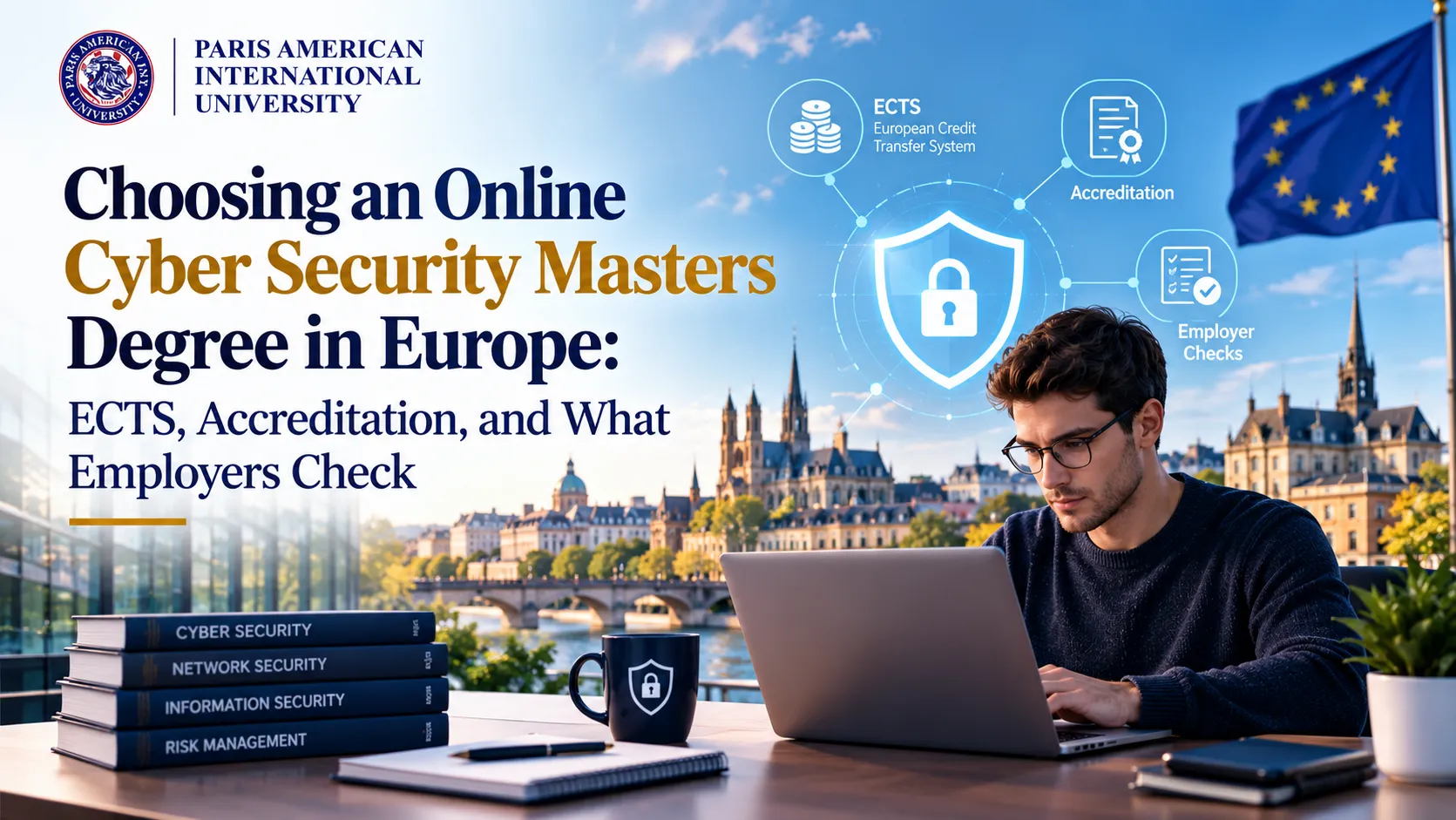

Most people compare tuition and start dates first. Hiring managers look at something else. They want to know whether your qualification is recognized, how many credits it carries, and whether the school stands behind it.
If you are weighing a cyber security masters degree from a European institution, a few technical details matter more than any brochure promise. They decide whether the degree opens doors or quietly stalls in a recruiter’s inbox.
This guide explains how European credits work, what accreditation really means, and which checks employers tend to run. You will also find a short checklist to use before you pay a deposit.
How ECTS Credits Shape a European Master’s
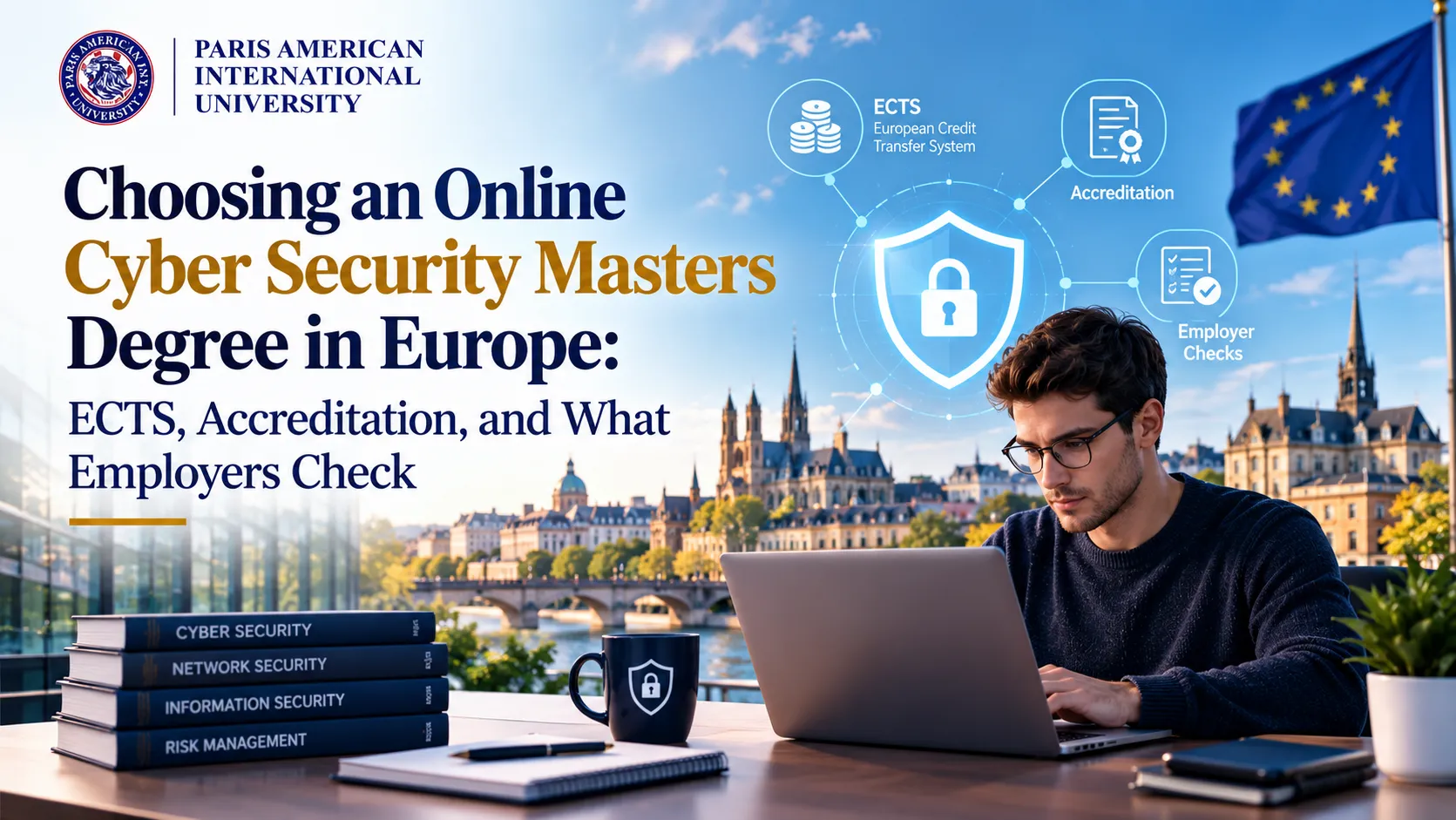
Europe uses the European Credit Transfer and Accumulation System, known as ECTS. One academic year usually equals 60 credits, and each credit reflects roughly 25 to 30 hours of student work.
Most master’s programs fall between 60 and 120 credits. A 90-credit program often runs about 18 months, while a 120-credit program usually takes two years. These figures are common, but individual schools set their own structure.
Credits matter because they make your study measurable. An employer or another university can read your transcript and understand the workload without guessing.
Why Accreditation Matters More Than the Website Design
A polished site proves nothing about quality. Accreditation does. It is an independent review that checks whether a school meets defined academic standards.
In Europe, national authorities oversee recognition. Quality assurance agencies registered with the European Quality Assurance Register also review institutions in many countries. Rules differ from one country to the next, so a program that is valid in one place may need extra steps elsewhere.
Always ask two questions. Who accredits the institution, and who accredits this specific program? Then confirm the answers with the named body, not just the school’s own claims.
The Bologna Process in Plain Terms
The Bologna Process, started in 1999, aligned degree structures across many European countries. It is the reason bachelor’s, master’s, and doctoral levels look familiar from Lisbon to Warsaw. It does not, however, guarantee that every individual program is recognized everywhere.
Reading a Curriculum Like a Hiring Manager
A good program should match real security work. Look for modules that cover the following:
- Network and cloud security
- Cryptography and secure communication
- Risk management and governance
- Incident response and digital forensics
- Ethical hacking and penetration testing
- Privacy law, including the GDPR
Pay attention to hands-on labs. Theory is useful, but employers want proof that you have handled logs, configured controls, and written incident reports. A capstone project or a thesis on a real problem can serve as a strong portfolio piece.
What Employers Actually Check
Recruiters rarely read a syllabus line by line. Instead, they run quick checks.
- They confirm the school is recognized by a legitimate authority.
- They look at the degree title and level on the diploma.
- They scan for relevant skills and tools on your resume.
- They check for industry certifications alongside the degree.
That last point surprises many students. Certifications such as CISSP, CISM, or CompTIA Security+ are respected, and they complement academic study well. A degree shows depth, while a certification shows current, practical knowledge. Together, they send a stronger signal than either one alone.
Questions to Ask Before You Enroll
Online study works well for working professionals, but it needs careful vetting. Start with a short list of direct questions.
- Is the degree awarded by a recognized institution, and can I verify it?
- How many ECTS credits does the program carry?
- Are exams proctored, and are there any in-person requirements?
- Does the school offer career guidance or alumni contact?
Institutions such as Paris American International University present their program details publicly, which helps applicants compare credit loads, structure, and delivery before applying. Use that kind of openness as a baseline when you review any school.
Matching the Program to Your Career Stage
Your background changes what you should look for. A network engineer moving into security may want deeper governance and risk content. A graduate with a computer science degree might prefer advanced technical modules and research.
If you already work in IT, ask how much of the schedule is flexible. Weekly deadlines with recorded lectures suit shift workers better than fixed live sessions. Also consider the time zone, since live classes scheduled in Europe can be awkward for students elsewhere.
Finally, think about portability. If you plan to work abroad, a master’s degree in cybersecurity from a recognized European school can be easier to evaluate, because ECTS credits are widely understood.
A Simple Test Before You Commit
Think of choosing a program like checking a lock before you trust it with your front door. You do not judge it by how shiny it looks. You test how it works.
Before you commit to any cyber security masters degree, verify the accreditation, confirm the credit load, and read the curriculum with an employer’s eyes. Spend an hour on that research now, and you protect years of effort later. A degree built on clear facts will serve your career long after the course ends.





















Sign in to leave a comment.