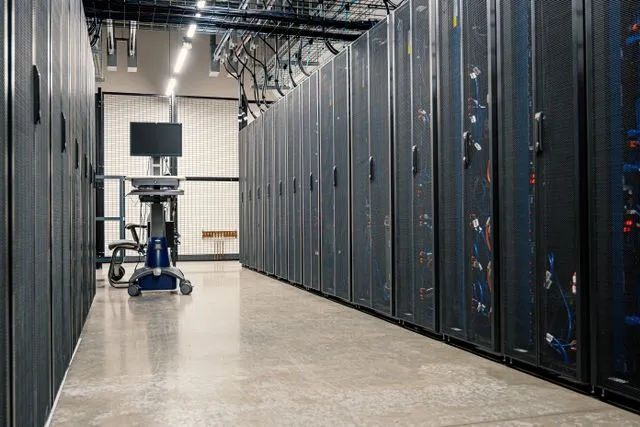

Data centers are built to support critical business operations, but the infrastructure inside them does not remain in service forever. Organizations may eventually need to close a facility, consolidate multiple data centers, migrate workloads to a different location, move infrastructure to the cloud, or replace outdated servers and storage systems. These projects require considerably more planning than simply disconnecting equipment and removing it from a building. Data center decommissioning services provide organizations with a structured approach to retiring infrastructure while addressing data security, asset management, logistics, environmental responsibilities, and business continuity.
A data center can contain thousands of individual assets, including servers, hard drives, storage arrays, networking equipment, racks, power systems, cables, and other hardware. Many of these devices may contain sensitive or proprietary information. Others may still have resale value even though they are no longer required by the organization. A successful decommissioning project therefore needs to account for every asset from the beginning of the project through its final disposition.
What Is Data Center Decommissioning?
Data center decommissioning is the controlled process of retiring and removing technology infrastructure from a data center. The process may involve shutting down equipment, documenting assets, removing hardware, securely destroying data, transporting equipment, evaluating resale opportunities, recycling obsolete technology, and preparing the facility for its next use.
Decommissioning can occur for many reasons. A business may be consolidating infrastructure into fewer facilities, relocating its technology environment, transitioning workloads to cloud services, upgrading to a newer data center, or closing an older facility.
Regardless of the reason, the project should be carefully planned to prevent unnecessary downtime, security risks, asset losses, and operational disruptions.
Why Data Center Decommissioning Requires Careful Planning
Data centers are highly interconnected environments. Servers may depend on storage systems, networking equipment, power infrastructure, cooling systems, and other components to operate correctly.
Removing equipment without understanding these relationships can create unexpected problems.
A structured decommissioning plan helps organizations determine which systems are being retired, which workloads need to be migrated, what equipment must remain operational, and when individual assets can safely be removed.
Planning also provides an opportunity to identify dependencies before equipment is disconnected.
Creating a Complete Asset Inventory
One of the first steps in a successful decommissioning project is creating an accurate inventory.
The inventory should identify servers, storage devices, networking equipment, racks, appliances, backup systems, and other relevant assets. Serial numbers, asset tags, models, locations, and equipment condition can be recorded to improve accountability.
An accurate inventory is particularly important when a data center contains equipment from different generations or departments.
It also helps determine which assets may have resale value and which should be recycled.
Identifying Data-Bearing Equipment
Data security is one of the most important considerations during a data center closure or infrastructure retirement.
Servers and storage systems can contain databases, customer information, employee records, financial information, intellectual property, credentials, backups, and other sensitive material.
Before equipment leaves the organization's control, data-bearing components need to be handled through an appropriate sanitization or destruction process.
Organizations should identify every device capable of storing information and include those assets in the data destruction plan.
Secure Data Destruction
Secure data destruction services can be integrated into the decommissioning process to protect information stored on retired equipment.
Depending on the storage technology and the organization's security requirements, data may be securely erased using an appropriate sanitization process or the storage media may be physically destroyed.
The method should be selected based on the specific device and intended final disposition.
For example, equipment that will be reused or resold may require a secure sanitization process, while storage media that will not be reused may be appropriate for physical destruction.
Maintaining Chain of Custody
Data center equipment should remain accounted for as it moves through the decommissioning process.
Chain-of-custody procedures can document when equipment is removed, who handled it, where it was transported, and how it was ultimately processed.
This is particularly important for storage devices containing sensitive information.
Maintaining detailed records can help organizations demonstrate that equipment was handled according to established procedures and reduce uncertainty about the location and status of retired assets.
Recovering Value From Retired Equipment
Decommissioning does not necessarily mean that every piece of equipment should be discarded.
Servers, networking equipment, storage systems, and other technology may still have market value depending on their age, specifications, condition, and demand.
IT asset buyback services can provide an opportunity to evaluate eligible equipment and recover potential value.
This can be particularly useful during large decommissioning projects because a substantial number of assets may be retired simultaneously.
Equipment with resale potential can be separated from assets that are obsolete or damaged.
IT Equipment Recycling
Some equipment will not have sufficient resale value to justify reuse.
Older servers, damaged components, obsolete networking hardware, and other technology may need to be directed toward responsible IT equipment recycling.
Recycling provides an appropriate end-of-life pathway for electronic equipment that can no longer serve a practical purpose.
Components and materials may be recovered and processed through appropriate recycling channels rather than sending technology directly into ordinary waste streams.
Disconnecting and Removing Infrastructure
Physical removal is a major component of data center decommissioning.
Equipment may be mounted in racks, connected to extensive cabling, attached to power systems, or integrated with other infrastructure. Removal therefore needs to be performed in a controlled sequence.
The organization should determine which equipment can be removed first and which systems need to remain operational during the transition.
Proper labeling can help prevent equipment from being disconnected prematurely or removed from the wrong location.
Handling Networking Equipment
Networking infrastructure can be particularly important during decommissioning because devices may support communication between servers, storage systems, offices, and external networks.
Switches, routers, firewalls, access devices, and other networking hardware should be identified and evaluated before removal.
Configuration information and business dependencies should also be considered.
Once equipment is retired, appropriate data and configuration handling procedures should be followed to ensure that sensitive information does not remain accessible.
Managing Servers and Storage Systems
Servers and storage systems often represent some of the most important assets in a data center.
Before removing them, organizations should confirm that applications and workloads have been successfully migrated or retired.
Storage devices require particular attention because they may contain large volumes of information.
A detailed inventory and secure data destruction plan can help ensure that storage media is not overlooked during the project.
Planning for Business Continuity
A decommissioning project should not interfere unnecessarily with active business operations.
Organizations should establish clear timelines for shutting down systems and coordinate decommissioning with application owners, IT teams, vendors, and other stakeholders.
Critical workloads may need to be migrated to another data center, cloud environment, or replacement infrastructure before physical equipment is removed.
Testing the replacement environment before shutting down the old infrastructure can help identify problems while the original systems are still available as a reference.
Data Center Decommissioning and Cloud Migration
Cloud migration is one reason organizations may reduce their physical data center footprint.
Moving workloads to cloud infrastructure can eliminate the need for some physical servers and storage systems, but the physical equipment still needs to be properly retired.
Once workloads have been migrated and verified, the associated hardware can enter the decommissioning process.
Organizations should ensure that data stored on retired hardware is appropriately handled rather than assuming that migration automatically eliminates the information contained on the original equipment.
Documentation and Reporting
Detailed documentation can make a large decommissioning project easier to manage.
Reports can identify assets collected, equipment processed, data destroyed, assets resold, and equipment recycled.
Records may include serial numbers, asset tags, quantities, processing dates, and final disposition information.
This documentation provides organizations with greater visibility into the project and can support internal asset management and security requirements.
Preparing the Facility After Equipment Removal
Decommissioning does not necessarily end when the last server leaves the building.
The organization may need to address racks, cabling, power connections, cooling infrastructure, flooring, security systems, and other physical elements.
The scope depends on whether the facility is being closed, repurposed, sold, or prepared for another tenant.
A complete project plan should establish which infrastructure remains and which components need to be removed.
Environmental Considerations
Large data centers can generate substantial amounts of electronic equipment at the end of a project.
Responsible recycling can help ensure that obsolete hardware is processed through appropriate channels.
Equipment that can be reused or resold can potentially remain in service elsewhere, while equipment that has reached the end of its useful life can be recycled.
Combining asset recovery with recycling allows organizations to consider both financial recovery and responsible end-of-life management.
Managing Large-Scale Logistics
A major data center may contain hundreds or thousands of assets. Removing, packaging, transporting, and processing this equipment requires careful logistical coordination.
Assets should be organized before transportation, with appropriate documentation connecting equipment to its inventory records.
Large projects may also require specialized packaging and transportation arrangements to protect equipment during removal and movement.
A centralized process can reduce the risk of misplaced assets and help maintain visibility throughout the project.
Choosing Data Center Decommissioning Services
Organizations should evaluate providers based on their ability to manage the full scope of the project.
Important capabilities can include asset inventory, equipment removal, logistics, secure data destruction, asset valuation, resale, recycling, reporting, and project coordination.
Experience with large technology environments is particularly important when a project involves significant quantities of servers, storage systems, and networking equipment.
Before beginning the project, organizations should establish the scope of work, security requirements, timelines, reporting expectations, and final disposition procedures.
A Structured Approach to Data Center Retirement
Data center decommissioning is a complex process that requires coordination between technology, security, operations, facilities, and asset management teams. Simply turning off equipment and removing it from the building can leave important questions unanswered.
A structured approach ensures that workloads are properly transitioned, equipment is accurately documented, sensitive information is securely handled, valuable assets are evaluated for potential recovery, and obsolete technology is responsibly recycled.
Data center decommissioning services can help organizations manage these responsibilities through a coordinated process designed around the specific requirements of the facility.
Whether the project involves closing a small server room or retiring a large enterprise data center, careful planning can reduce disruption, improve asset accountability, protect sensitive information, and create a more efficient transition to the organization's next technology environment.






















Sign in to leave a comment.