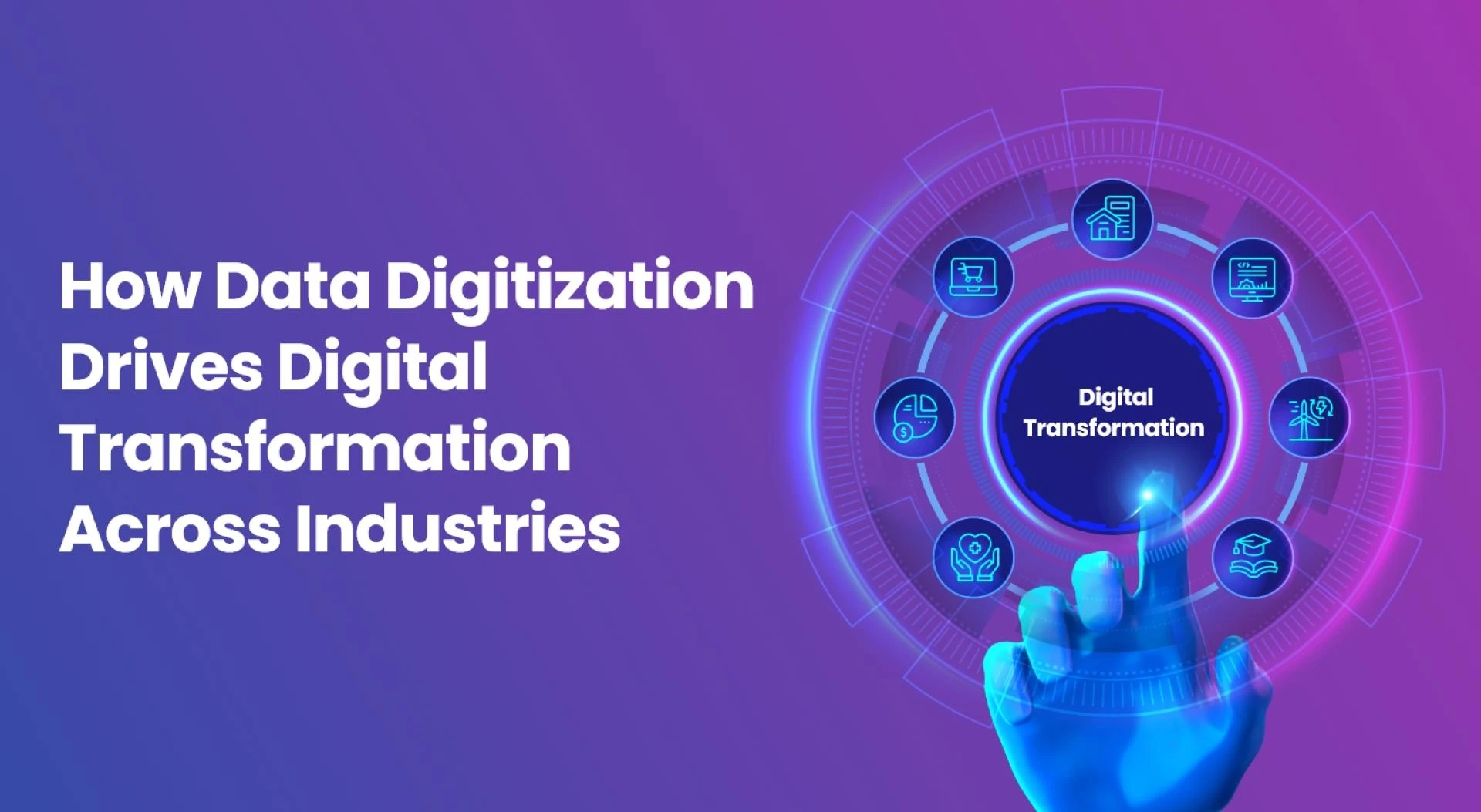

Businesses across every sector rapidly adopt digital technologies that help in staying ahead in the competitive market. With a plethora of industries competing in the market, adopting the latest approaches, innovations, and technologies is a key aspect of growth and success in business. Businesses across sectors often seek novel paths to stay ahead of the market and deliver a high-quality customer experience, streamlined operations, and more. As the entire economy has transformed with technology and innovation, industries have reshaped their strategies and operations.
Digitization has altered how businesses perform, operate, and approach their strategies, leading to significant growth in the competitive market. Nonetheless, digital transformation across industries is now a growth engine that enables firms to stay ahead of the market, deliver high-quality products and services, and achieve efficient workflows. Digital transformation generates a massive volume of data across multiple platforms in various formats.
Data is a crucial resource for businesses in the digital era, enabling them to extract valuable insights to make data-driven decisions, stay ahead of the competition, streamline current work approaches, and more. Therefore, digital transformation in any industry produces significant amounts of digital data, which is difficult to manage, organize, and store.
Adopting the digital transformation also comes with the adoption of data digitization. As a matter of fact, the concept of data digitization empowers businesses to convert traditional methodologies to digital practices. That is, shifting from paper to screen practices results in a streamlined process and more efficient data management. Digitization of data across industries enables quick access to information, streamlined management, accurate data extraction, seamless workflows, and informed decision-making.
Global transformation with digital aspects helps industries upgrade in line with market dynamics and ensure they remain ahead of the competition to deliver the best, seamless customer experience. Nonetheless, there are various sectors where data digitization services play a crucial role in delivering data-centric solutions and gaining a competitive advantage. Let’s get a quick overview of data digitization and how it is evident across industries.
Understanding Data Digital Transformation
In the dynamic landscape of business, technology and innovation play a crucial role, transforming the work approach. Latest technologies enhance business processes, operations, workflows, and the customer experience in line with trends. As a matter of fact, digitization is one of the approaches that has streamlined manual work. Digital transformation in the market automates workflows, resulting in improved decision-making, better data management, greater operational efficiency, and more. Today, from small businesses to large businesses, every sector has adopted digitization due to its long list of benefits and the demand of the digital market. In simple terms, data digitization refers to transforming physical data into a digital format using the latest technologies and advanced processes.
Businesses generate and collect data from multiple sources, such as social media, websites, client information, documents, PDFs, and more. Usually, documents are a key aspect of data, entailing vital details that can be confidential. Document digitization in any business enables professionals to quickly access documents from digital databases, such as cloud platforms and other digital repositories. Moreover, digital technologies are dramatically reshaping business structures and models to meet the dynamic market changes.
Leveraging data digitization drives exceptional results by transforming business models, creating new value, enhancing the customer experience, and gaining a competitive advantage through data-informed decisions that streamline operations and strategies. Digital transformation converts paper files into searchable, shareable digital files, resulting in a plethora of benefits, as follows;
- Enhanced Efficiency & Productivity: Quickly search, find, and retrieve information using keywords, eliminating manual searching through paper.
- Improved Accessibility & Collaboration: Access data from anywhere, anytime, on any device, and share easily with dispersed teams.
- Significant Cost & Space Savings: Reduce costs for physical storage, paper, printing, and off-site storage by freeing up valuable office space.
- Superior Security & Disaster Recovery: Protect against data loss from disasters (fire, flood) or theft with digital backups, encryption, and access controls.
- Better Data Management & Analytics: Digital formats allow for easier processing, analysis, reporting, and integration with other systems.
- Information Preservation: Prevents physical degradation of original documents, preserving important data for the future.
- Increased Scalability: Easily manage and scale data volumes without needing more physical storage, unlike paper records.
- Environmental Benefits: Reduces paper consumption and the environmental footprint of physical document management.
These are the pivotal benefits that underscore the importance of data digitization services across various businesses. Managing vast datasets physically has become nearly impossible; industries in large economies adopt document digitization services and other related approaches to streamline workflows. Let’s explore which key industries have transformed physical data into digitized data.
Data Digitization by Key Industries
As discussed briefly about data and how digital transformation has become a key aspect of business success. In the modern landscape, data is a vital resource that helps to make informed decisions and streamline business operations. Leveraging the digitization of data enables professionals to harness the power of data and gain a competitive advantage for continuous growth. Major industries adopting data digitization include Healthcare, Finance & Banking, Retail & E-commerce, Transportation, Hospitality, and Manufacturing, all leveraging digital transformation for efficiency, better customer experiences, and data-driven insights, with sectors like IT, Real Estate, and Energy also heavily involved in managing vast data streams.
- Healthcare: Uses digital records (EHRs), telehealth, wearables, and data analytics for improved patient care, cost reduction, and risk analysis.
- Finance & Banking: Employs data for personalized banking, fraud detection, credit risk assessment, and simplified operations.
- Retail & E-commerce: Focuses on data analytics for inventory, customer behavior, personalized marketing, and omnichannel experiences.
- Transportation & Logistics: Uses data for route optimization, safety, autonomous vehicles, and managing complex supply chains.
- Hospitality & Tourism: Digital bookings, data management for internal processes, and virtual reality experiences.
- Manufacturing (Industry 4.0): Adopts IoT, robotics, and advanced platforms for data processing, storage, and smart factories.
- Real Estate: Builds large databases for market analysis, targeted marketing, and informed decision-making.
- IT & Software: Manages massive data from user queries, product information, and documents.
- Energy (Oil & Gas): Utilizes sensors, IoT, and data platforms to manage operations.
- Education: Uses data for market understanding, competition analysis, and digital learning platforms.
Every sector is digitizing to gain efficiency, improve services, and stay competitive in the digital age, from managing vast datasets to creating entirely new digital business models. As a matter of fact, digitization across sectors enables efficient, accurate, and streamlined data management, enabling professionals to harness the power of data to extract valuable insights. These insights help make data-driven decisions, drive business growth, and enhance the customer experience.
Ending Thoughts
Data digitization services play a vital role in the modern business landscape, allowing industries to make data-driven decisions and gain a competitive advantage. This approach streamlines complex operations, enhances the customer experience, and smartly manages vast amounts of data.




















Sign in to leave a comment.