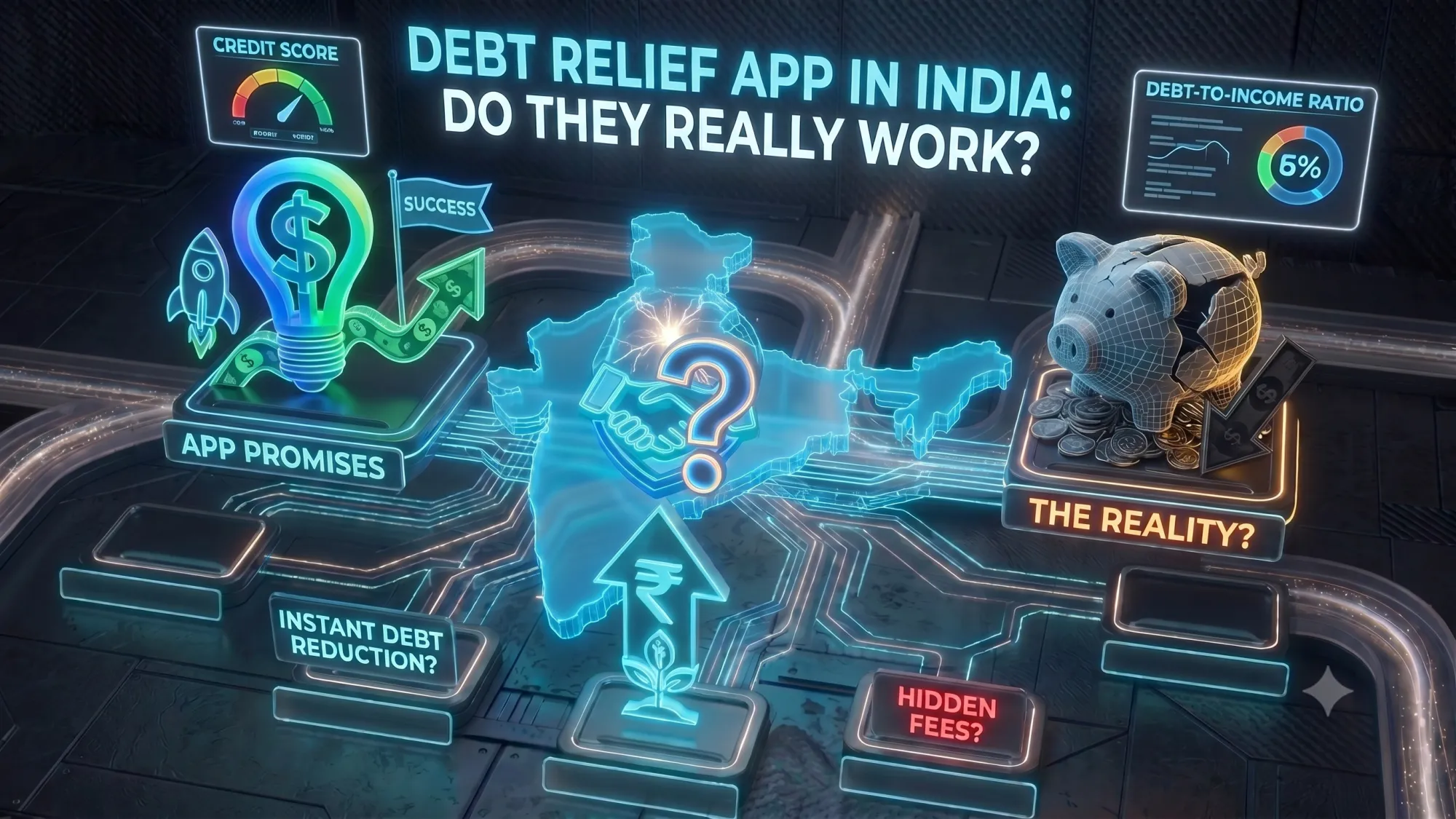

Searching for a debt relief app usually means you've reached a very specific kind of exhaustion not just the loan itself, but the constant background noise of it. The EMI reminder that pops up before you've even had coffee. The call from an unknown number you already know is a recovery agent. The quiet math you do in your head every time you get paid, before the money even lands. It's usually around this point that people go looking for a faster, more structured way out than just gritting their teeth through another month.
If you've found yourself typing "debt relief app" into Google at midnight, you're not being dramatic. You're doing exactly what a financially stressed person should do looking for a real way out instead of just white-knuckling through another month of minimum payments.
The problem is that this space is noisy. Search results are full of apps that promise a lot and explain very little. So before you download anything or hand over your loan details to a stranger's platform, it's worth understanding what these apps actually do, how the process works, and how to separate the ones that genuinely help from the ones that don't.
What a Debt Relief App Is Actually Supposed to Do
The term "debt relief app" gets used loosely, and that's part of the confusion. Some apps are just glorified EMI calendars they remind you what's due and when. Others help you consolidate multiple debts into a single number on a dashboard, which looks tidy but doesn't actually reduce what you owe.
The apps worth paying attention to are the ones built around loan settlement where the platform steps in and negotiates directly with your lender to close the loan for less than the full outstanding amount. That's the difference between a tool that organizes your debt and one that actually shrinks it.
If your goal is a lower monthly obligation, one of these apps might be enough. But if you're already behind on payments and the total amount owed feels genuinely unmanageable, settlement is usually the more realistic path and it's a lot more common than most people assume.
Why Loan Settlement Isn't the Scary Word People Think It Is
There's a stigma attached to the phrase "settling a loan," like it's something only people who've given up do. In reality, it's a formal, legal negotiation. You and the lender agree on a reduced amount, you pay it, and the loan is officially closed with documentation to prove it.
Banks and NBFCs aren't doing you a favor here, either a settled loan recovers more value for them than a loan that drags on as a non-performing asset for years. That's exactly why many lenders are open to these conversations even though they don't advertise it on their homepage.
The part people usually get wrong is assuming settlement means disappearing on your loan or ignoring calls until something happens. It's the opposite. It's a documented process with a clear before-and-after, ending in a No Dues Certificate once it's resolved.
The Question Everyone Asks: What Happens to My CIBIL Score?
This deserves a straight answer instead of vague reassurance. Yes, a settled loan is reported differently on your credit report than a fully closed one it shows as "Settled" rather than "Closed," and that does have a temporary impact on your score.
But here's the context that usually gets left out: if you're already missing EMIs, your score is taking damage every single month regardless. Continued default is, in almost every case, worse for your credit history than a settlement. Settlement stops the bleeding and gives you an actual point to start rebuilding from typically, people see meaningful recovery in their score within a year or two of disciplined financial behavior afterward.
What a Genuine Debt Relief App Process Looks Like
A trustworthy platform tends to follow a predictable, transparent structure:
- You share your loan or credit card details lender, amount outstanding, how long you've been behind.
- The platform assesses your case and works out a realistic settlement figure based on your specific situation.
- They negotiate with your lender directly on your behalf.
- You review and approve the settlement offer before committing to anything.
- Once payment is made, the loan is formally closed.
If a platform skips straight to asking for money before any of this negotiation happens, that's worth pausing on.
How to Tell a Legitimate Platform From a Risky One
This is genuinely the part people should spend the most time on, because the debt relief space has both serious operators and opportunistic ones. A few things worth checking before you commit to any app:
- Do they actually negotiate with lenders, or just give generic advice? These are very different services, and only one of them changes what you owe.
- Are there upfront fees before any settlement happens? A platform confident in its results usually doesn't need to charge you before delivering anything.
- Can they clearly explain the CIBIL impact? If they dodge the question or oversell it as "no impact at all," that's a red flag — be wary of anyone underselling the trade-offs.
- Is the communication with your lender documented and visible to you? You should never feel like you're in the dark about what's being negotiated on your behalf.
There are a handful of platforms in India that are genuinely built around this model rather than treating it as an upsell. If you want to see what a properly explained, step-by-step breakdown of the process looks like including how CIBIL is affected and what the actual negotiation involves this debt relief app guide from Zavo is one of the more thorough explainers currently out there, and it's worth a read before you decide on anything.
When Loan Settlement Actually Makes Sense
Settlement isn't the right move for everyone. If you're a few months behind but can realistically catch up with some restructuring or a slightly longer tenure, that's usually a better first step than settlement. But if the outstanding amount has grown to a point where full repayment feels genuinely out of reach even with better budgeting settlement stops being a last resort and starts being the sensible option.
The honest signal to look for is this: are you paying only interest every month while the principal barely moves? Are recovery calls now a daily occurrence? If either of those is true, it's worth exploring settlement seriously instead of continuing to absorb damage every month while hoping things improve on their own.
Final Thoughts
Searching for a debt relief app usually means you've already had the hardest realization — that the current situation isn't sustainable. That's not a failure; it's the first practical step toward fixing it.
The apps that are actually worth your time are the ones that negotiate real reductions, explain the credit impact honestly, and don't charge you before they deliver a result. Do a bit of homework before you commit to one, but don't let the noise in this space stop you from taking the step. A structured, legal path out of unmanageable debt exists, and thousands of people use it every year to close that chapter and start over.
Frequently Asked Questions
1. Is using a debt relief app safe?
It can be, as long as the platform is transparent about its process, doesn't charge upfront fees before a settlement, and clearly explains how your credit score will be affected.
2. Does a debt relief app work for credit card debt too?
Yes. Most legitimate settlement platforms handle both personal loans and credit card dues, since both can be negotiated down through the same basic process.
3. Will my lender agree to a settlement?
Often, yes especially if you're already in default. Lenders generally prefer recovering a reduced amount over letting a loan sit unresolved for years.
4. How long does the settlement process usually take?
It varies by lender and case complexity, but most negotiations move faster than people expect once your details and financial situation are documented clearly.
5. Is loan settlement the same as loan default?
No. Default means missing payments with no resolution. Settlement is a formal agreement that legally closes the loan for an agreed reduced amount, documented with a No Dues Certificate.























Sign in to leave a comment.