
In the ever-evolving landscape of the digital age, data has become the lifeblood of innovation. Two giants in the tech-driven transportation and food delivery sectors, Uber and Uber Eats, have amassed vast amounts of valuable data through their platforms. The key to unlocking the true potential of this data lies in understanding and decoding their Application Programming Interfaces (APIs).
### The Power of APIs
APIs serve as the bridge that allows different software applications to communicate with each other. For Uber and Uber Eats, APIs provide developers access to a treasure trove of data that includes user behavior, location information, transaction details, and more. By tapping into these APIs, developers can gain insights, create new features, and enhance existing services.
### Understanding Uber's API
Uber's API provides access to a variety of data, including ride details, driver information, and real-time ride updates. This wealth of information has given rise to innovative applications and services. For instance, developers can create apps that integrate Uber's ride-sharing capabilities into other platforms or leverage the data for urban planning and traffic management.
In urban planning, the API data can be used to analyze traffic patterns and optimize transportation infrastructure. By understanding the demand for rides in specific areas at different times, city planners can make informed decisions about road development and public transportation.
### Unleashing Uber Eats API Potential
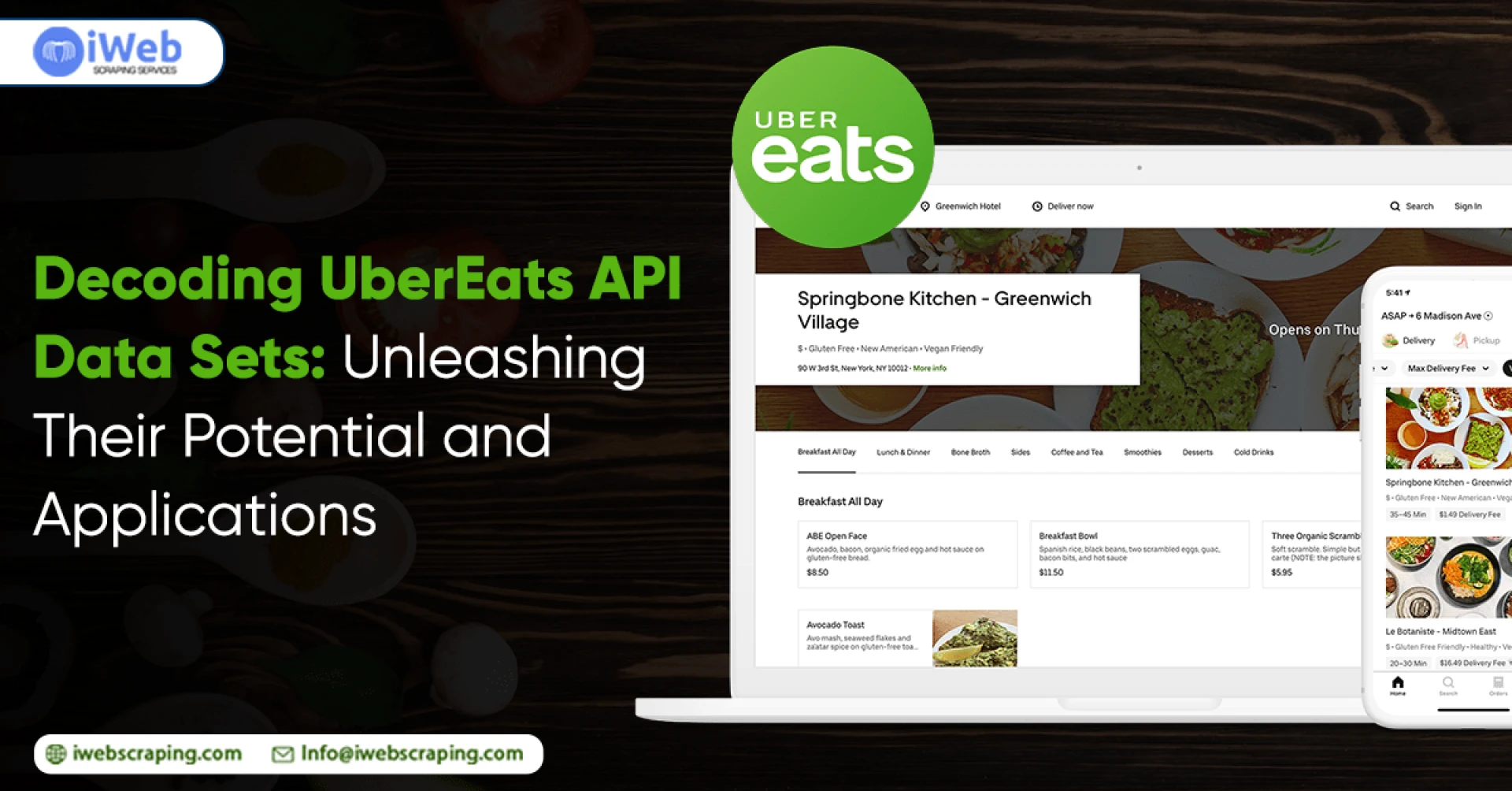
Uber Eats, an extension of the Uber ecosystem, also offers a robust API that exposes a variety of data related to food delivery. This includes restaurant information, menu details, order status, and delivery tracking. Developers can use this data to create applications that enhance the user experience or streamline restaurant operations.
One innovative application of the Uber Eats API is in the development of food recommendation systems. By analyzing user preferences, order history, and restaurant ratings, developers can create algorithms that suggest personalized food options, making the dining experience more enjoyable for users.
### Applications in Machine Learning
Decoding Uber and Uber Eats API data sets opens up exciting possibilities in the realm of machine learning. By training models on this data, developers can create predictive algorithms that anticipate user behavior, optimize delivery routes, and even predict popular food trends.
For Uber, machine learning can be applied to predict demand in specific areas, allowing the platform to allocate resources more efficiently. This not only improves the overall user experience but also enhances driver satisfaction by reducing idle time.
In the context of Uber Eats, machine learning can be employed to optimize delivery routes, reducing delivery times and increasing customer satisfaction. Predictive models can also help restaurants optimize their menus based on popular choices and customer preferences.
### The Future of API-Driven Innovation
As technology continues to advance, the role of APIs in driving innovation becomes increasingly significant. Uber and Uber Eats, with their vast user bases and extensive datasets, are at the forefront of this revolution. Decoding their APIs allows developers to tap into a goldmine of data, unleashing the potential for groundbreaking applications in transportation, food delivery, and beyond.
In conclusion, the decoding of Uber and Uber Eats API data sets is a gateway to a world of possibilities. From optimizing urban transportation to revolutionizing the food delivery experience, developers have the tools they need to create innovative solutions that benefit both users and service providers. As we continue to explore the potential of these APIs, the future holds exciting developments that will shape the way we move and dine in the digital age.





Sign in to leave a comment.