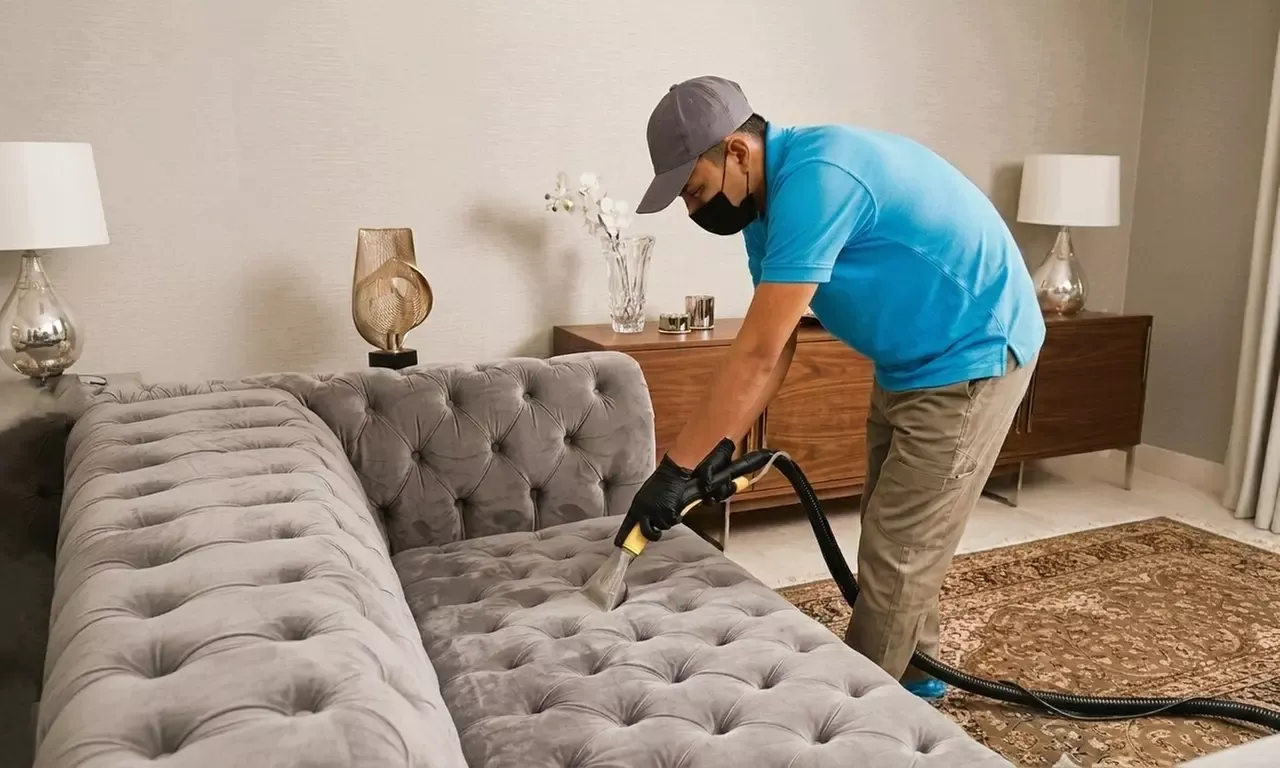

Most cleaning methods only move dirt around. Steam cleaning is one of the few that actually destroys what's living inside fabric, not just what's sitting on the surface.
That distinction matters more than it sounds. A sofa can be vacuumed weekly and still harbor bacteria, dust mites, and allergens deep inside the cushions, simply because a vacuum was never designed to reach that layer.
The Science of Why Steam Actually Works
It Comes Down to Temperature
Steam cleaners typically heat water to around 212°F (100°C), well above the threshold most bacteria and viruses can survive. Most common pathogens, including E. coli, Salmonella, and Staphylococcus, are significantly reduced once temperatures pass roughly 140°F.
Dust mites are even more heat-sensitive. Research shows steam temperatures above 131°F are enough to kill dust mites on contact, and standard steam cleaning equipment comfortably exceeds that threshold.
It Penetrates Where Chemicals Can't Reach
Steam doesn't just sit on a surface. It penetrates pores, cracks, and fabric fibers, reaching into the deeper layers of a mattress or sofa cushion where dirt and allergens typically settle.
Traditional shampoo-based cleaning tends to work only at the surface, leaving what's underneath largely untouched.
The Numbers Are Genuinely Striking
Multiple independent studies on steam cleaning report it kills up to 99.9% of common household germs, including bacteria, viruses, mold spores, and dust mites, when applied at the correct temperature and duration. That figure holds up across a range of surfaces, from upholstery and mattresses to countertops and floors.
Why Steam Cleaning Fits the UAE Especially Well
No Chemical Residue in a Hot, Humid Climate
Chemical-based cleaning products can leave residue behind that reacts differently in high heat and humidity, sometimes causing odors or discoloration over time. Steam cleaning uses heat and moisture alone, avoiding that risk entirely while still delivering a deep clean.
It Fights Humidity Instead of Adding to It
There's a common misconception that a wet cleaning method is a bad fit for a humid climate. In practice, professional steam cleaning equipment uses controlled, low-moisture steam and fast extraction.
That means furniture dries far faster than it would from a heavily saturated shampoo treatment — a meaningful difference in a place where trapped moisture invites mold growth.
It Targets a Very Specific Local Problem
The UAE's combination of desert dust, near-constant air conditioning, and seasonal humidity swings creates ideal conditions for dust mites to settle into carpets, sofas, and mattresses.
A single mattress alone can harbor anywhere from 100,000 to 10 million dust mites, feeding on shed skin cells in exactly the kind of environment UAE homes provide indoors.
What Steam Cleaning Actually Looks Like in Practice
Preparation Comes First
Before any steam is applied, furniture is typically vacuumed to remove loose surface debris. Skipping this step reduces the effectiveness of the steam treatment that follows, since the machine ends up working through loose dirt instead of the embedded layer underneath.
Controlled Heat and Pressure Do the Work
A professional-grade steam cleaner applies heated vapor at controlled pressure across the fabric, loosening ground-in dirt and killing bacteria and dust mites on contact.
This step is where the real difference between professional equipment and a household steam mop shows up — commercial units sustain higher, more consistent temperatures across a larger surface area.
Extraction Removes What the Steam Loosens
Steam alone loosens dirt; extraction removes it. Professional services use vacuum-based extraction alongside the steam application, pulling out both the moisture and the dislodged particles rather than leaving them to resettle once the fabric dries.
Fast, Controlled Drying Finishes the Job
Because steam cleaning uses far less water than traditional deep cleaning, drying times are typically shorter, often within a few hours rather than a full day. That matters in homes without space to keep furniture out of use for long stretches.
Steam Cleaning Across Different Furnishings
Sofas and Upholstered Furniture
Steam cleaning lifts embedded dirt, stains, and odors from cushions and frames without oversaturating fabric that can't handle heavy moisture. It's particularly effective on fabric sofas that trap pet dander and skin cells over time.
Mattresses
Mattress steam cleaning targets the layer just beneath the surface, where dust mites and skin cells concentrate most heavily. Since mattresses can't be run through a washing machine, steam is one of the only practical ways to sanitize the material itself rather than just the removable cover.
Carpets and Rugs
Steam cleaning across a larger surface like carpet uses the same heat-and-extraction principle, reaching into the pile where regular vacuuming tends to push dirt deeper rather than lifting it out. Older or high-pile carpets typically benefit the most, since they hold more trapped material than newer, low-pile varieties.
Curtains
Curtains absorb dust and allergens in much the same way carpets and upholstery do, yet get cleaned far less often. Including curtains in a steam cleaning routine closes a gap that furniture-focused cleaning on its own tends to leave behind.
How to Evaluate a Steam Cleaning Provider
Ask About Equipment, Not Just the Word "Steam"
Not all steam cleaning equipment performs equally. Ask whether a provider uses commercial-grade machines capable of sustaining higher temperatures, rather than a basic handheld steamer marketed the same way.
Confirm the Process Includes Extraction
Steam without proper extraction can leave moisture and loosened dirt behind rather than removing it. A provider should be able to explain clearly how their process handles both steps.
Check Drying Time Estimates
Legitimate steam cleaning with proper extraction should leave furniture usable again within a few hours. If a provider quotes a full day or more for drying, it's worth asking what's different about their process.
Compare Transparent, Published Pricing
Reliable providers list clear pricing based on furniture size and type. Before booking, it's worth checking a current sofa cleaning Dubai price listing so you know what a fair, itemized quote actually looks like ahead of time.
Steam Cleaning vs. Traditional Dry Cleaning Solvents
Chemical Exposure Is the Core Difference
Traditional dry cleaning relies on chemical solvents to break down dirt and stains, which can leave trace residue on fabric even after the cleaning process finishes. Steam cleaning relies entirely on heat and moisture, removing that chemical exposure altogether.
Health-Sensitive Households Notice the Difference First
Homes with young children, pets, or family members with respiratory sensitivities tend to benefit most from switching to steam-based cleaning, since there's no lingering chemical smell or residue for anyone to come into contact with afterward.
Environmental Impact Adds Up at Scale
Steam cleaning generally uses fewer chemicals and less water than traditional deep cleaning methods, which matters more the more frequently a household or business schedules cleaning. Over dozens of cleanings a year, that difference in resource use becomes meaningful rather than marginal.
Frequently Asked Questions
Is steam cleaning safe for all fabric types?
Most fabrics tolerate steam cleaning well, though delicate or antique materials sometimes need a lower-temperature approach. A reliable provider will assess fabric type before starting rather than applying the same settings to everything.
How long does the smell or dampness last afterward?
With proper extraction, most furniture is dry to the touch within a few hours, and any residual dampness or smell should clear within a day. Longer-than-expected drying time is usually a sign the extraction step wasn't thorough.
Does steam cleaning replace the need for regular vacuuming?
No. Vacuuming still handles day-to-day surface dust between deep cleans. Steam cleaning addresses the embedded layer that regular vacuuming can't reach, so the two work best as complementary habits rather than substitutes for one another.
How often should steam cleaning be done in a UAE home?
Most households benefit from steam cleaning roughly every six months, with more frequent cleaning recommended for homes with pets, young children, or allergy sufferers.
Why This Method Is Worth Choosing Over Traditional Cleaning
Traditional shampoo-based cleaning tends to mask problems rather than solve them, often leaving chemical residue behind while barely touching what's embedded deep in the fabric. Steam cleaning works differently, using heat and extraction to physically remove and destroy what's actually causing odor, staining, and allergen buildup.
In a climate like the UAE's, where humidity, desert dust, and constant air conditioning all work together to feed dust mite and bacteria growth indoors, that difference isn't cosmetic. It's the difference between furniture that looks clean and furniture that genuinely is.























Sign in to leave a comment.