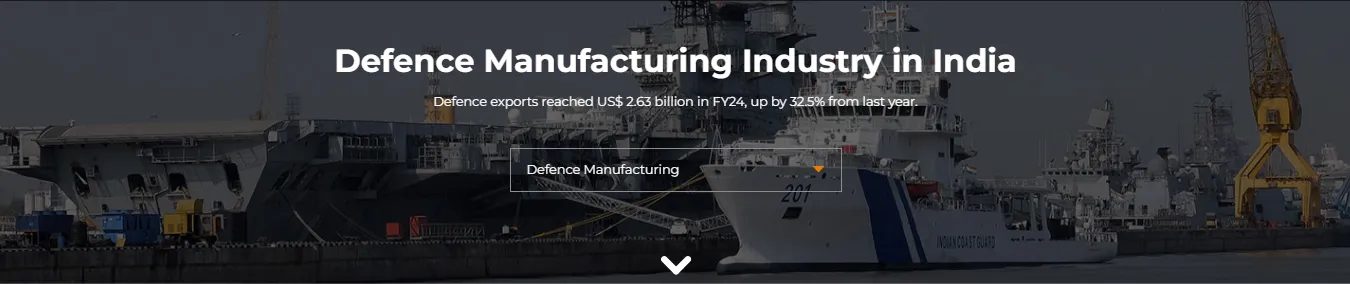

India’s defence manufacturing industry is undergoing a significant transformation, emerging as a key pillar of national security, economic growth, and technological advancement. With rising geopolitical challenges and a strong push for self-reliance, the country is rapidly transitioning from one of the world’s largest defence importers to a growing global exporter.
Introduction to Defence Manufacturing in India
India possesses one of the largest and most capable armed forces globally, driving substantial demand for advanced defence equipment. The industry spans multiple segments, including:
- Military aircraft and helicopters
- Naval vessels and submarines
- Missiles and defence systems
- Armoured vehicles and artillery
- Electronic warfare and communication systems
Key players include public sector enterprises like Bharat Electronics Limited (BEL), Hindustan Aeronautics Limited (HAL), and Bharat Earth Movers Limited (BEML), alongside an expanding private sector ecosystem.
Market Size and Industry Growth
India’s defence manufacturing sector has witnessed remarkable growth in recent years:
- Defence production reached ₹1,50,590 crore (US$ 17.57 billion) in FY25, marking strong year-on-year growth
- The government aims to achieve ₹3,00,000 crore (US$ 34.7 billion) in production by FY29
- Defence exports surged from ₹686 crore in FY14 to ₹23,622 crore in FY25, reflecting a massive expansion
This growth highlights India’s increasing competitiveness in the global defence market.
Key Growth Drivers
1. Rising National Security Needs
Ongoing border tensions and strategic challenges have increased demand for modern defence equipment, accelerating domestic production efforts.
2. Government Policy Support
Initiatives such as Make in India and Atmanirbhar Bharat aim to boost indigenous manufacturing and reduce import dependency.
3. Increased Budget Allocation
The Union Budget FY26 allocated ₹6.81 lakh crore to defence, including significant capital expenditure for modernization.
4. Export Expansion
India is exporting defence equipment to multiple countries, including advanced missile systems, showcasing its growing technological capabilities.
Government Initiatives Boosting the Sector
The Indian government has introduced several initiatives to strengthen defence manufacturing:
- Defence Industrial Corridors in Uttar Pradesh and Tamil Nadu to attract investments
- iDEX (Innovations for Defence Excellence) to promote startups and innovation
- FDI up to 74% under the automatic route to attract foreign investment
- Positive indigenisation lists to reduce imports and boost local production
- SRIJAN portal to facilitate domestic manufacturing opportunities
These initiatives are creating a robust ecosystem for both public and private sector participation.
Role of Private Sector and Startups
The private sector is playing an increasingly important role in defence manufacturing:
- Private companies contributed significantly to defence exports
- Over 700 industrial licenses have been issued to companies in the sector
- Startups and MSMEs are driving innovation, especially in emerging technologies
The iDEX program has enabled hundreds of startups to collaborate with defence agencies and develop cutting-edge solutions.
Investment Opportunities
India’s defence manufacturing sector offers vast opportunities across multiple segments:
- Aerospace: Aircraft, UAVs, avionics (₹4,32,700 crore opportunity)
- Shipbuilding: Naval vessels and submarines (₹3,28,852 crore opportunity)
- Missiles & Artillery: Advanced weapon systems (₹1,81,734 crore opportunity)
The sector is expected to see long-term investments driven by modernization and indigenisation efforts.
Recent Developments
Some notable developments in the sector include:
- Strategic defence agreements with countries like the US and Indonesia
- Growing collaboration between Indian firms and global defence companies
- Major events such as Aero India showcasing indigenous capabilities
- Rapid growth in defence-tech startup funding
These developments highlight India’s increasing global presence in defence manufacturing.
Challenges in the Defence Manufacturing Sector
Despite strong growth, the sector faces certain challenges:
- Dependence on imported high-end technologies
- Limited participation of MSMEs in core manufacturing
- Complex procurement processes
- Need for advanced R&D capabilities
Addressing these challenges will be crucial for sustained growth.
Future Outlook
The future of India’s defence manufacturing industry looks promising:
- Target of 70% self-reliance in defence production by 2027
- Expansion of exports to new global markets
- Increased adoption of advanced technologies like AI, drones, and space-based systems
- Strong government push towards innovation and private sector participation
India is well on its way to becoming a global defence manufacturing hub.
Conclusion
India’s defence manufacturing industry is entering a new era of growth, driven by strong policy support, rising demand, and increasing global competitiveness. With a focus on self-reliance, innovation, and exports, the sector is set to play a crucial role in shaping the country’s economic and strategic future.





























Sign in to leave a comment.