
The real estate sector in India is one of the most dynamic and rapidly growing industries, playing a crucial role in economic development, urbanisation, and employment generation. As the second-largest employment generator after agriculture, the sector spans residential, commercial, retail, and hospitality segments, making it a key pillar of the country’s growth story.
Overview of the Real Estate Sector in India
India’s real estate industry has witnessed significant transformation over the past decade, driven by policy reforms, rising income levels, and increasing demand for modern infrastructure. The sector is currently valued at hundreds of billions and is expected to reach US$ 970 billion by 2030, showcasing strong long-term growth potential.
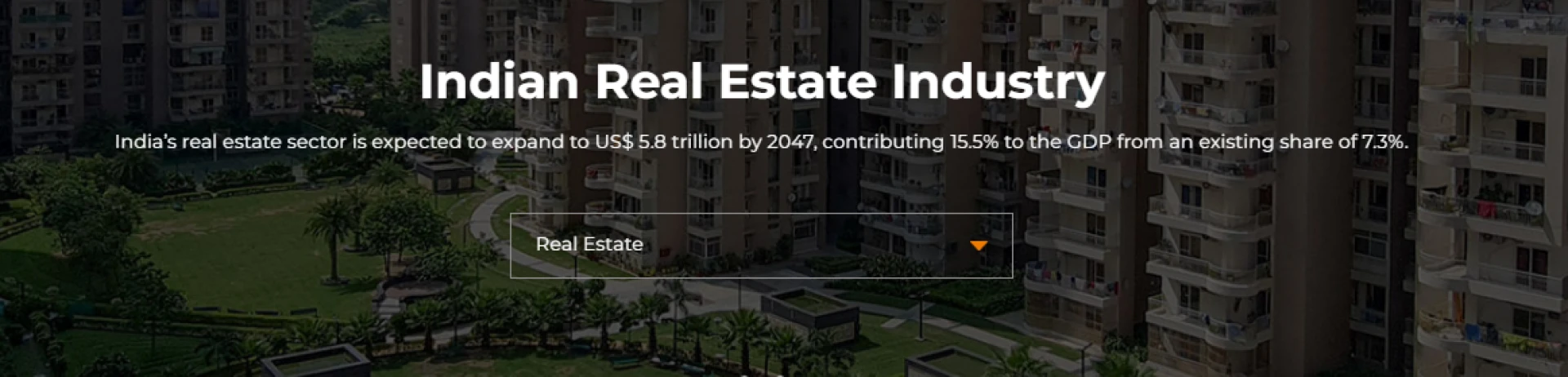
In the long run, the market is projected to expand to US$ 5.8 trillion by 2047, contributing nearly 15.5% to India’s GDP, up from around 7.3% today.
Key Segments of the Indian Real Estate Industry
1. Residential Real Estate
The residential segment remains the backbone of the industry, driven by rapid urbanisation and rising demand for housing.
- Growing preference for premium homes priced between ₹90 lakh and ₹1.5 crore
- Increased demand for larger and luxury homes post-pandemic
- Rise of nuclear families boosting housing demand
Luxury housing has seen a surge, with sales of high-value properties increasing significantly across major cities.
2. Commercial Real Estate
India’s commercial real estate segment is expanding rapidly due to demand from IT, BFSI, and Global Capability Centres (GCCs).
- Office leasing expected to cross record levels
- Growth in co-working and flexible office spaces
- Expansion in Tier I and emerging Tier II cities
The office market alone is expected to surpass 90 million sq. ft. of leasing activity, reflecting strong corporate demand.
3. Retail and Hospitality
The retail and hospitality segments are rebounding strongly with the growth of organised retail and tourism.
- Increasing mall developments in urban centres
- Growth in e-commerce influencing retail space demand
- Rising tourism boosting hotel and hospitality infrastructure
4. Industrial and Warehousing
The rise of e-commerce and logistics has boosted demand for warehousing and industrial real estate.
- Growth in logistics parks and distribution hubs
- Increased investments in supply chain infrastructure
- Expansion driven by manufacturing initiatives
Growth Drivers of the Real Estate Sector
1. Rapid Urbanisation
India’s urban population is expected to reach 900 million by 2047, driving massive demand for housing and infrastructure.
2. Rising Disposable Income
Increasing income levels and a growing middle class are boosting home ownership and real estate investments.
3. Policy Reforms and Transparency
Government initiatives have significantly improved transparency and investor confidence, including:
- Real Estate (Regulation and Development) Act (RERA)
- Goods and Services Tax (GST)
These reforms have streamlined processes and enhanced accountability in the sector.
4. Institutional Investments
The sector has seen strong domestic and foreign investments, with institutional funding reaching billions annually.
- Real Estate Investment Trusts (REITs) crossing ₹1 lakh crore market capitalisation
- Increasing private equity participation
Emerging Trends in Indian Real Estate
1. Rise of Luxury Housing
Demand for luxury homes has surged, with significant year-on-year growth in high-end property sales.
2. Smart and Sustainable Developments
Developers are focusing on green buildings, smart homes, and sustainable infrastructure to meet evolving consumer preferences.
3. Growth of Tier II and Tier III Cities
Cities beyond metros are becoming new real estate hotspots due to affordability and infrastructure development.
4. Digital Transformation
Technology adoption, including PropTech, AI, and digital platforms, is reshaping property buying and management.
Investment Opportunities
The Indian real estate sector offers diverse investment avenues:
- Residential properties for long-term appreciation
- Commercial spaces for rental income
- REITs for institutional investors
- Land investments in emerging corridors
With rising infrastructure projects and urban expansion, investors are increasingly exploring new micro-markets across the country.
Challenges in the Sector
Despite its growth, the sector faces certain challenges:
- Project delays and regulatory hurdles
- Land acquisition complexities
- Financing constraints for developers
- Market fluctuations and demand cycles
However, continued reforms and technological advancements are expected to address these issues over time.
Future Outlook
India’s real estate sector is poised for robust growth, supported by favourable demographics, policy initiatives, and increasing investments. The industry is expected to remain a major contributor to GDP while creating millions of jobs and driving infrastructure development.
With the vision of becoming a developed economy by 2047, real estate will continue to play a central role in shaping modern urban landscapes and supporting economic expansion.
Conclusion
The real estate industry in India stands at the cusp of a transformative phase. From rapid urbanisation and rising housing demand to technological innovation and policy reforms, the sector is evolving into a global powerhouse.
As investment opportunities expand and infrastructure improves, India’s real estate market is set to become one of the most attractive destinations for investors and developers worldwide.































Sign in to leave a comment.