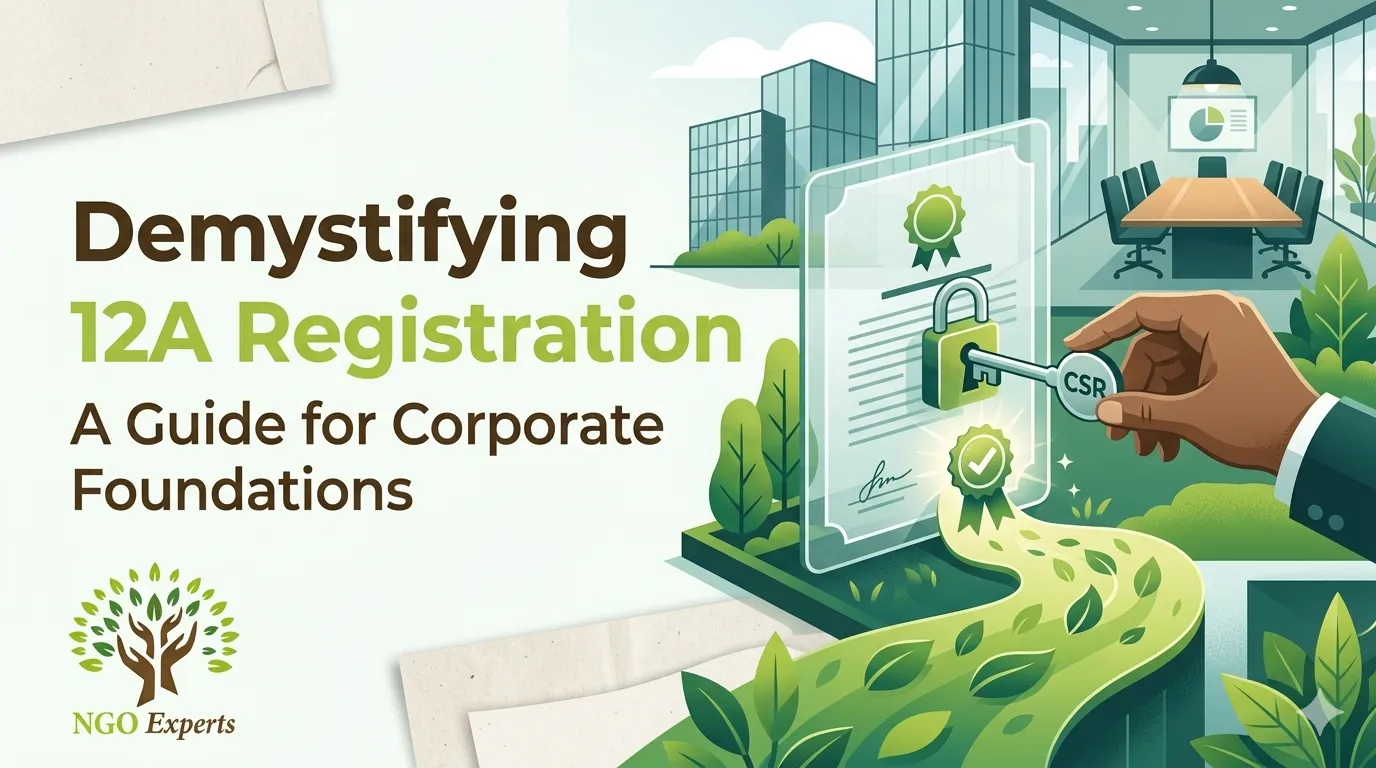

Starting and managing a charitable organization requires a clear vision, dedicated personnel, and steady funding. Whether you are running a small local initiative or a large corporate foundation, your primary goal is to direct every possible rupee toward your chosen cause.
However, without proper legal recognition under the Income Tax Act, your foundation might have to pay standard taxes on the donations and income it receives. This reduces the money available for actual welfare work. This is where 12A Registration becomes necessary. For anyone establishing or running an NGO, understanding this specific tax exemption is a fundamental requirement for long-term financial stability.
What exactly is 12A Registration?
12A registration is a tax exemption granted by the Income Tax Department of India to not-for-profit organizations. When a foundation holds this certificate, its surplus income—including donations, grants, and operational receipts—is exempt from standard income tax.
By default, the law views any organization that receives money as a taxable entity. Without 12A status, a charitable trust or Section 8 company is treated like a regular commercial business for tax purposes. If you receive one lakh rupees in donations, you would have to pay a percentage of that directly to the government. Registering under section 12A changes this legal standing. It officially recognizes your entity as a charitable organization, ensuring that the funds you collect stay dedicated to your philanthropic objectives.
Why This Exemption Matters for a NGO
Obtaining this certificate provides several distinct advantages that go far beyond just saving money on annual taxes.
Protecting Your Core Funds
The most direct benefit is the tax exemption itself. Charitable work is expensive, and relying on external donations means budgets are often tight. By removing the burden of income tax, you keep the entirety of your funds available for community programs, facility building, or public welfare operations. Over the years, these savings add up to a substantial amount of capital that can directly benefit the communities you serve.
Opening Doors to Government and Corporate Grants
Most major funding agencies, corporate CSR (Corporate Social Responsibility) departments, and international donors require strict proof of legal compliance before they release funds. A 12A certificate is usually the very first document they ask for. Furthermore, if you plan to register your organization on the NGO Darpan portal to apply for government grants and schemes, having your tax exemptions in order is a necessary part of the compliance process. Without it, many institutional doors remain closed.
Setting the Stage for 80G Certification
It is common to hear 12A and 80G mentioned together. While 12A exempts the organization from paying tax on its income, 80G allows the donors to claim tax deductions on the money they give to you. You cannot apply for an 80G certificate unless you already have your 12A registration. Securing 12A is the foundational step in building a donor-friendly structure that encourages continuous giving.
Who Can Apply for This Exemption?
The Income Tax Department has specific criteria for who can receive this status. It is available to:
- Charitable Trusts registered under the Indian Trusts Act.
- Societies registered under the Societies Registration Act.
- Section 8 Companies registered under the Companies Act.
The primary condition is that the organization must exist solely for charitable, educational, religious, or public welfare purposes. Private family trusts or organizations that work strictly for the benefit of a specific religious community or caste do not qualify for this exemption.
Recent Rule Changes and Renewals
In the past, once an organization received this tax exemption, it was generally valid for a lifetime unless specifically revoked. However, recent amendments to the tax laws have changed this structure.
Today, newly registered entities are first granted a provisional registration. This provisional status is valid for three years. Once the organization becomes active and begins its charitable activities, it must apply for permanent registration. Even this "permanent" status now comes with a time limit—it must be renewed every five years. This change requires corporate foundations to maintain excellent financial records and conduct annual audits, as the tax department will review their operational history during every renewal cycle.
The Standard Application Process
The application process is entirely online, which makes it accessible but requires strict attention to detail regarding documentation.
Filing Form 10A
You must submit Form 10A electronically through the official Income Tax e-filing portal. This form requires detailed information about your organization's founders, its physical address, and its stated objectives.
Required Documentation
The application must include several supporting documents. You will need to attach the original registration certificate of your trust, society, or Section 8 company. Additionally, you must provide the Trust Deed or Memorandum of Association (MOA) that outlines your rules and regulations. If your organization has been active for a few years before applying, you will also need to submit audited financial statements for the past three years.
Once submitted, the Commissioner of Income Tax reviews the application. They may ask for additional documents or clarifications to verify the genuine nature of your charitable activities before granting the final approval.
Conclusion
Securing your 12A registration is not just a routine compliance task; it is a critical protective measure for your organization's finances. It ensures that the hard work you put into raising funds translates directly into social value, rather than going toward tax liabilities.
Navigating the legal paperwork for non-profits takes careful planning and attention to detail. At Ngoexperts, we guide foundations and trusts through every step of their compliance journey. If you need assistance filing for your tax exemptions or managing your ongoing registrations, reach out to our team today to keep your foundation on the right track.



























Sign in to leave a comment.