
Missing teeth do more than affect how you look—they can reduce your confidence, make eating difficult, impact speech, and lead to long-term oral health problems. Many people experience discomfort while chewing, hesitation when smiling, and even shifting of nearby teeth. Over time, untreated gaps can cause jawbone deterioration and facial changes. Replacing missing teeth at the right time is essential not only for appearance but also for maintaining overall oral health and function.
This is where dental implants have revolutionized tooth replacement. They provide a permanent, natural-looking, and highly functional solution compared to temporary alternatives. This guide covers everything you need to know, including what dental implants are, types available, eligibility, procedure steps, recovery, cost, benefits, and potential risks—helping you make a confident and informed decision.
What Are Dental Implants?
Dental implants are modern restorations designed to replace missing teeth by mimicking their natural structure and function. They consist of three key components:
- Implant Post: A titanium screw inserted into the jawbone, acting as an artificial tooth root
- Abutment: A connector that secures the crown to the implant
- Crown: The visible, tooth-like portion that restores appearance and function
Once placed, the implant integrates with the jawbone through a biological process, creating a strong and stable foundation. Unlike removable dentures or traditional bridges, implants function like natural teeth, allowing you to eat, speak, and smile with ease.
Types of Dental Implants
Dental implants are customized based on individual needs and oral conditions:
Based on Placement:
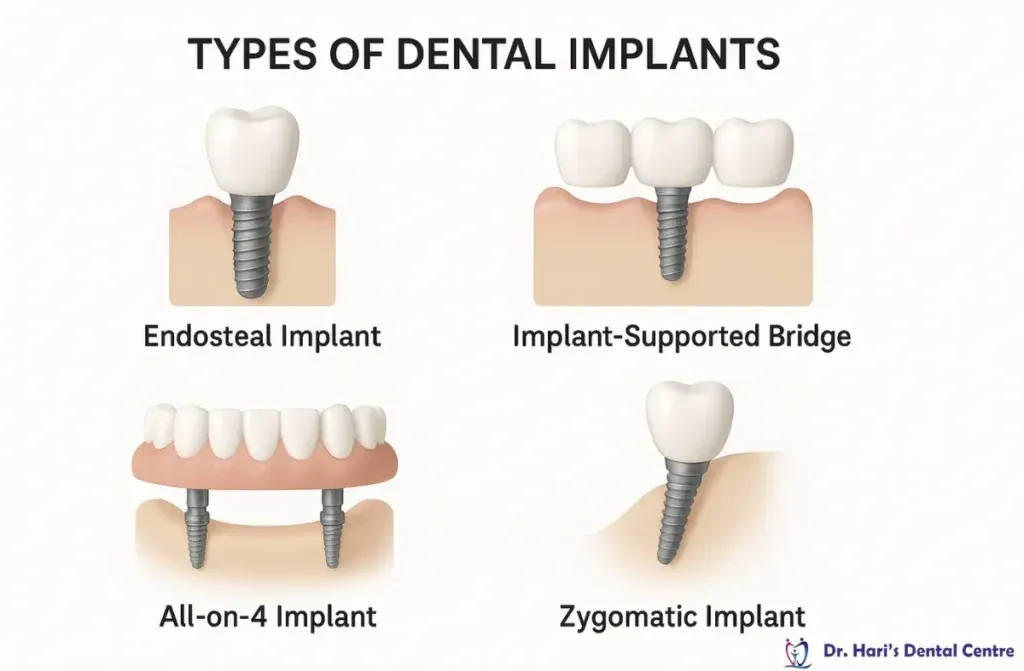
- Endosteal Implants: The most common type, placed directly into the jawbone
- Subperiosteal Implants: Positioned under the gum but above the bone, suitable for patients with limited bone height
- Zygomatic Implants: Used in complex cases, anchored in the cheekbone instead of the jawbone
- Mini Implants: Smaller implants used for stabilizing dentures or in areas with minimal bone
Based on Treatment Need:
- Single Tooth Implants: Replace one missing tooth
- Multiple Teeth Implants: Support bridges or multiple crowns
- Full Mouth Implants (All-on-4 / All-on-6): Restore an entire arch of teeth
Each patient receives a tailored treatment plan to ensure the most suitable option.
Who Can Get Dental Implants?
You may be a good candidate if you have:
- Healthy gums
- Adequate jawbone density
- Good oral hygiene practices
Additional Considerations:
- Smoking may slow healing and affect success rates
- Chronic conditions should be well-controlled
- Adults of any age can undergo implant treatment if bone health is sufficient
Basic Eligibility Checklist:
✔ One or more missing teeth
✔ No major uncontrolled health issues
✔ Commitment to oral care
✔ Willingness to follow post-treatment guidelines
A detailed evaluation is always performed before proceeding.
When Are Dental Implants Recommended?
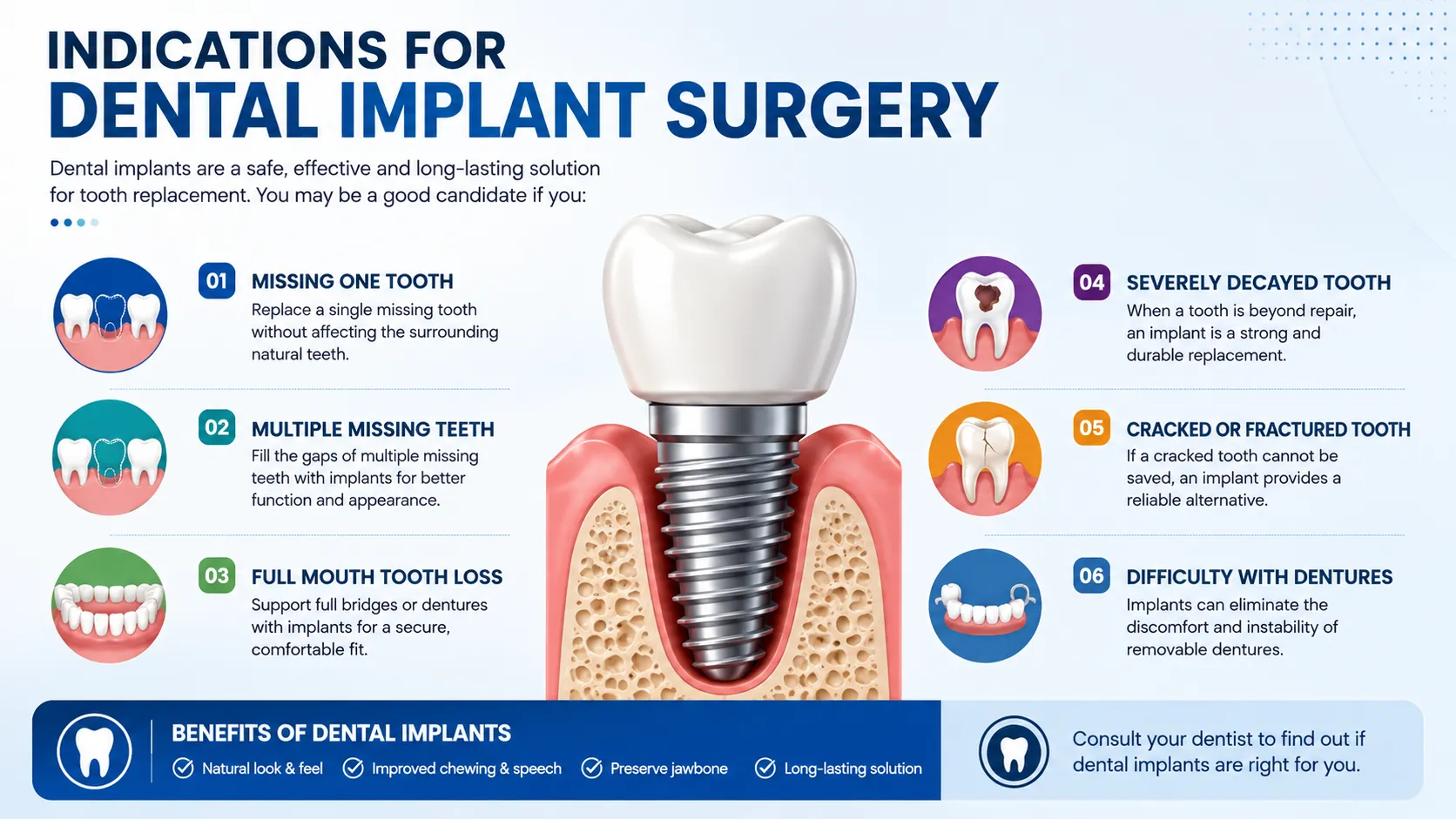
Dental implants are ideal in several situations:
- Single Tooth Replacement: Restores one missing tooth without affecting adjacent teeth
- Multiple Tooth Loss: Supports bridges for improved function and aesthetics
- Full Mouth Restoration: Provides a fixed solution for complete tooth loss
- Loose Dentures: Stabilizes dentures for better comfort and confidence
- Bone Preservation: Prevents bone shrinkage by stimulating the jaw
- Replacing Failed Treatments: Offers a durable alternative to damaged restorations
When Dental Implants May Not Be Suitable
Although highly effective, implants may not be recommended in certain cases:
- Uncontrolled medical conditions such as diabetes
- Heavy smoking habits
- Severe bone loss without prior grafting
- Previous radiation therapy affecting the jaw
- Poor oral hygiene
- Certain medications that impact healing
- Lack of patient readiness or unrealistic expectations
A thorough consultation ensures safety and suitability.
Step-by-Step Dental Implant Procedure
1. Consultation and Diagnosis
Includes clinical examination, X-rays, and advanced imaging.
2. Treatment Planning
A personalized plan is created based on bone condition and treatment goals.
3. Implant Placement
A minor surgical procedure where the implant is inserted into the jawbone.
4. Healing Phase
The implant bonds with the bone over 3–6 months.
5. Final Restoration
The abutment and crown are placed to complete the treatment.
Timeline:
Typically completed within 3 to 6 months, though faster options may be available in select cases.
Recovery and Aftercare
What to Expect:
- Mild swelling or discomfort for a few days
- Gradual healing over several weeks
Diet Tips:
- Start with soft foods
- Avoid hard or sticky items
Oral Care:
- Maintain gentle brushing
- Use prescribed mouth rinses
Follow-Up:
Regular dental visits are important to monitor healing and long-term success.
Benefits of Dental Implants
- Prevents Bone Loss: Maintains jawbone strength and structure
- Natural Appearance: Blends seamlessly with existing teeth
- Long-Lasting Solution: Can last decades with proper care
- Protects Nearby Teeth: Does not affect adjacent healthy teeth
- Improves Function: Restores full chewing ability
- Supports Facial Structure: Prevents a sunken appearance
- High Success Rate: Proven reliability with proper maintenance
Cost of Dental Implants
The overall cost depends on several factors:
- Number of implants required
- Type of implant and materials used
- Need for additional procedures like bone grafting
- Clinic expertise and technology
While affordability is important, quality and long-term success should always be prioritized.
Are Dental Implants Worth It?
Dental implants are a valuable long-term investment because:
- They offer exceptional durability
- They eliminate repeated replacement costs
- They improve daily comfort and confidence
- They function like natural teeth
Though the initial cost may be higher, the long-term benefits outweigh temporary alternatives.
Risks and Complications
Dental implant procedures are generally safe, but possible risks include:
- Infection at the implant site
- Nerve-related discomfort (rare)
- Sinus-related issues (upper jaw cases)
- Implant failure (uncommon with proper care)
- Gum inflammation around the implant
- Minor prosthetic adjustments over time
Proper planning and aftercare significantly reduce these risks.
Success Rate of Dental Implants
- Overall Success Rate: 95–98%
- Long-Term Performance: Implants can last 10–20 years or more
- Immediate Placement Success: High success in selected cases
Their reliability makes them one of the most trusted treatments in modern dentistry.
Conclusion
Dental implants have transformed the way missing teeth are treated by offering a permanent, natural, and highly effective solution. They not only restore function but also improve confidence and overall quality of life.
If you are dealing with missing teeth, exploring dental implants can be the first step toward regaining a healthy and confident smile. With the right care, expert guidance, and advanced treatment, long-lasting results are well within reach.
Read also https://drharisdentalcentre.com/services/dentures/.


















Sign in to leave a comment.