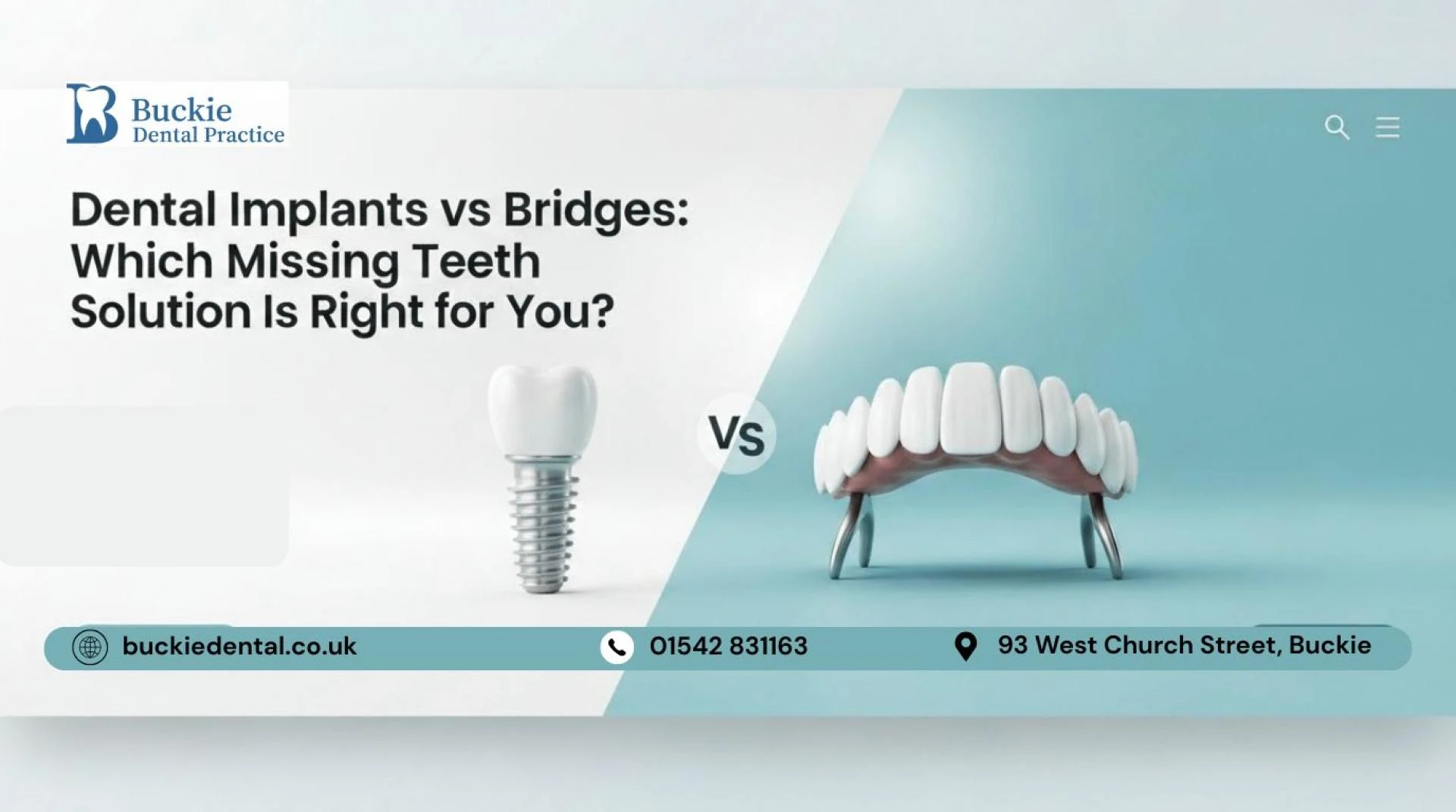

Losing a tooth is frustrating. It modifies the way you chew your favourite food, the way you talk, and, in fact, can entirely destabilise your confidence when you smile. No one would wish to have a gap in their teeth long enough, and that is the reason why determining the appropriate missing teeth solution is the major priority of most individuals.
You generally have two heavy hitters to choose from- dental implants and dental bridges. Both get the job done, but they tackle the problem in entirely different ways. One acts like a brand-new tooth root, while the other leans on your existing teeth for support. In this blog, we will look at what actually works best for your mouth.
Replace Missing Teeth Permanently
Let's talk about implants first. If your ultimate goal is to replace missing teeth permanently, an implant is usually the closest thing to growing a real tooth back.
A dentist places a tiny titanium post straight into your jawbone. After your body heals around it, a custom-made crown goes right on top to finish the look.
The greatest advantage is the safeguarding of your bones. When a tooth falls away, your jawbone gradually begins to diminish. However, implants will deceive your body into believing the presence of the tooth. This maintains the strength of your bones and helps you not to get a sunken-in face with advancing age.
The Realistic Timeline for Implants
Implants are fantastic, but they require patience. Since the titanium post needs time to fuse naturally with your bone, the whole process usually takes a few months from start to finish. They also come with a higher price tag upfront. However, because they can last for decades, many people find they actually save money in the long run.
The Reality of Dental Bridges
A bridge is exactly what it sounds like. It literally bridges the gap in your smile.
Instead of going into the jawbone, this treatment uses the teeth on either side of your empty space as anchors. The dentist places crowns on those anchor teeth, and an artificial tooth sits securely in the middle.
Bridges are incredibly popular for a few very good reasons. First, they are fast. You can usually walk out with a complete smile in just a couple of weeks, skipping the surgery entirely. They also cost a bit less right out of the gate, making them an attractive option if you are working with a tighter immediate budget.
The Catch with Going the Bridge Route
However, there is a trade-off. Because a bridge sits above the gums, it will not stop your jawbone from thinning out over time.
Since it completely relies on your neighbour teeth to hold it up, those anchor teeth have to be filed down so the crowns can fit over them. If those neighbour teeth already have large fillings or damage, capping them is actually a great idea. But if they are perfectly healthy, shaving them down can feel like an unnecessary compromise.
Finding Your Ideal Missing Teeth Solution
Every mouth is different. What works wonders for your friend might be a terrible idea for you. Sometimes, picking the right missing teeth solution comes down to plain old logic and looking at what your mouth currently needs.
If you are stuck on the fence, grab a cup of coffee and read through this quick checklist to see where you stand.
- Look at your timeline- Want your smile back this month? A bridge is your fastest route by far. Willing to wait a few months for your body to heal for a longer-lasting result? Go with an implant.
- Check the neighbours- If the teeth next to your gap are already damaged and need crowns anyway, a bridge kills two birds with one stone. If they are perfectly healthy, an implant protects them from being ground down.
- Think about your bone- Implants are the only option that preserves your jawbone density. If you want to avoid bone loss, implants take the win.
- Compare the costs- Bridges are usually lighter on the wallet initially. However, keep in mind that a typical bridge might need replacing after 10 to 15 years, while implants can easily last a lifetime with good care.
- Evaluate your health- Implants require minor surgery. If you have a medical condition that makes healing difficult, or if you simply want to avoid surgery entirely, a bridge is a highly effective, non-invasive alternative.
Daily Life & Maintenance
Any missing teeth solution requires a little bit of upkeep to keep your mouth in top shape. It is not just a set-it-and-forget-it situation.
With an implant, the upkeep is incredibly easy. You brush it and floss around it exactly like you do with the rest of your natural teeth. There is no special routine to learn.
Bridges take just a bit more effort. Because the false tooth sits flush against your gum line and is connected to the anchor teeth, you cannot floss straight down between them. You have to use special floss threaders or a water flosser to clean underneath the gap. If you skip this step, bacteria will easily gather under the bridge, which can eventually cause decay on your anchor teeth.
Why the Right Foundation Matters?
You have to start on a healthy note before you get into any dental work. It is like a house construction. On rotting walls, you would never put on a brand-new roof.
Having said that, you are already on the right path if you are searching for a hygiene dental near me. Before you ever consider getting a bridge or an implant, healthy gums are a condition to be considered absolute. When your gums are swollen, bleeding or having a hard time with disease, then neither medical procedure is going to last a long time.
This is exactly why talking to an experienced dentist in Buckie makes all the difference. A professional will not just look at the gap in your smile. They evaluate your whole mouth, checking your bone density, your bite alignment, and your gum health to see what your jaw can actually support safely.
Final Words
Picking a missing teeth solution does not have to be an overwhelming process. Bridges offer a quick, non-surgical fix that is usually much easier on the wallet upfront. Implants demand a bit more time and investment, but they reward you with decades of bone protection and standalone strength.
If you are looking for a solution for your missing teeth, contact Buckie Dental Practice and book an appointment today!
FAQs
Do dental implants feel like real teeth?
Yes, they do. Because they are anchored securely into your jawbone, they do not slip or shift. Most people completely forget they even have an implant after a few weeks.
Is getting a dental bridge painful?
Not at all. The area is completely numbed before the dentist prepares your anchor teeth. You might feel a little sensitivity for a few days afterwards, but it is a very routine and comfortable procedure.
How long will a dental bridge actually last?
With great brushing and daily flossing underneath the false tooth, a high-quality dental bridge usually lasts anywhere from 10 to 15 years before it needs to be updated.
Can my mouth reject a dental implant?
It is incredibly rare. Implants are made of titanium, which is highly compatible with the human body. As long as you have enough healthy bone and follow the aftercare steps, the success rate is incredibly high.
What happens if I just leave the gap empty?
Ignoring a missing tooth usually leads to bigger problems. Your other teeth will naturally start shifting into the empty space, which can mess up your bite and make it harder to chew comfortably.


























Sign in to leave a comment.