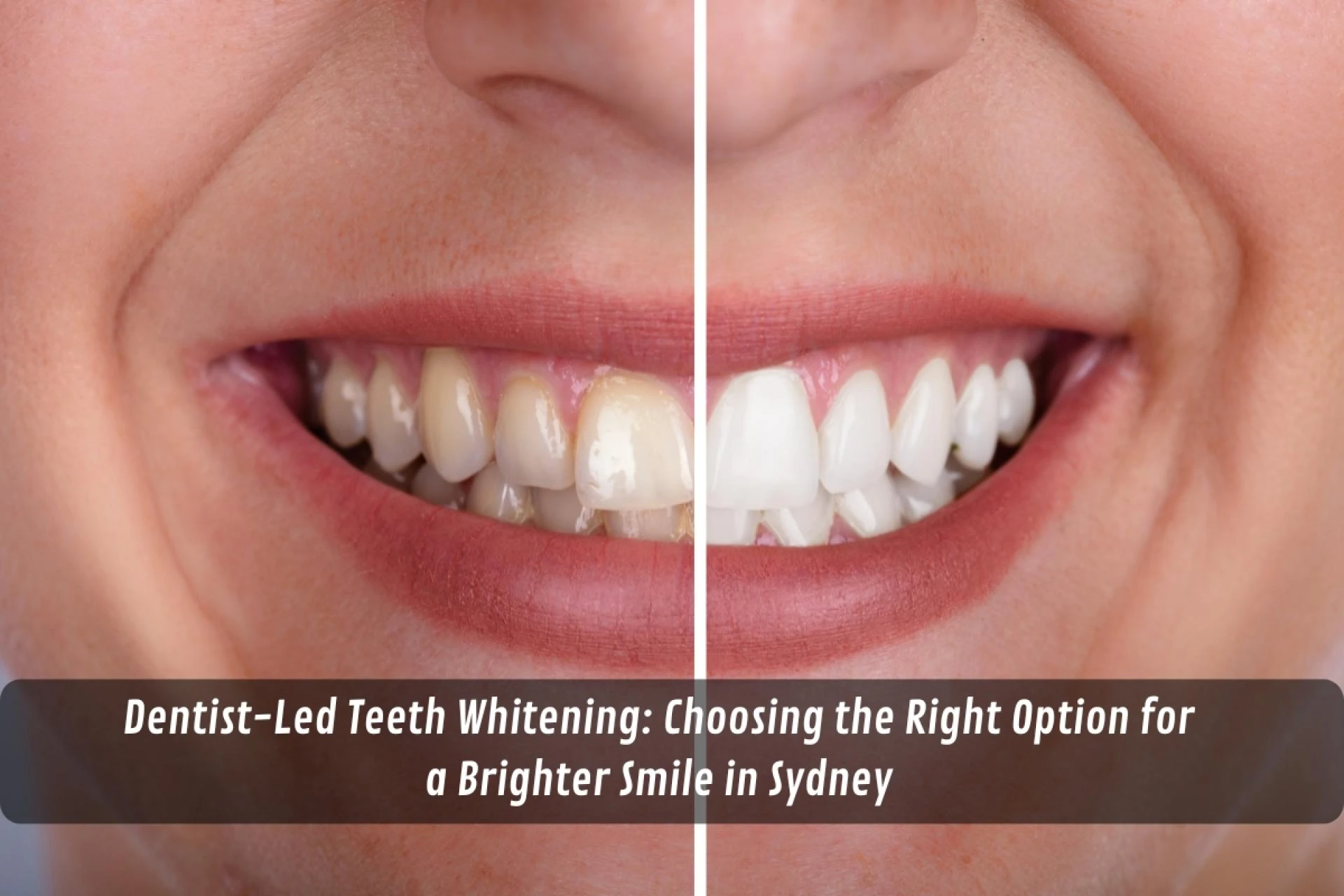

A whiter smile can be a confidence boost, but “whitening” isn’t one single thing—there are different methods, different limits, and different risks depending on teeth, gums, and existing dental work.
In Sydney, it’s easy to get pulled between in-chair promises, take-home kits, and chemist strips, then end up with patchy results or sensitivity you didn’t bargain for.
This guide breaks down dentist-led smile whitening options in a way that helps make a sensible decision, even if the plan is to start small.
What whitening can change (and what it can’t)
Teeth whitening lightens natural tooth structure by reducing stain and discolouration, but it won’t change the colour of crowns, veneers, fillings, or bonding—so it’s important to explore dentist led smile whitening options across Sydney to ensure the most suitable treatment for your individual dental work and desired results.
That mismatch is the number-one reason people feel “something looks off” after whitening, even when the natural teeth have lightened.
It also won’t fix the underlying cause of certain discolouration (for example, decay, enamel loss, or internal staining that needs a different approach).
A practical mindset is to treat whitening like “shade improvement within limits,” not a makeover that overrides biology.
The main whitening options and how they differ
In-chair whitening (dentist-led).
This is usually the fastest path to noticeable change, because stronger whitening gels can be used with soft-tissue protection and professional control.
It’s often chosen when there’s a deadline (events, photos, or a confidence reset), but it can also be the method most likely to trigger temporary sensitivity in people who are prone to it.
Custom take-home trays (dentist-led).
Trays made to fit properly can make whitening more even and predictable, because the gel sits where it should and stays off the gums as much as possible.
The trade-off is time: results build over days to a couple of weeks, and consistency matters.
Over-the-counter strips, pens, and generic trays (self-directed).
These can be helpful for very mild, surface-level staining, but they’re a blunt instrument—one-size-fits-all, less controlled, and easier to misuse.
The common downside is unevenness (especially if teeth aren’t aligned) and gum irritation from product contact.
Decision factors that matter more than the marketing
1) What’s causing the colour change?
Coffee, tea, red wine, smoking, and some foods tend to create external staining that often responds well to whitening once teeth are clean.
If discolouration is internal (older trauma, some medication-related staining, heavy fluorosis), whitening may still help—but expectations need to be set realistically.
2) Existing dental work in the smile zone.
If there are visible crowns or veneers, whitening can lighten the natural teeth around them, making the restorations look darker by comparison.
That doesn’t mean whitening is off the table; it just means the plan may include shade-matching options after whitening to keep things looking consistent.
3) Sensitivity risk and gum health.
Sensitivity isn’t a sign whitening is “working,” and pushing through it usually backfires.
A dentist-led approach can adjust gel strength, exposure time, and spacing between sessions—and flag issues like gum recession or cracks that make sensitivity more likely.
If a quick suitability check would help narrow the choice, the Blue Mountains Dental & Implant Centre whitening options guide is a practical starting point before booking anything.
4) Timeline and lifestyle fit.
If the schedule is tight, in-chair whitening may suit—then maintenance habits do the heavy lifting afterward.
If there’s time and a preference for a more gradual change, take-home trays can be easier to integrate into daily life.
5) How white is “white enough”?
The best-looking results usually land in “brighter but believable,” because ultra-white shades can highlight texture differences and draw attention to restorations.
A realistic target shade is often the one that makes the face look fresher without making the teeth look like a separate object.
Common mistakes people make (and how to avoid them)
Mistake 1: Whitening without a clean and a check.
Whitening over plaque, tartar, or active gum inflammation can lead to uneven results and extra irritation, so a clean first is rarely wasted effort.
Mistake 2: Assuming more product equals faster results.
Longer wear time or higher frequency doesn’t always mean “more white”—it can mean more dehydration (temporary brightness) and more sensitivity later.
Mistake 3: Trying to whiten around crowns and veneers without a plan.
If a front crown is involved, the “final smile” needs to be thought through so the colour transition looks natural.
Mistake 4: Using generic trays that flood the gums.
Gum burns and irritation happen when gel sits on soft tissue, and once the gums are irritated, everything feels worse.
Mistake 5: Forgetting maintenance is the real secret.
Without a plan for the weeks after whitening, stains re-accumulate and people end up repeating the strongest step too often.
A simple first-actions plan for the next 7–14 days
Days 1–3: Reset the basics.
Brush twice daily with a fluoride toothpaste, floss or use interdental brushes, and ease off stain-heavy drinks where possible.
Days 4–7: Get clarity on what will and won’t change.
Take a quick inventory: any crowns/veneers on front teeth, history of sensitivity, gum recession, or cracked edges.
Days 8–10: Choose the method that matches the constraint.
If the main constraint is time, lean toward a dentist-led in-chair option; if the main constraint is sensitivity risk, lean toward a more gradual tray approach with professional guidance.
Days 11–14: Plan the “after” before you start.
Decide on two maintenance habits (for example: rinse with water after coffee; use a straw for iced drinks; keep whitening touch-ups conservative rather than frequent).
Operator experience moment
When people come in feeling unsure, it’s usually because they’ve heard two opposite stories: “whitening is totally safe” and “whitening wrecked my teeth.”
What tends to calm things down is separating temporary, manageable sensitivity from red-flag issues like decay, exposed roots, or mismatched dental work that needs planning.
Once the method fits the mouth—not the marketing—results look more even and the process feels far less dramatic.
Local SMB mini-walkthrough: getting whitening-ready in Sydney
Start by booking a clean and check that fits a typical workday window (early morning, lunch break, or late afternoon).
If commuting is part of the week, plan whitening around lower-stress days so any sensitivity feels easier to manage.
Keep a “stain diary” for three days—coffee, tea, red wine, cola, and smoking are the usual suspects.
If there’s a wedding, interview, or photo shoot, aim to finish active whitening at least a week beforehand so shade stabilises.
If you’ve got a visible crown or veneer, ask how the final shade will be balanced so the smile stays consistent.
Practical Opinions:
If time is tight, choose the option that’s controlled and predictable rather than the strongest one.
If sensitivity is a known issue, go slower and plan breaks—results often look better anyway.
If front restorations are involved, make “overall harmony” the goal, not just “whiter teeth”.
Key Takeaways
- Whitening changes natural tooth colour, but not crowns, veneers, or fillings—plan for shade matching if needed.
- In-chair whitening is fastest; custom trays are steadier; over-the-counter options are best kept for mild staining.
- Sensitivity risk, gum health, and existing dental work matter more than brand promises.
- A clean, realistic shade goal, and a maintenance plan prevent most disappointment.
Common questions we hear from Australian businesses
Q1) Is teeth whitening a good fit for staff-facing roles or customer-facing teams?
Usually it’s most useful for roles where confidence and presentation matter, but it shouldn’t be treated like a requirement.
A practical next step is to pick a low-pressure timeline (2–3 weeks) and choose a method that won’t disrupt work with sensitivity.
In Sydney workplaces, it’s common to plan it around big moments like events, presentations, or new roles rather than doing it “just because”.
Q2) What if someone has a crown or veneer on a front tooth—should they skip whitening?
It depends on where the restoration sits and how visible it is when smiling.
A practical next step is to ask for a shade plan so whitening improves the natural teeth first, then the restoration can be reviewed for colour match if needed.
In Australia, many people have older front restorations that were matched years ago, so a little planning prevents the “one tooth looks darker” outcome.
Q3) How can a small business help a team member avoid sensitivity if they’re whitening before an event?
In most cases the biggest difference comes from choosing a gradual approach and avoiding last-minute overuse.
A practical next step is to finish active whitening at least a week before the event and keep a simple maintenance routine instead of “panic whitening.”
In Sydney, where coffee culture is part of daily life, rinsing with water after coffee and spacing stain-heavy drinks can help results last longer.
Q4) How long do whitening results last in real life?
Usually results last longer when maintenance habits change, and they fade faster when stain exposure stays the same.
A practical next step is to choose two easy habits (like water after staining drinks and regular cleans) and treat touch-ups as occasional, not constant.
In Australia, diet patterns and habits like tea, red wine, and social coffee runs are common drivers of re-staining, so lifestyle matters as much as the whitening method.
Sign in to leave a comment.