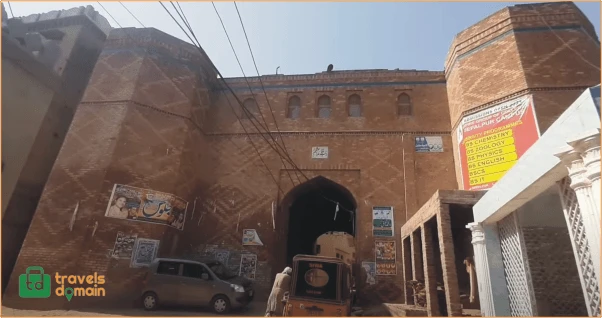

Depalpur Fort is located in the historical and beautiful city of Dipalpur in the Okara district.
According to Rigvedic of India, the first name of this city was Saripur or Srinagar.
The name was later changed to Deepapur by Deepa Chand, brother of Raja Salwahan of Sialkot, after his son Raja Deepa. The name changed to Depalpur or Dipalpur over time.
Lahore Fort: History and Architecture of an Attraction in LahoreRohtas Fort JehlumAccording to the Rig Vedic of India, Dipalpur city is the oldest living city on the Indian subcontinent, which was destroyed many times but was rebuilt on its ruins each time.
Deepalpur is still present on the bosom of the earth with its full climate.
History of Depalpur Fort:
The Depalpur of the past was confined within the fort of Dipalpur, which had an area of about a hundred acres.
Two thousand years ago, when the Aryans entered the subcontinent, their abode was Sapat Sindhu, the land of seven rivers, in which Ravi, Sutlej, Chenab, Jhelum, Indus, Beas, and Kabul flowed.
Among the famous civilizations of this period were Ajodhan (Pakpatan), Kuballa, and Dipalpur.
In the 13th and 14th centuries AD, Dipalpur played an important role in the defense of the Delhi Empire against the Mongols.
At that time Dipalpur was the only fort on the route from Khyber to Delhi.
According to famous historian Ibnash Chandradas's book "History of Dipalpur by Mian Allah Dutta Naseem", when was Dipalpur fort first built? There is no clear mention of it in history.
However, in the 14th century AD, Feroz Shah Tughluq repaired and rebuilt this strong fort for the last time.
Although the 25 feet wide walls of Dipalpur Fort made of rare red bricks have collapsed, many stories are still alive today across these crumbling walls. Guard posts were built at the gates of the fort, which are still there today.
In the 12th century AD, when Ghiyasuddin Tughlaq was the ruler of Dipalpur, the Tartar flood also faced failure at the Dipalpur fort.
The fort suffered a lot of damage in this battle, which was repaired again by Ghiyasuddin Tughluq in 1244.
When Zahiruddin Babur invaded the subcontinent in 1526, he also faced the greatest resistance in the fort of Dipalpur, which he acknowledged in his book Tuzk-i Babri.
https://travelsdomain.com/depalpur-fort-okara-a-jewel-of-history/
0
0










Sign in to leave a comment.