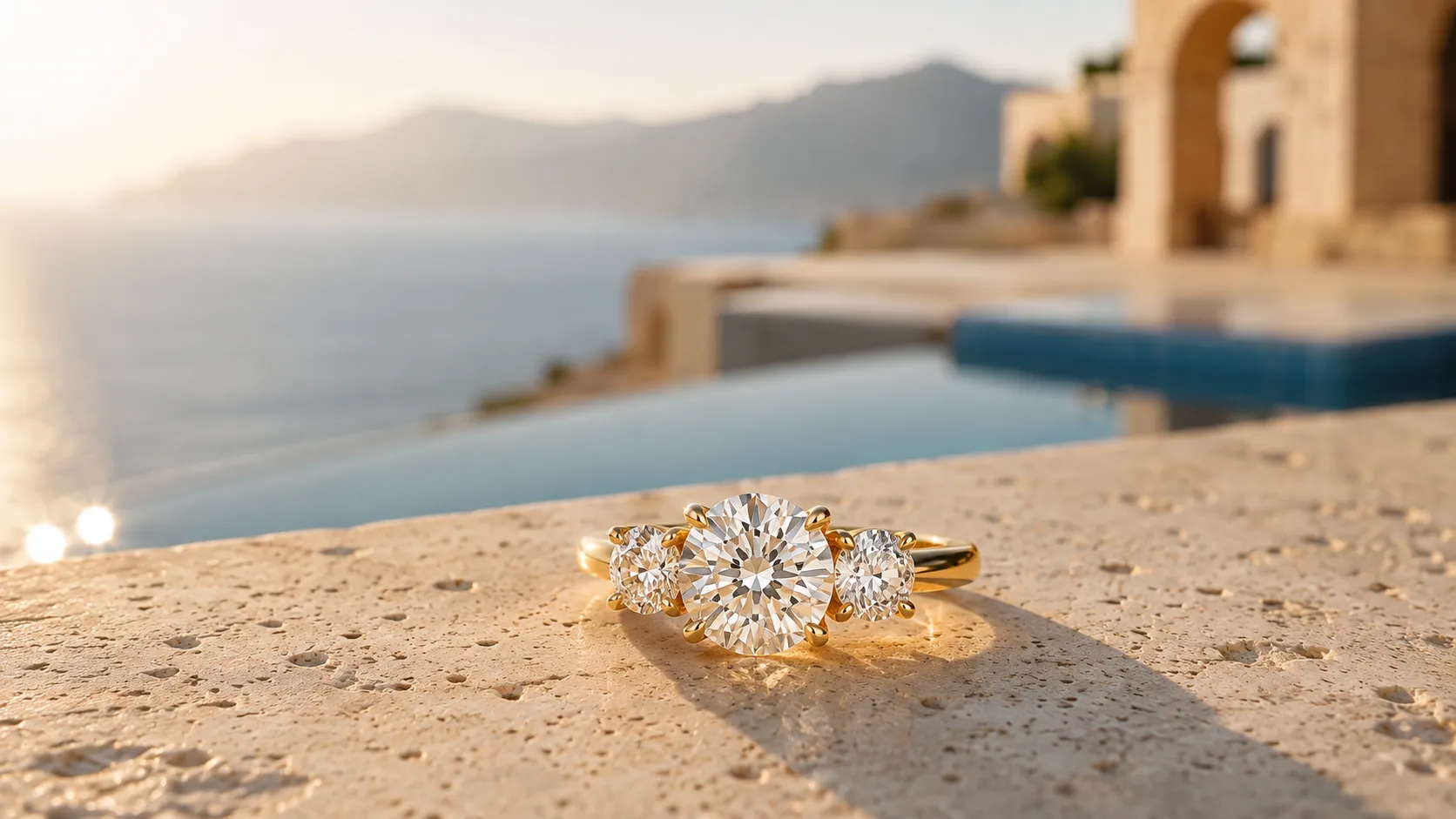

Why Diamond Certification Matters
Buying a diamond ring can feel exciting, but it can also bring a lot of questions. How do you know the diamonds are the quality described by the seller? Is the color grade accurate? What about clarity, cut, and carat weight?
This is where diamond certification becomes useful.
A diamond certificate, also called a grading report, gives you a detailed record of a diamond's main characteristics. When you are choosing a three stone wedding ring, this information can be especially helpful because you are looking at three center stones instead of just one.
A good report gives you something clear to compare while making your decision. It can also help you understand what you are paying for instead of choosing only by appearance.
What Is a Diamond Certificate?
A diamond certificate is a report prepared by an independent gemological laboratory. It records important details about the diamond after it has been examined and graded.
The report may include:
- Carat weight
- Color grade
- Clarity grade
- Cut grade
- Measurements
- Shape and cutting style
- Polish
- Symmetry
- Fluorescence
- Identification details
Some reports may also include a diagram showing clarity characteristics or a proportions diagram.
It is important to understand that a certificate is not the same as a guarantee that one diamond is better than another. Instead, it provides a professional assessment that helps you compare diamonds using the same basic standards.
What Should You Check on the Report?
When reading a diamond grading report, you do not need to understand every technical term right away. Start with the details that have the biggest effect on appearance and value.
Carat Weight
Carat refers to the weight of the diamond, not simply its visible size.
With three stones, the total carat weight may be shown separately from the individual weights. For example, a ring may have one larger center diamond with two smaller side stones.
Looking at the individual weights helps you understand how the total carat weight is divided across the ring.
Color Grade
Diamond color grades indicate how much body color a diamond shows. For many traditional white diamonds, less visible color can be preferred.
In a three-stone design, matching the three diamonds can also matter. If the center diamond looks noticeably different from the side stones, the overall appearance may not feel balanced.
Clarity Grade
Clarity describes the presence of internal characteristics and surface marks in a diamond.
A higher clarity grade does not automatically mean a diamond will look better to the eye. Some diamonds with lower clarity grades can still look clean when viewed without magnification.
The report helps you know exactly what grade you are considering rather than relying only on a seller's description.
Cut, Polish, and Symmetry
These details are worth paying close attention to because they can affect how a diamond handles light.
Cut refers to how well the diamond has been shaped and proportioned. Polish describes the quality of the diamond's surface finish, while symmetry looks at how accurately its parts line up.
For a three-stone design, these details can be particularly important because the stones sit close together. Differences in cut or proportions may become easier to notice when the diamonds are viewed side by side.
Does Every Three Stone Ring Have Three Certificates?
Not always.
The answer depends on the diamonds used in the ring and the seller's documentation. A ring may have separate grading reports for individual diamonds, while smaller side stones may not have their own reports.
This does not automatically mean there is a problem.
Smaller diamonds are often treated differently from larger center stones. What matters is knowing which diamonds have individual reports and what information is available for the others.
If you are unsure, ask the seller before purchasing. A trustworthy jeweler should be able to explain the documentation clearly.
How Certification Helps You Compare Rings
Imagine that you are looking at two rings that appear similar in photographs. Both have three diamonds, both use the same metal, and both have a similar total carat weight.
Without grading information, it can be difficult to understand why their prices are different.
A certification report gives you more information to work with. You can compare color, clarity, cut, weight, measurements, and other characteristics instead of judging only by the picture.
This can make the buying process less confusing and help you decide which ring fits your budget and expectations.
Check the Report Number
If a diamond comes with a grading report, check whether the report number matches the information provided with the diamond.
Some diamonds may have a report number inscribed on their girdle. When available, this can provide another way to connect the physical diamond with its documentation.
You should also make sure the report comes from a recognized gemological laboratory and that the information is current and consistent with the diamond being sold.
Taking a few minutes to check these details can give you much more confidence before making a purchase.
Certification and Lab Grown Diamonds
Certification is also important when buying lab grown diamonds.
Lab grown diamonds have the same basic chemical and physical properties as natural diamonds, but their origin is different. A grading report can identify the diamond as laboratory grown and provide details about its characteristics.
If you are considering a three diamond engagement ring with lab grown diamonds, certification can help you understand the quality of each stone and compare different options.
At Antiquecut, paying attention to diamond details can make the selection process easier because you can focus on what actually matters for your ring rather than guessing from photographs alone.
What to Ask Before Buying
Before purchasing your ring, consider asking these simple questions:
- Which diamonds have individual grading reports?
- Which laboratory issued the report?
- What are the color and clarity grades?
- What is the carat weight of each stone?
- Is the center diamond graded separately?
- Are the side stones matched in color and appearance?
- Can I verify the report number?
- Does the diamond report identify whether the stone is natural or lab grown?
- Are the details on the report consistent with the ring being offered?
Getting clear answers can prevent surprises later.
Make the Certificate Part of Your Decision
A diamond certificate should not be the only thing you consider when choosing a ring. The design, diamond shape, metal, setting, comfort, budget, and the way the three stones look together all matter.
Still, certification gives you useful information that your eyes cannot always provide.
When choosing a three stone wedding ring, take your time and compare the grading details along with the overall design. If you are ready to see different styles, Buy three stone wedding ring options and compare the details before making your final choice.
The right ring should not leave you wondering whether you made a good decision. A clear diamond report, honest information, and a design that feels right to you can make that special purchase much easier.






















Sign in to leave a comment.