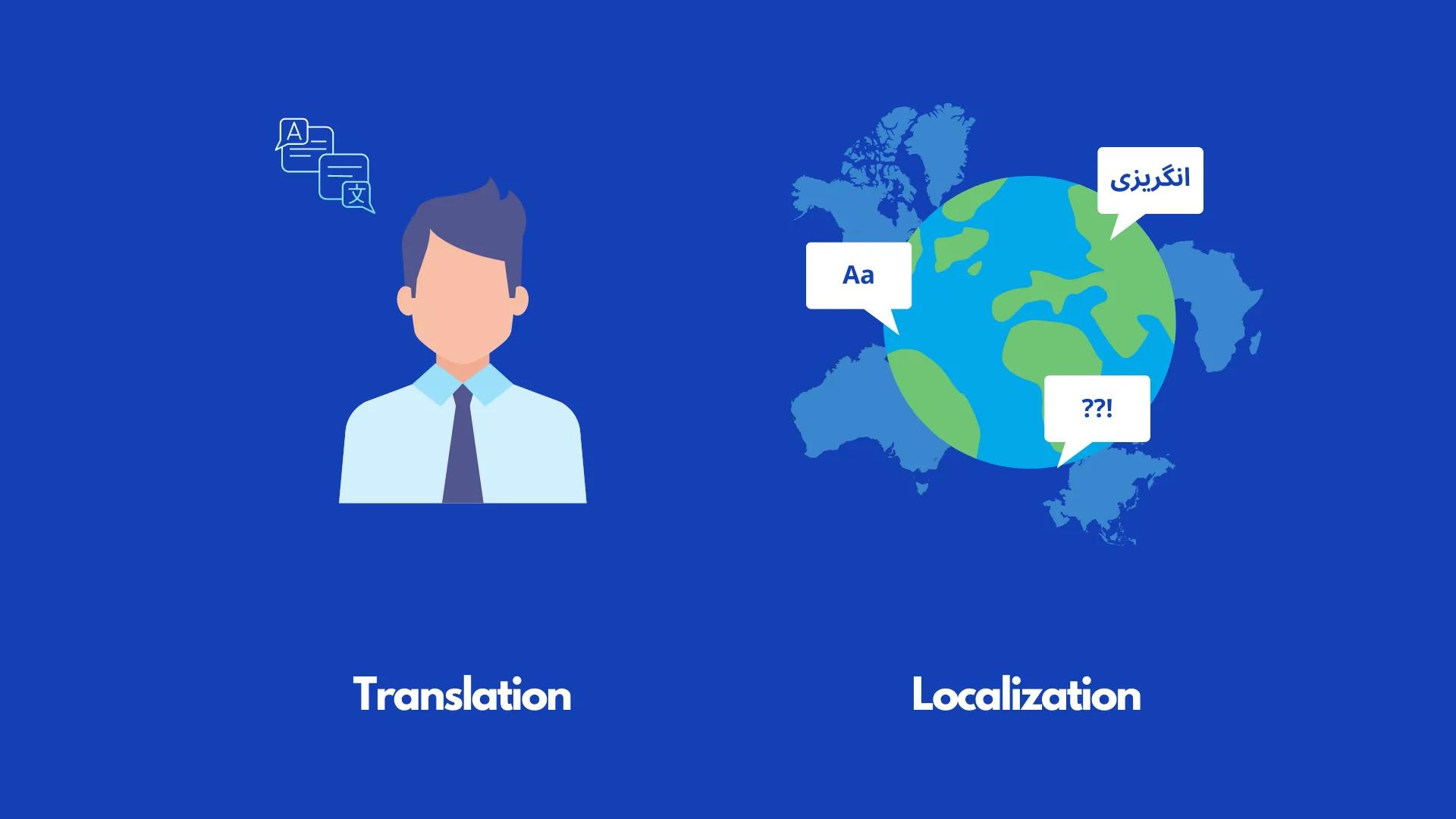

If your business has an online presence, reaching customers in different countries is often a goal. But just offering your website in another language involves more than simple translation. Understanding the difference between translation and localisation is key to creating a website that truly connects with international visitors. This guide will explain both processes, highlighting their unique roles and why localisation may be essential for your global success.
What Is Website Translation?
Website translation is the process of converting written text from one language into another. The aim is to ensure your content says the same thing in a new language as it does in the original. This task focuses on accuracy and clarity, so the meanings are not lost or changed.
Main Features of Translation
- Changes written text from one language to another.
- Keep the original message, tone, and intent as close as possible.
- Usually translates word-for-word or phrase-by-phrase.
- Rarely adapts content for local culture, jokes, or habits.
When Is Translation Enough?
Translation is suitable when:
- You have informational content with minimal cultural references.
- Your target audience has similar values and customs to your home market.
- The website does not contain slang, jokes, or idioms.
What Is Website Localisation?
Localisation takes translation several steps further. It not only changes language but also adapts your website content, visuals, and user experience to fit the culture and expectations of your target audience. Localisation ensures your website feels natural and relevant to users in each market.
Key Aspects of Localisation
- Converts language and adapts content for local culture.
- Changes layout, images, symbols, colours, and even payment options to suit local tastes.
- Adapts date formats, currencies, measurements, and addresses.
- Consider local laws, traditions, and user behaviours.
Examples of Localisation
- Colours: Red means “good luck” in China, but can signal “danger” in some Western countries.
- Currency: Showing yen (¥) for Japanese customers or pound sterling (£) for the United Kingdom (UK).
- Cultural References: Swapping jokes or sayings that do not make sense in other cultures for more relevant expressions.
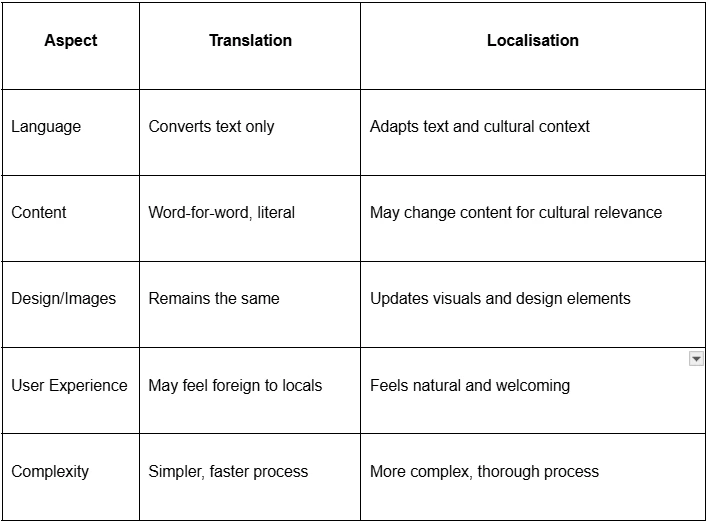
Translation vs. Localisation: Quick Comparison
Why Localisation Helps Your Website Succeed
Localisation makes your website feel as though it was built just for that audience. People are more likely to trust, buy from, and engage with companies that seem to "get" their local way of life. Here’s why localisation is so valuable:
- Builds trust and credibility: Visitors see your business respects their culture.
- Improves user experience: Content and navigation make more sense to locals.
- Boosts engagement: Visitors stay longer and interact more with your website.
- Increases sales: Customers are more likely to buy when offers fit their needs.
- Reduces misunderstandings: Prevents confusion over words, images, or check-out details.
When Should You Choose Localisation Over Translation?
- You plan to sell internationally: Different markets have unique customs and buyer expectations.
- You want to grow your brand: Local touch shows your commitment to every market, not just your home country.
- You face local competition: Your website needs to feel just as approachable as a local business.
- You care about legal compliance: Laws about content, privacy, and products vary by country.
How to Start With Website Localisation
- Identify key target markets: Look at where your website traffic is coming from and test new markets.
- Work with professional localisers: Experts make sure everything from the language to payment options is tailored.
- Test with locals: Gain feedback from real users to catch missed details.
- Keep updating: Local preferences and laws can change, so review your site often.
Conclusion: Go Beyond Words for Real Impact
Simply translating your website isn’t enough in today’s global market. Localisation ensures your brand connects in deeper, more meaningful ways. By making your website relevant and welcoming to each audience, you stand out and build lasting relationships.
Want to unlock your business's true potential online? Discover how Elite Asia can localise your website for every market you want to reach.





























Sign in to leave a comment.