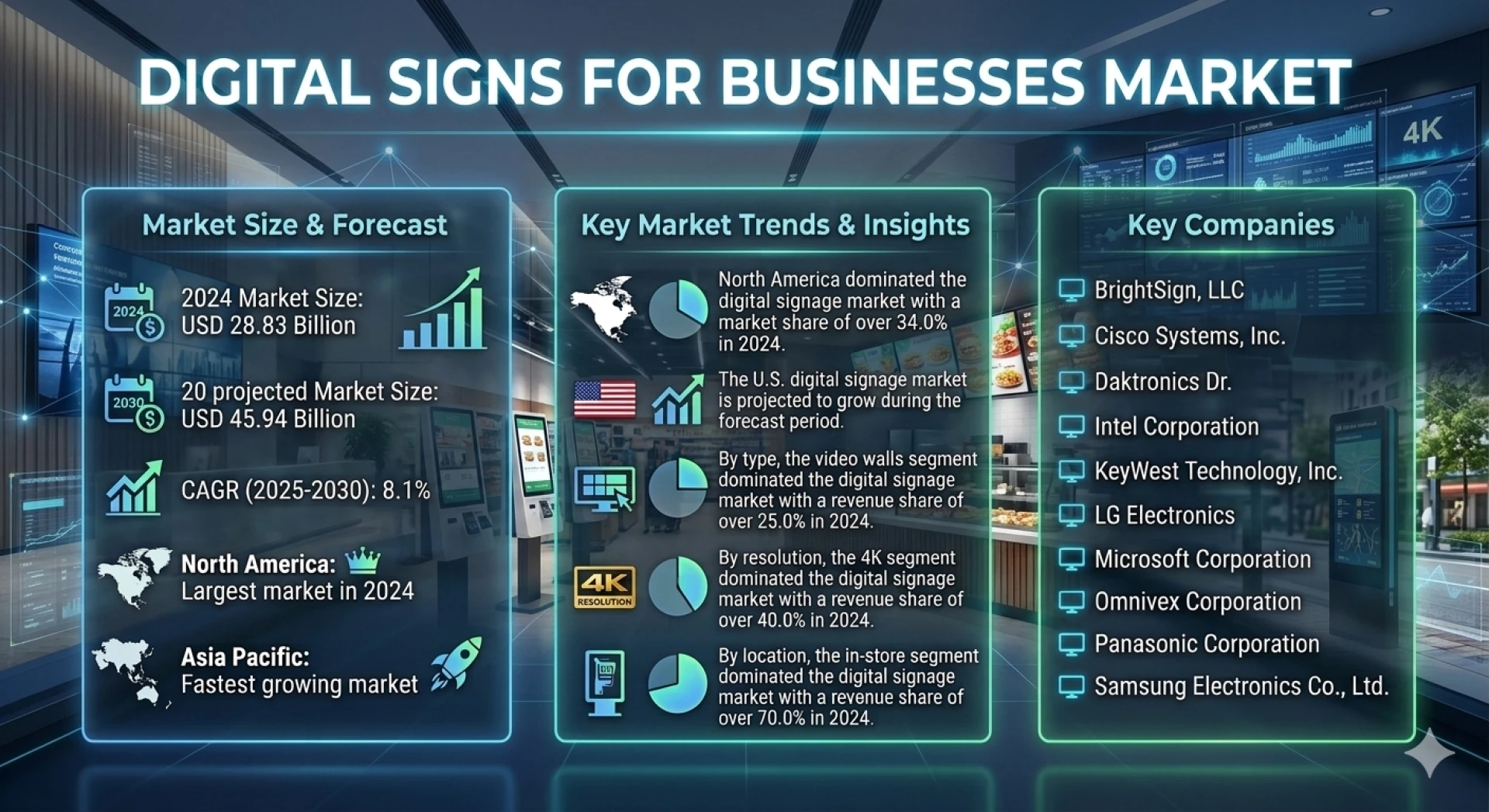

The global Digital Signage Market is rapidly evolving as businesses increasingly adopt dynamic display technologies to improve customer engagement, advertising effectiveness, and real-time communication. Digital signage refers to electronic displays such as LED screens, LCD panels, video walls, and interactive kiosks used to present multimedia content in commercial and public environments. According to insights published by Grand View Research, the global digital signage market was valued at over USD 28 billion in 2024 and is projected to grow steadily through 2030, driven by increasing demand for digital advertising, advancements in display technology, and the growing adoption of smart infrastructure.
Organizations across industries - including retail, healthcare, transportation, hospitality, and corporate sectors are increasingly deploying digital signage solutions to deliver engaging visual content and enhance customer experiences. Unlike traditional static advertising methods, digital signage allows businesses to update content in real time, customize messaging for targeted audiences, and integrate multimedia formats such as videos, animations, and live data feeds. As digital transformation continues to reshape communication strategies, digital signage has become a powerful tool for modern marketing and information delivery.
Rising Demand for Interactive and Data-Driven Displays
One of the primary drivers of the digital signage market is the growing demand for interactive and visually engaging display systems. Retailers and brands are increasingly using digital displays to capture customer attention, promote products, and enhance in-store experiences. Interactive kiosks, touchscreens, and smart displays are becoming common in shopping malls, airports, restaurants, and corporate offices. To manage these screens at scale, businesses often rely on digital signage software to schedule content, update displays remotely, and keep messaging consistent across locations.
Technological advancements such as 4K and ultra-high-definition displays, improved LED brightness, and cloud-based content management systems are further enhancing the capabilities of digital signage platforms. These technologies enable businesses to manage content across multiple screens and locations from a centralized system, improving operational efficiency while maintaining consistent brand messaging.
Expanding Applications Across Industries
The digital signage market has expanded significantly across multiple industries due to its ability to deliver real-time information and immersive advertising experiences. In the retail sector, digital displays are widely used for promotional campaigns, product information, and personalized advertisements. Retailers are integrating digital signage with analytics tools to track customer behavior and optimize marketing strategies.
In transportation hubs such as airports, railway stations, and bus terminals, digital signage systems provide passengers with real-time schedule updates, directions, and announcements. Similarly, healthcare facilities use digital displays for patient communication, navigation, and appointment information. Corporate offices also leverage digital signage for internal communication, meeting schedules, and employee engagement initiatives.
The growing trend of smart cities and connected infrastructure is also driving the deployment of large-scale outdoor digital signage networks for public information systems and digital advertising.
Technology Innovations Driving Market Growth
The digital signage industry continues to benefit from rapid advancements in display technology and software platforms. LED displays dominate the market due to their superior brightness, durability, and energy efficiency, making them ideal for both indoor and outdoor environments. Meanwhile, OLED displays are gaining popularity for their ability to produce vibrant colors and ultra-thin screen designs.
Cloud-based digital signage platforms are also becoming increasingly popular because they enable remote content management and real-time updates across multiple locations. Businesses can schedule advertisements, monitor performance metrics, and customize messages for different audiences using centralized dashboards. Integration with artificial intelligence and analytics tools is further enabling businesses to deliver personalized and data-driven advertising experiences.
For More Details or Sample Copy please visit link @: Digital Signage Market Report
Competitive Landscape and Key Companies
The digital signage market features a competitive ecosystem of display manufacturers, technology providers, and software solution companies. Industry players are focusing on innovation, strategic partnerships, and product development to strengthen their market positions.
Key companies operating in the market include:
- Samsung Electronics
- LG Electronics
- Panasonic Corporation
- Sharp NEC Display Solutions
- Cisco Systems
- Intel Corporation
- BrightSign LLC
- Daktronics
- Scala Digital Signage
- Omnivex Corporation
These companies offer a wide range of digital signage hardware, software, and integrated solutions designed to support commercial advertising, public information systems, and enterprise communication platforms. Continuous innovation in display technologies and software analytics is expected to intensify competition and drive further advancements in the market.
Future Outlook
The future of the Digital Signage Market looks promising as organizations continue to invest in digital communication tools to enhance brand visibility and customer engagement. Increasing adoption of interactive displays, AI-powered analytics, and cloud-based content management systems will continue to reshape how businesses communicate with audiences in physical spaces.
As digital advertising budgets grow and smart city initiatives expand worldwide, digital signage will play an increasingly important role in modern communication ecosystems. Businesses that integrate advanced display technologies with data-driven marketing strategies will gain a competitive edge by delivering immersive, personalized, and impactful visual experiences.
#DigitalSignage #BusinessTechnology #SmartDisplays #DigitalAdvertising #DisplayTechnology #CustomerEngagement #MarketingInnovation #ContentManagementSystems






















Sign in to leave a comment.