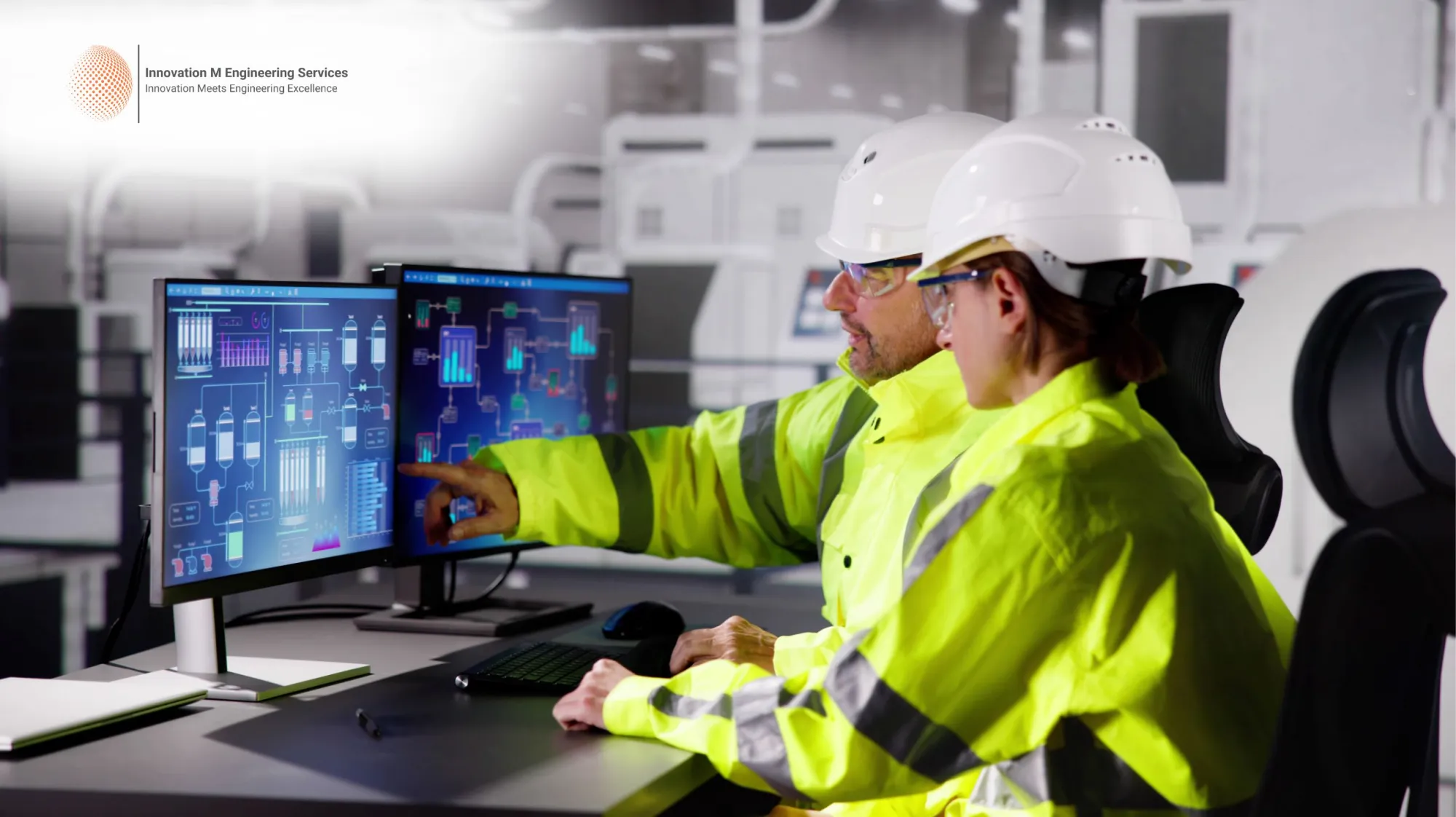

Modern construction projects are becoming more digital, data-driven, and lifecycle focused. Digital Twin BIM connects a coordinated BIM model with asset information, operational data, and performance updates. For owners, consultants, contractors, and facility teams, it links what was designed, what was built, and how the asset performs after delivery.
McKinsey reported that global construction output reached about $13 trillion in 2023, equal to 7% of global gross output. Autodesk and FMI also reported that formal data strategies could help construction statement up to $1.85 trillion in avoidable cost impacts linked to poor data. These figures show why reliable digital information matters.
What Is Digital Twin BIM?
Digital Twin BIM combines Building Information Modeling with updated asset data. CAD to BIM services provide the foundation by converting 2D CAD drawings into intelligent 3D BIM models, enabling accurate project data from the start. BIM supports design coordination, documentation, clash detection, quantity information, and construction planning. A digital twin extends that information into operations, maintenance, performance monitoring, and decision support.
NIST describes a digital twin as a computer model of a physical system, such as a building, that can support simulation, monitoring, optimization, and decision-making. In construction, BIM provides structured asset information, while the digital twin keeps it useful after construction.
BIM vs Digital Twin: Key Difference
The BIM vs digital twin comparison is mainly about purpose and timing. BIM is used during design and construction to coordinate geometry, documentation, and project information. A digital twin uses that foundation with live, updated, or operational data after the asset is built.
In simple terms, BIM explains what the asset should be. A digital twin helps teams to understand how the asset is performing. Owners should define asset information requirements early so the model does not look complete but lack operational data.
How BIM IoT Integration Supports Digital Twins
BIM IoT integration connects sensors, building systems, equipment, and platforms with model-based asset information. It can support monitoring for energy use, occupancy, temperature, equipment performance, safety systems, water systems, and maintenance alerts.
Strong BIM IoT integration is essential for modern dam engineering solutions, ensuring accurate asset management and operational efficiency. It depends on precise asset tagging, sensor mapping, naming standards, data security, and dashboard coordination. If the BIM model, sensors, and asset codes are not properly aligned, the digital twin may produce inconsistent or confusing information, reducing the effectiveness of monitoring and decision-making.
Benefits and Applications in Construction
Digital Twin BIM can improve coordination, asset visibility, preventive maintenance, lifecycle planning, and decision-making. It gives owners and project teams, a clearer view of how design information connects with actual performance.
Common applications include hospitals, airports, commercial buildings, campuses, industrial facilities, smart buildings, roads, bridges, water systems, and utilities. Owners may use digital twin data for energy management, space planning, equipment maintenance, safety reviews, and asset performance tracking.
Why Companies Outsource BIM Services
Many firms outsource BIM services because digital twin projects require data structuring, model accuracy, asset classification, software knowledge, and multidisciplinary coordination. Internal teams may concentrate on design deadlines and may not have time to prepare models for lifecycle use.
Companies may outsource BIM services for model auditing, scan-to-BIM, data cleanup, Cobie support, dashboard coordination, asset tagging, and facility handover. External help is useful when the project requires BIM production skills and asset information management.
What Digital Twin BIM Services Include
Digital twin BIM services may include BIM model development, as-built modeling, asset data structuring, IoT data mapping, facility model preparation, point-cloud conversion, interoperability checks, and lifecycle information management.
The scope of digital twin BIM services depends on project stage. A new project may start with asset data requirements in the BIM Execution Plan. A reformation may begin with laser scanning and model verification. An operational facility may require model cleanup and sensor mapping.
Best Practices for Successful Implementation
Digital Twin BIM should not be treated as only a software model. It is a lifecycle workflow involving designers, contractors, owners, technology teams and facility managers.
Best practices in as built drafting services include defining asset information requirements, setting Level of Development, using clear naming conventions, checking model quality, mapping sensors correctly, planning interoperability, protecting cybersecurity, and updating asset information after handover. Teams should also assign ownership for data protection.
Conclusion
Reliable construction drafting services play a key role in creating accurate BIM models that support successful Digital Twin implementation. Digital Twin BIM is becoming increasingly important for construction and engineering because it connects design data, construction records, operational performance, and lifecycle asset management. The best results come from clear data requirements, accurate models, disciplined reviews, and practical operational strategies.
IM Engineering Services provides dependable BIM and digital engineering support for Digital Twin BIM, BIM IoT integration, digital asset modeling, and digital twin BIM services. Firms should evaluate BIM maturity, review asset data requirements, and explore IMES BIM services to improve coordination, operations, and lifecycle performance.
FAQs
What is Digital Twin BIM in construction?
It is a BIM-based digital representation connected with updated or operational asset data.
What is the difference between BIM and digital twin?
BIM supports design and construction coordination. A digital twin extends the model into operation, monitoring, and performance management.
How does BIM IoT integration support digital twin projects?
It connects sensors and systems with BIM asset data for monitoring, maintenance, and operational decisions.
When should a company outsource BIM services?
A company may outsource BIM services when it needs model accuracy, data structuring, asset tagging, or digital twin expertise.

























Sign in to leave a comment.