
Introduction
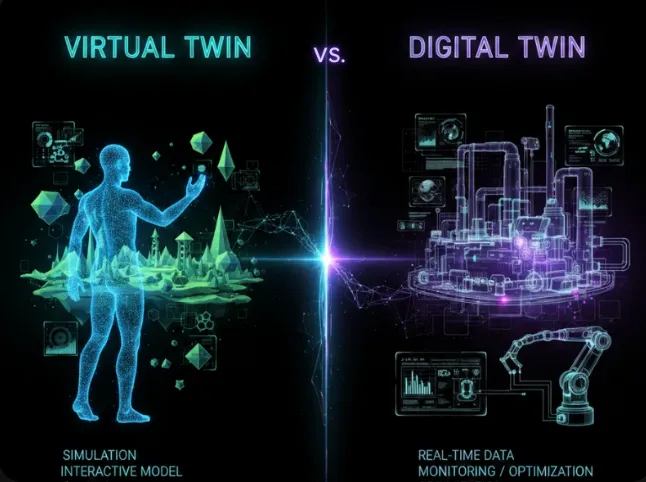
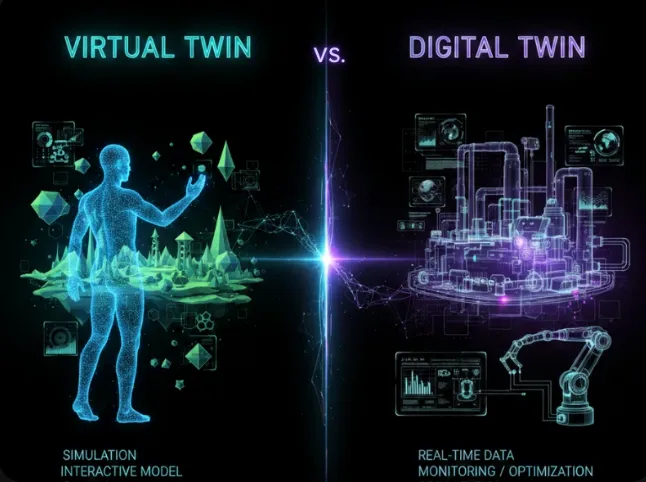
Modern industrial systems are becoming increasingly complex, and simulation technologies play a major role in improving efficiency, planning, and decision-making. However, the terminology used in this space can often be confusing. One such comparison is Digital twin vs Virtul twin, which is frequently discussed in the context of industrial optimization and smart facility management.
LocaXion helps simplify these concepts by explaining how both technologies work and where they differ, especially in terms of real-time data integration and operational use cases.
Understanding Digital Twin and Virtual Twin
Both Digital Twin and Virtual Twin are technologies used to create digital representations of physical systems, processes, or environments. These digital models help organizations simulate, monitor, and analyze operations in a virtual environment.
Although they share similarities in structure, their functionality and data handling approaches differ significantly, particularly when it comes to real-time connectivity and system updates.
How Digital Twins Work
Digital Twins are designed to maintain a continuous connection with real-world physical assets. They receive real-time operational data, which allows them to reflect the current state of systems with high accuracy.
This real-time synchronization makes Digital Twins highly valuable in industries where live monitoring and instant decision-making are critical. They provide an updated digital mirror of physical operations, supporting better control and responsiveness.
How Virtual Twins Work
Virtual Twins, on the other hand, focus more on simulation-based environments. They are typically used for testing scenarios, planning processes, and analyzing system behavior without requiring constant real-time data input.
This makes Virtual Twins particularly useful for predictive modeling, design testing, and exploring different operational outcomes before implementation.
Key Difference: Real-Time Data Integration
The most important difference between Digital Twin and Virtual Twin lies in real-time data integration. Digital Twins continuously update using live data from physical systems, while Virtual Twins rely more on static or pre-defined simulation inputs.
Understanding this difference is crucial for businesses aiming to improve facility optimization and operational efficiency in industrial environments.
Role of RTLS in Industrial Simulation
In modern industrial environments, RTLS (Real-Time Location Systems) plays a critical role in enhancing digital modeling technologies. RTLS feeds live location and movement data into these systems, making simulations more accurate and responsive.
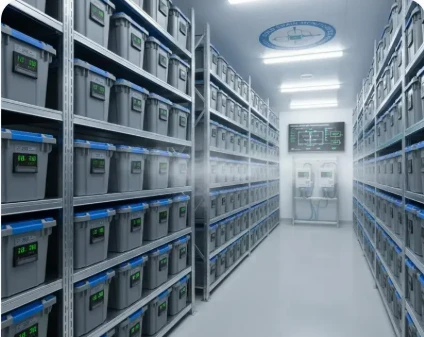
By integrating RTLS with Digital Twin systems, businesses can achieve better visibility of assets, improved workflow tracking, and more precise operational control. This is especially valuable in warehouse and industrial simulation environments where real-time accuracy is essential.
Why This Matters for Facility Optimization
Accurate simulation and real-time visibility are essential for optimizing modern facilities. The combination of Digital Twins, Virtual Twins, and RTLS allows organizations to improve efficiency, reduce delays, and enhance decision-making processes.
This leads to smoother operations, better resource utilization, and more intelligent system management across industrial environments.



























Sign in to leave a comment.