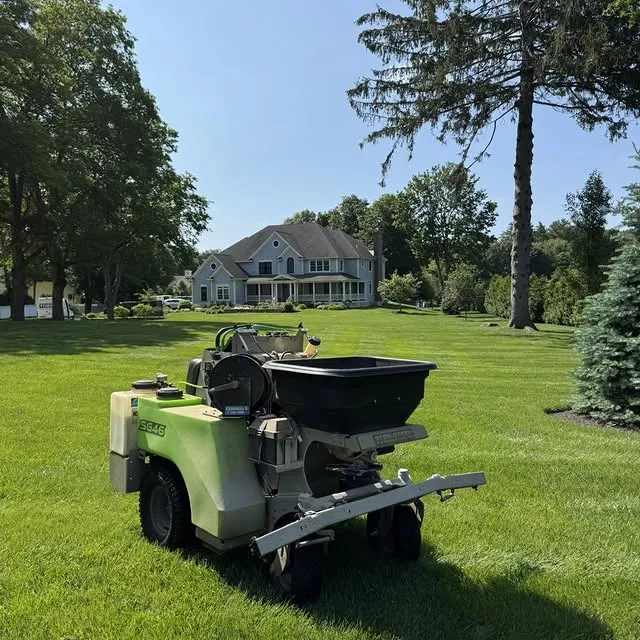

Kingston, NH homeowners don't need convincing that ticks are a problem — most have already found one on a kid, a dog, or themselves after an afternoon in the yard. What's less obvious is whether a DIY approach is enough, or whether yard tick control in Kingston, NH really requires a professional program. Here's an honest breakdown of both paths.
Why Kingston Yards Are Prime Tick Habitat
Kingston sits in a part of Rockingham County where wooded lots, stone walls, and shaded property lines back right up against lawns — exactly the conditions ticks favor. Ticks don't spread evenly across a yard. They cluster in shaded perimeter zones: tree lines, leaf piles, stone walls, and tall vegetation along the edges of a property. The open, sunny middle of most lawns is actually low-risk. That distinction matters because it shapes which control method — DIY or professional — is likely to work.
The tick season in this part of New Hampshire also runs longer than most homeowners assume, typically from early spring into fall depending on temperatures. That extended window is where a lot of DIY efforts fall short.
DIY Tick Control: What Homeowners Can Do Themselves
DIY tick control isn't nothing — it's a legitimate first layer of defense, especially for lower-risk properties. Typical homeowner steps include:
- Mowing regularly and keeping grass short, particularly near property edges
- Clearing leaf litter, brush piles, and overgrown vegetation
- Creating a mulch or gravel barrier between lawn and wooded areas
- Applying store-bought tick sprays or granules along perimeter zones
The upside is cost and control — homeowners can start immediately without hiring anyone. The downside is consistency. Store-bought products are typically weaker than professional-grade formulations, and because tick season lasts months, a single spring application rarely holds up through summer and fall. Most DIY programs need to be repeated every few weeks to keep pace with tick lifecycles, which is a significant time commitment most homeowners underestimate.
What Professional Yard Tick Control Adds
Professional yard tick control in Kingston, NH generally differs from DIY in three ways: targeting, timing, and product strength.
Rather than spraying an entire lawn, professional treatments focus specifically on the high-risk perimeter zones where ticks actually live and breed — wooded edges, stone walls, and shaded borders. This targeted approach is both more effective and more efficient than blanket treatment of open turf that was never much of a tick habitat to begin with.
Professional programs are also seasonal by design, with applications scheduled around tick activity cycles rather than a single spring or summer treatment. That ongoing schedule is the piece most DIY routines struggle to maintain over a full season.
Don't Overlook Lawn Health Itself
Tick control doesn't happen in isolation from the rest of the lawn. Thin, patchy, or disease-stressed turf tends to hold more moisture and debris at ground level, which can make perimeter zones even more hospitable to ticks. This is one reason professional lawn fungicide treatments in Kingston, NH are often bundled into broader turf care programs rather than sold as a standalone service — preventative and curative fungicide applications keep grass dense and healthy through the vulnerable spring and summer windows, which supports the same perimeter areas that tick treatments are targeting. A lawn care program that addresses turf health and tick pressure together tends to outperform either approach done in isolation.
DIY vs. Professional: A Straight Comparison
- Upfront cost: DIY is lower, while Professional is higher but bundled with a seasonal plan.
- Time commitment: DIY is high due to frequent reapplication, while Professional is low with scheduled visits.
- Product strength: DIY uses consumer-grade products, while Professional uses professional-grade.
- Targeting: DIY often involves whole-yard guesswork, while Professional targets perimeter zones specifically.
- Season-long consistency: DIY is difficult to maintain, while Professional has consistency built into the program.
- Best for: DIY is best for low-risk, open yards, while Professional is best for wooded or high-risk properties.
When It's Time to Call a Tick Control Provider
For yards with minimal wooded exposure, a diligent DIY routine can be enough. But for Kingston properties bordering conservation land, dense tree lines, or stone walls, most homeowners find that a local tick control company in Kingston, NH is worth the investment simply because the season is too long and the risk zones too specific for occasional store-bought spraying to keep up.
Frequently Asked Questions
What are the main factors that make Kingston yards prone to ticks?
Kingston's wooded lots, stone walls, and shaded property lines create ideal conditions for ticks. They prefer shaded areas like tree lines and leaf piles, which often cluster at the edges of properties, making these zones high-risk for tick populations.
Is DIY tick control effective for all types of yards?
DIY tick control can be effective for lower-risk properties with minimal wooded exposure. However, for yards bordering dense vegetation or conservation land, a DIY approach may not be sufficient due to the need for consistent and targeted treatments.
How often do I need to apply DIY tick control products?
Most DIY tick control products need to be reapplied every few weeks to keep pace with tick lifecycles, especially during the long tick season that runs from early spring into fall. This frequent reapplication can be a significant time commitment for homeowners.
What are the benefits of hiring a professional for tick control?
Professional tick control offers targeted treatments that focus on high-risk areas where ticks breed and thrive, as well as a consistent application schedule timed around tick activity cycles. This approach is generally more effective than DIY methods that often apply products across the entire yard.
How does lawn health impact tick control efforts?
A healthy lawn is crucial for effective tick control; thin or disease-stressed lawns can hold more moisture and debris, making them more attractive to ticks. Professional lawn care often integrates fungicide treatments to maintain turf health, which in turn supports effective tick management.
What is the cost difference between DIY and professional tick control?
DIY tick control typically has a lower upfront cost compared to professional services, which may seem higher. However, professional programs often include bundled seasonal plans that provide better long-term value due to their targeted and consistent approach.
When should I consider calling a professional tick control provider?
You should consider hiring a professional if your property has significant wooded exposure, conservation land nearby, or dense vegetation. The specialized targeting and ongoing treatments provided by professionals are usually necessary to effectively manage tick populations in these environments.


























Sign in to leave a comment.