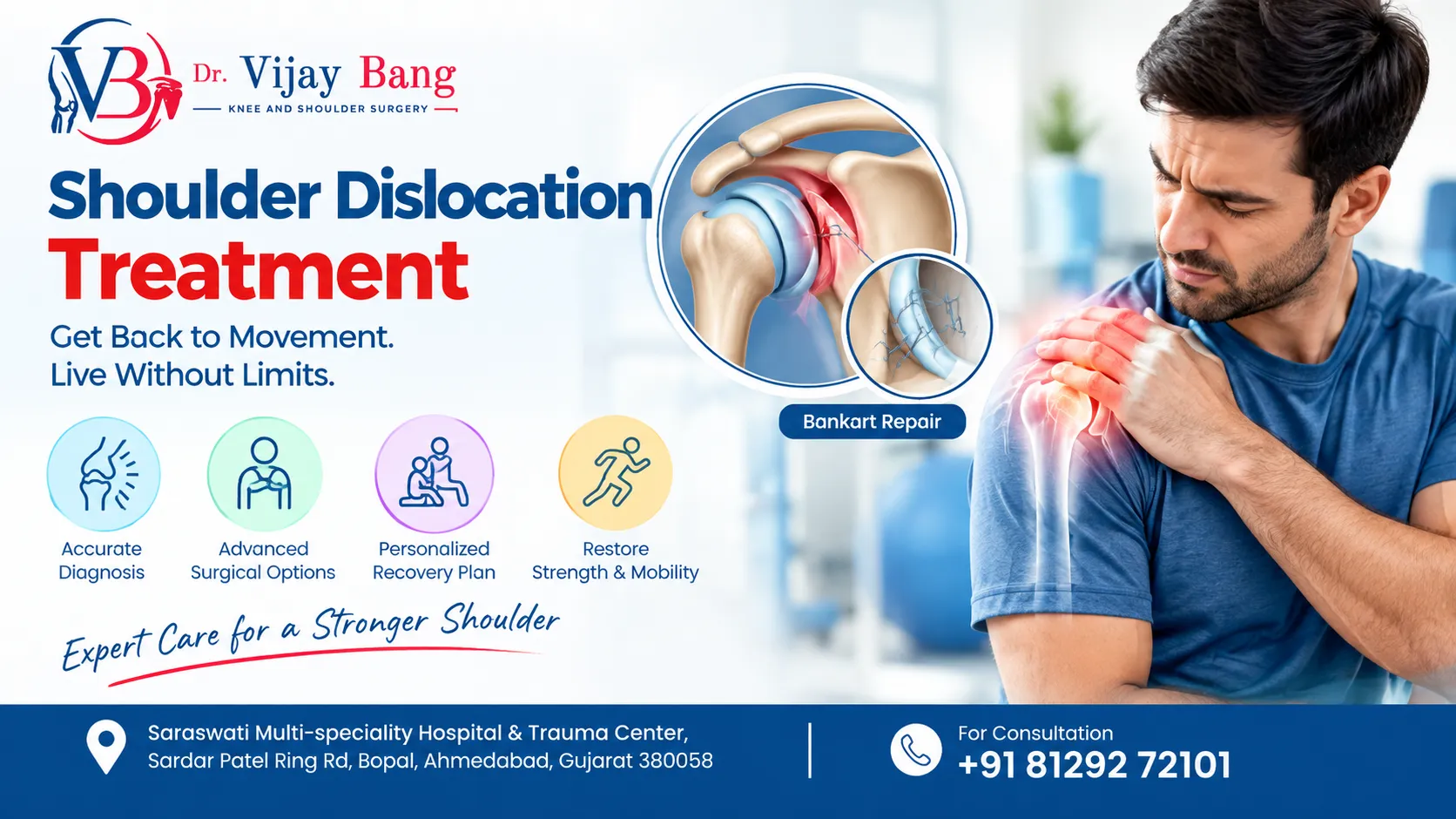

There's nothing quite like the shock of a shoulder popping out of place. It usually happens in an instant — a fall, an awkward tackle, a sudden wrong movement — and within seconds, you're dealing with pain, panic, and a joint that clearly doesn't look right. Once the initial shock settles, the question that follows almost every patient's mind is simple: will this need surgery? For anyone researching shoulder dislocation treatment in Ahmedabad, the honest answer is that it depends, and understanding why can bring real relief.
What Causes a Shoulder Dislocation?
The shoulder has the largest range of motion of any joint in the body, which unfortunately also makes it the most prone to slipping out of place.
- A fall onto an outstretched arm
- A direct blow or impact during sports or an accident
- Sudden, forceful rotation or overreaching of the arm
- Repeated minor instability that eventually leads to a full dislocation
- Contact sports where collisions are common
What Are the Symptoms of a Dislocated Shoulder?
The signs are usually hard to miss.
- A visibly out-of-place or deformed shoulder
- Intense, sudden pain
- Swelling around the joint
- Inability to move the arm normally
- Numbness or tingling that may extend down the arm
- Muscle spasms near the shoulder
What Factors Determine Whether Surgery Is Needed?
This is really the question everyone wants answered, and it comes down to a combination of factors specific to you.
- Your age — younger patients have a notably higher risk of the shoulder dislocating again
- Whether this is your first dislocation or a repeat occurrence
- How much damage there is to the labrum and surrounding ligaments, sometimes called a Bankart tear
- Your activity level, particularly involvement in sports with overhead or contact movements
- Whether there's an associated fracture or nerve involvement
A first-time dislocation in an older, less active adult often heals well without surgery. A repeat dislocation in a young athlete, however, frequently benefits from surgical repair to restore lasting stability.
How Is a Dislocated Shoulder Treated?
Treatment generally follows a clear sequence, whether or not surgery ends up being necessary.
- Immediate reduction, where a doctor carefully guides the joint back into place
- A period of sling immobilization to allow initial healing
- Physiotherapy to rebuild strength and restore normal movement
- Non-surgical management for many first-time dislocations, especially in older or less active patients
- Surgical repair, such as a Bankart repair, considered for recurrent dislocations, significant ligament damage, or young athletes wanting to return to demanding sports
- A structured rehabilitation program following surgery, when it's needed
How Can You Prevent Future Shoulder Dislocations?
Once your shoulder has dislocated once, protecting it becomes the priority.
- Strengthen your rotator cuff and shoulder-stabilizing muscles consistently
- Avoid pushing your arm into extreme overhead or backward positions unnecessarily
- Use appropriate protective gear during contact sports
- Complete your full physiotherapy program rather than stopping once pain improves
- Seek treatment promptly after a first dislocation, since early, proper care can lower the chance of it happening again
A Reassuring Final Word
Not every dislocated shoulder needs an operation, and not every case can safely avoid one either. What matters most is an honest, individualized assessment rather than a one-size-fits-all answer.
If you've experienced shoulder dislocation and want clarity on the right path forward, Dr. Vijay Bang offers thorough evaluation and shoulder dislocation treatment in Ahmedabad tailored to your specific injury.

























Sign in to leave a comment.