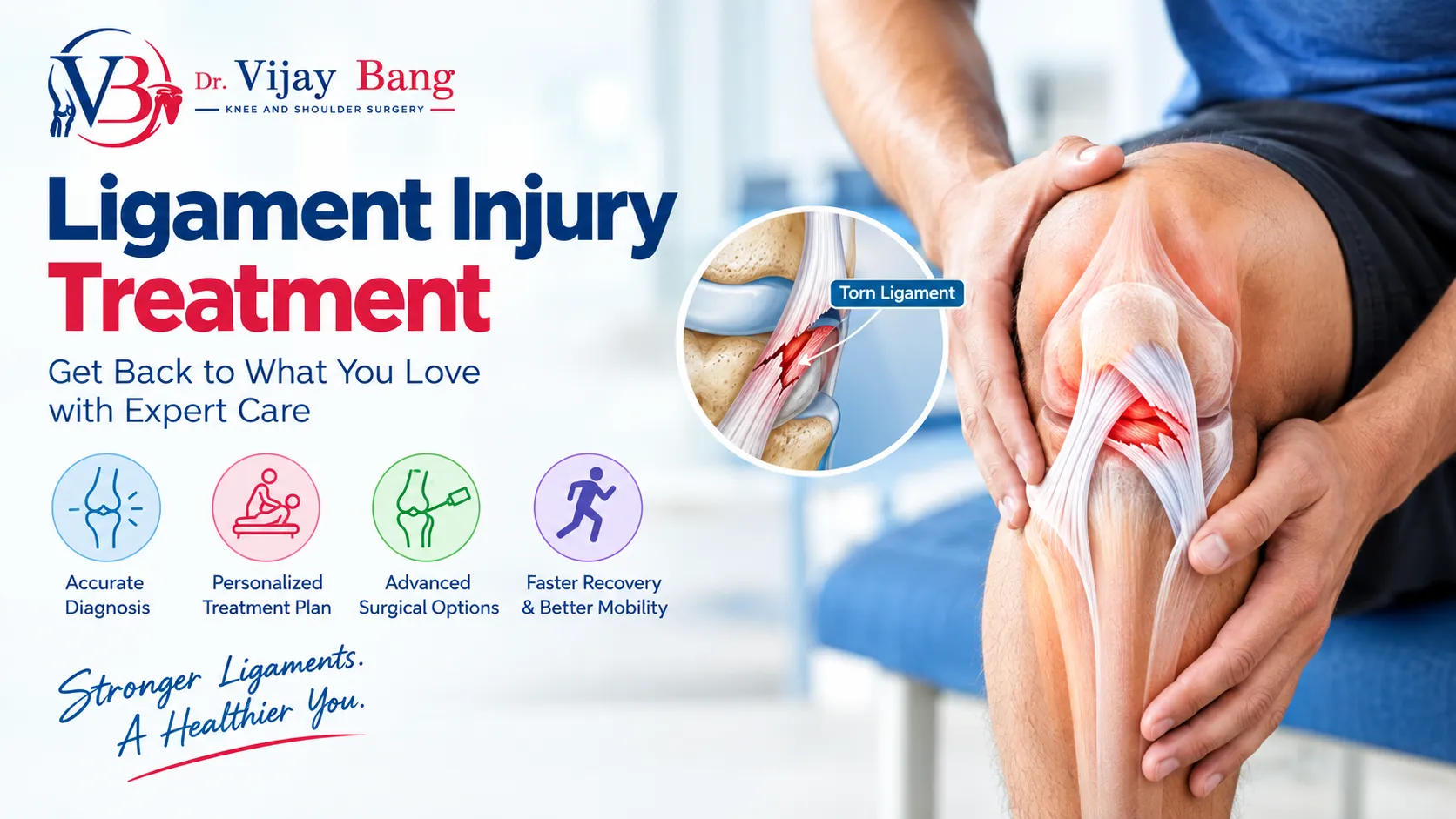

Twisted your knee during a morning jog or felt that sudden pull while playing badminton with friends? That sharp, sinking feeling of "something's not right" is one most active people know too well. The good news is that not every ligament injury needs surgery. In fact, many mild cases respond beautifully to the right physiotherapy approach. If you're exploring ligament injury treatment in Ahmedabad, understanding when physiotherapy is enough — and when it isn't — can save you time, worry, and unnecessary procedures.
What Causes Ligament Injuries?
Ligaments are the tough bands of tissue that hold your joints together and keep them stable during movement. They tear or stretch when a joint is forced beyond its normal range.
- Sudden twisting movements during sports like football or badminton
- Awkward landings after a jump
- Slips, falls, or missteps on uneven ground
- Direct impact to the knee during an accident
- Repetitive strain from activities that stress the joint over time
How Do You Know If It's Mild?
Not every ligament injury feels the same, and symptoms often tell you how serious it is.
- Mild swelling that settles within a day or two
- A dull ache rather than sharp, constant pain
- Some stiffness but the ability to bear weight
- No feeling of the knee "giving way" during walking
- Discomfort that improves gradually with rest
If your knee feels unstable or buckles under you, that usually points to a more significant tear that needs a doctor's evaluation first.
Who Is More at Risk?
Certain people are simply more prone to ligament injuries than others.
- Athletes involved in pivoting sports
- People with previous ligament injuries in the same joint
- Those with weak thigh or hip muscles
- Individuals who skip warm-ups before physical activity
- Older adults with reduced joint flexibility
Can Physiotherapy Really Fix It?
For grade I and many grade II ligament injuries, physiotherapy can be remarkably effective. A structured plan usually includes gentle range-of-motion exercises, gradual strengthening of the surrounding muscles, and balance training to restore stability. Your physiotherapist will also guide you on when to bear weight and how to protect the joint while it heals. This isn't a quick fix — it takes patience and consistency — but for the right injury, it works.
Recovery Tips Worth Following
- Rest the joint but avoid complete immobility unless advised
- Apply ice during the first 48 hours to reduce swelling
- Follow your physiotherapist's exercise plan without skipping sessions
- Avoid rushing back into sports before full strength returns
- Wear supportive footwear during recovery walks
Simple Prevention Tips
- Warm up properly before any physical activity
- Strengthen your quadriceps and hamstrings regularly
- Use proper technique during sports and gym workouts
- Wear appropriate footwear for your activity
- Listen to your body and rest when something feels off
Every ligament injury is different, and what works for one person may not suit another. If your symptoms don't improve within a couple of weeks, or if instability persists, it's worth getting a proper assessment. With the right ligament injury treatment in Ahmedabad, most patients recover well and return to their normal activities with confidence. Dr. Vijay Bang and his team can help you understand exactly where your injury stands and what path suits you best — book a consultation to get clarity and start healing the right way.























Sign in to leave a comment.