
If you’ve been told you may need a root canal, one of the first questions that often comes to mind is: does it hurt? It’s a common concern, but modern dentistry has made root canal treatment far more comfortable than many people expect.
What Is a Root Canal?
A root canal is a procedure used to treat infection inside a tooth. When the inner pulp becomes inflamed or infected, treatment helps remove the source of discomfort and protect the tooth from further damage.
At Douglas Miller Dental Practice, the focus is on ensuring patients feel informed, comfortable and supported throughout their care.
Does a Root Canal Hurt?
In most cases, the procedure itself is not painful. Local anaesthetic is used to numb the area, so you should feel little to no discomfort during treatment.
A dentist explains:
"Many patients are surprised that a root canal feels similar to having a routine filling. The aim is to relieve pain, not cause it."
You may experience some mild sensitivity afterwards, but this is usually temporary and manageable.
Why You Might Need a Root Canal
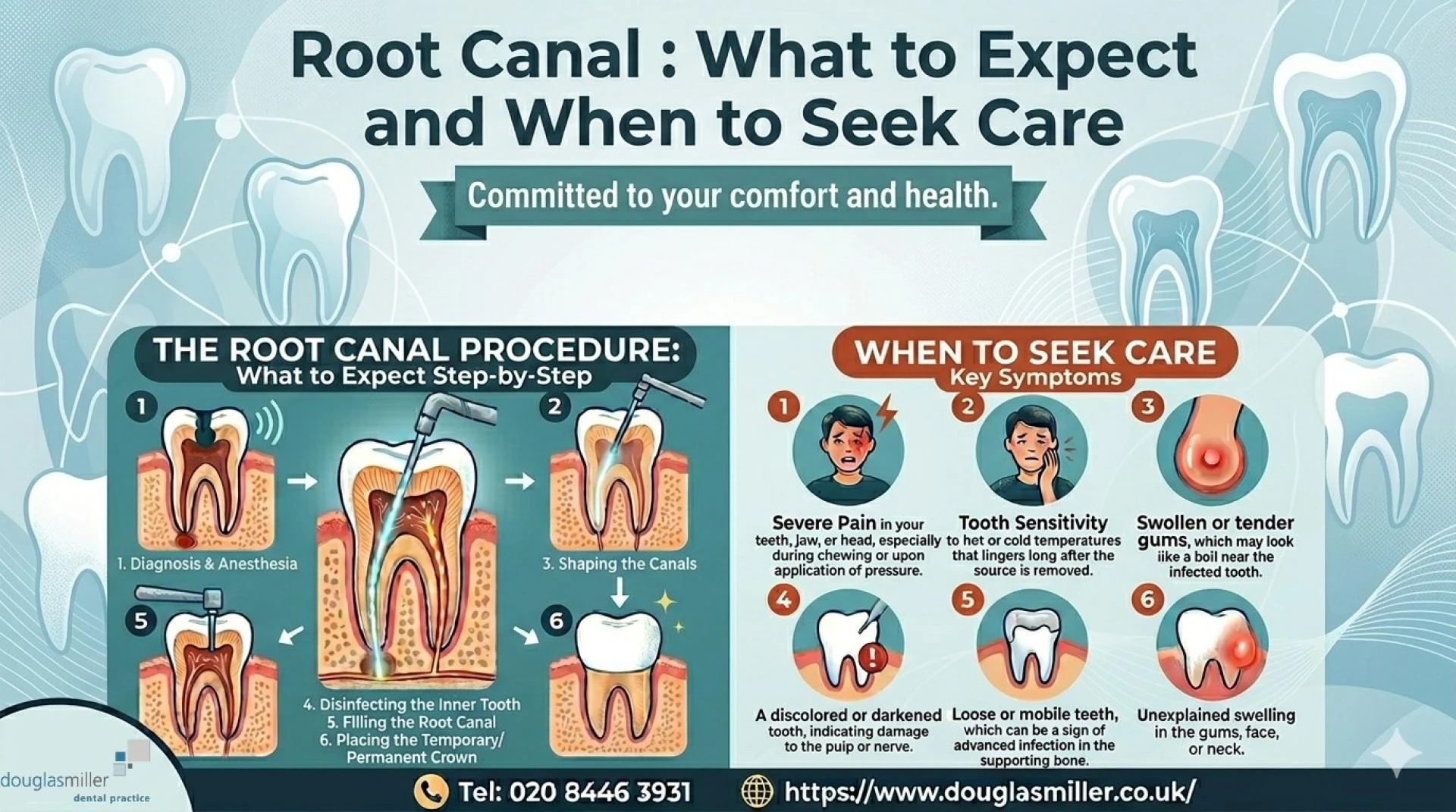
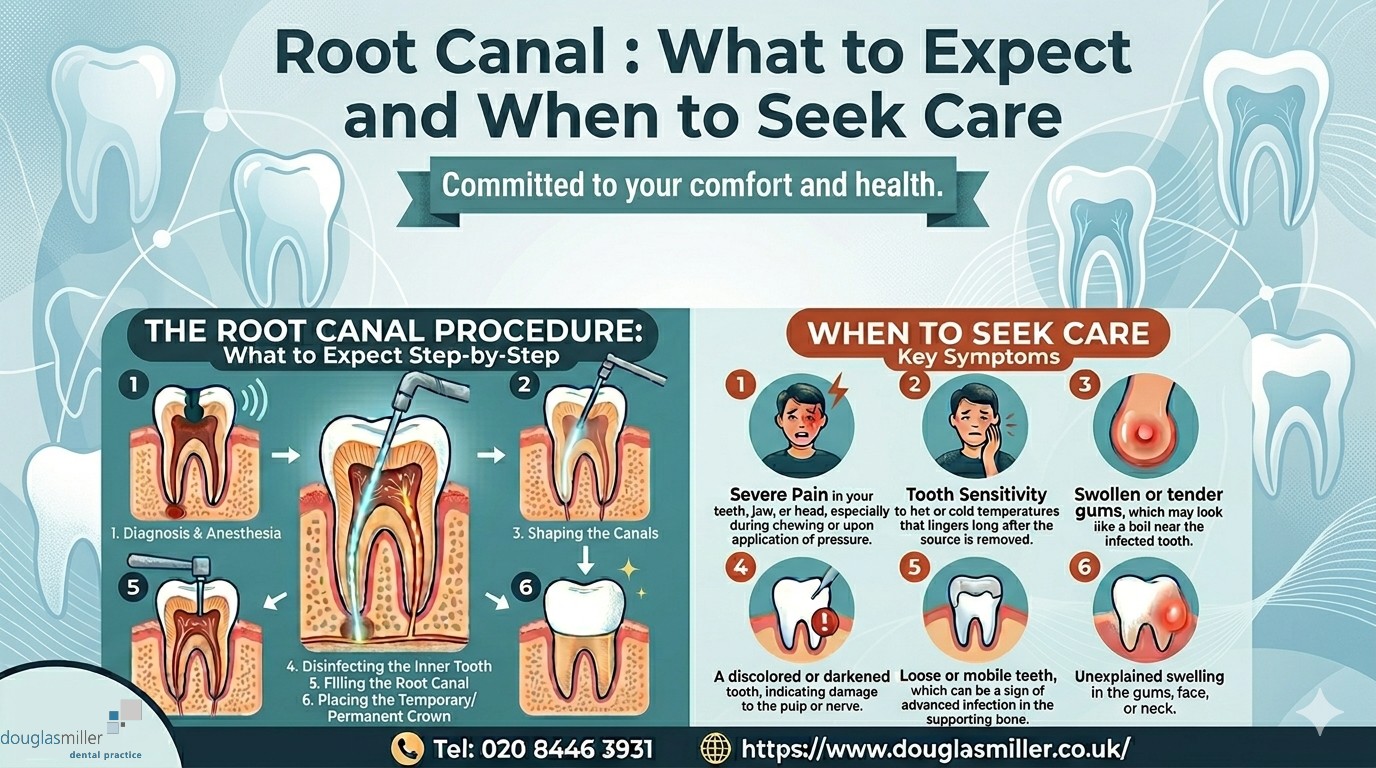
You may be advised to have a root canal if you experience:
- Ongoing toothache
- Sensitivity to hot or cold
- Swelling or tenderness in the gums
- Pain when biting or chewing
- Discolouration of a tooth
Seeking care early can help prevent the issue from becoming more complex.
What Happens During the Procedure?
Root canal treatment is carried out in stages:
- The tooth and surrounding area are numbed
- The infected tissue is gently removed
- The root canals are cleaned and shaped
- The tooth is sealed to prevent reinfection
In some cases, a crown may be recommended to restore strength and function.
Aftercare and Recovery
After your appointment, it’s normal to have slight tenderness for a few days. To support recovery:
- Avoid chewing on the treated side initially
- Take any recommended medication as advised
- Maintain good oral hygiene
- Attend follow-up appointments if needed
A hygienist shares:
"Keeping the area clean and following aftercare advice can make a big difference to how quickly you feel comfortable again."
When Should You Book an Appointment?
If you are experiencing persistent dental pain or signs of infection, it’s important to seek advice promptly. Early treatment can help relieve discomfort and protect your oral health.
Speak to a Dentist in North Finchley
If you’re worried about tooth pain or have questions about treatment, arranging a consultation can help put your mind at ease. The team at Douglas Miller Dental Practice provides clear guidance a

























Sign in to leave a comment.