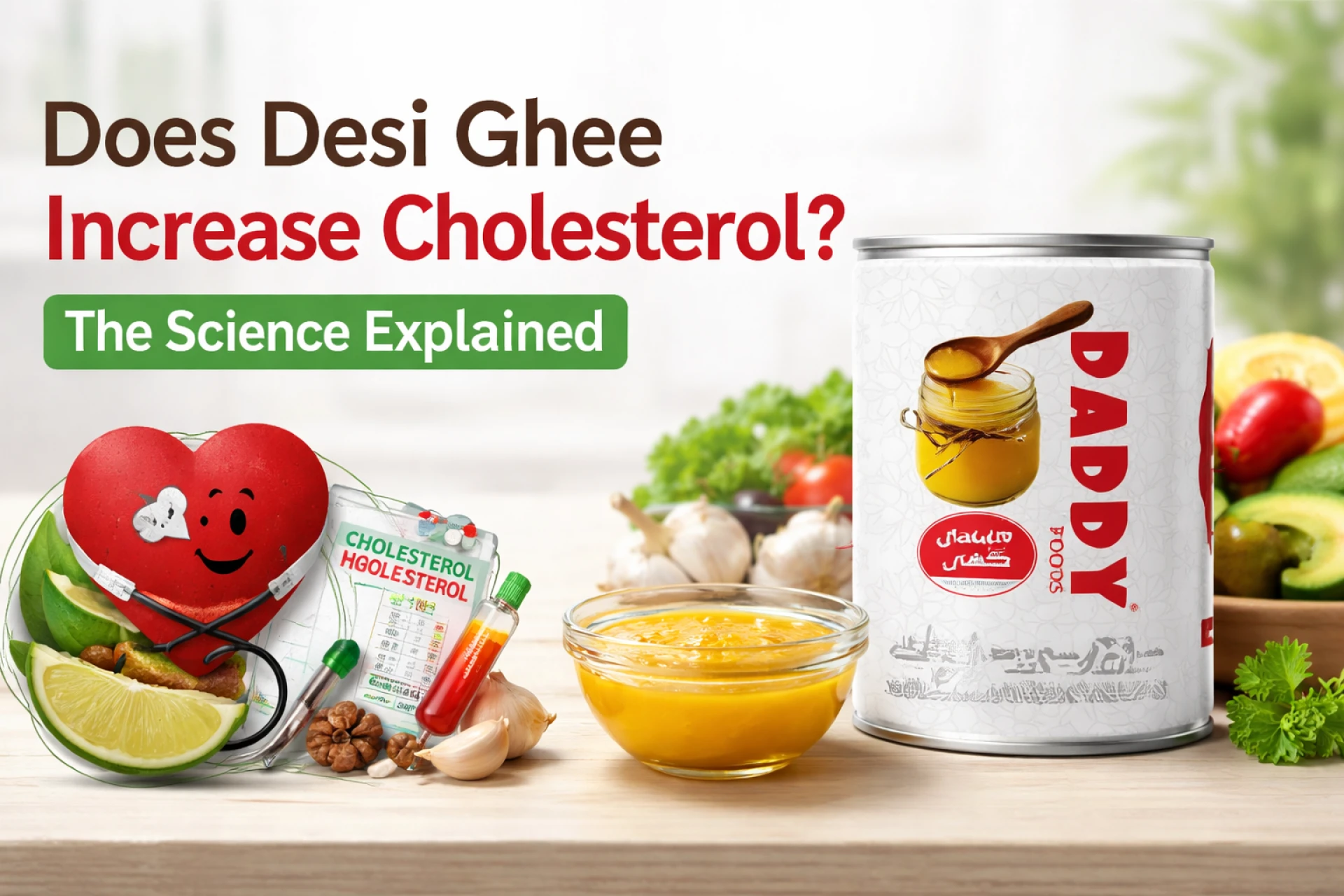

Generations of families have turned to golden ghee when they want their meals to dazzle with rich, nutty flavor. However, with the evolution of modern nutrition science, this ancient staple has come under scrutiny from many health-conscious individuals. You may take a stare at a jar of clarified butter and wonder about how it’ll have an effect on your heart.
I was left feeling confused by the debate around traditional cooking fats. We receive mixed signals from fitness influencers, doctors and our grandparents. You want clear, evidence-based answers so that you can make informed decisions for your family.
In this guide, we’ll break down how clarified butter affects your heart. We’re going to break down the nutritional profile of this traditional fat, sift fact from fiction and help you understand how to safely enjoy it.
What: The Science of Pure Desi Ghee
To know how ghee works with your body, you first need to get an idea of what it holds. What is pure desi ghee? Essentially, butterfat without milk solids and water. Clarifying it gives you a rich flavor, a high smoke point and longer shelf life.
This food that is a natural item in nature because it has a complex composition of fatty acid. In whang western medicine it was reviled for its high content of saturated fats but it also contains fat-soluble vitamins A, E, D and K, as well as conjugated linoleic acid (CLA) and butyrate. These compounds actively support digestion and decrease inflammation.
The grass-fed desi ghee has much higher nutrient content than the other types of fat. The solution lies within the purity of the product. These include adulterated or processed versions that do not have the same nutritional profile as your traditional, farm-fresh variety.
Why: The Science of Ghee and Heart Health
While everybody is asking, does desi ghee increases cholesterol? That confusion is rooted in previous dietary guidelines that stigmatized all saturated fats as unhealthy. For decades, scientists believed saturated fat directly caused heart disease.
Modern nutritional science has a far more complicated story to tell. Two primary types of cholesterol are produced in your body: HDL (high-density lipoprotein) and LDL (low-density lipoprotein). That’s why we often use the term HDL as the “good” cholesterol — it helps transport excess fat away from your arteries. LDL is the “bad” cholesterol because it can clog your blood vessels.
Well, research shows that high quality ghee may indeed raise your levels of HDL cholesterol. While it can also mildly raise LDL, it mainly increases the size of the fat lumps. Small, dense LDL particles are therefore much more of a risk from saturated fat ghee health perspective than large ones. At the end of the day, whether desi ghee is good for heart or not depends on your overall lifestyle and dietary pattern.
Who: Monitoring Your Cholesterol and Ghee Consumption
Who really should be concerned about consuming ghee? For the average healthy individual, including pure clarified butter in an overall balanced diet is relatively harmless. Our healthy bodies metabolize these natural fats efficiently when combined with our active lifestyles.
But certain people need to be careful. If you have a family history of heart disease or already struggle with lipid imbalances, you need to watch your saturated fat intake. This leads to a common question that patients often ask their doctors, “Can I eat ghee with High Cholesterol?” The answer most often leans toward portion control, not strict elimination.
Going to a health care provider helps you see what limits are appropriate for you. They can analyze your individual health markers and tell you how much fat your body can tolerate safely.
Where It All Fits: Ghee in a Healthy Diet
Where in your kitchen does this golden nectar belong? A major factor in ghee vs oil debate for health, is the way these fats respond during heating. High cooking temperatures break down seed oils, releasing deadly free radicals.
Ghee has a smoke point of roughly 485°F (250°C). This makes Pakistan’s best desi ghee for cooking significantly better than many vegetable oils when it comes to frying, sautéing and tempering spices. So, it’s stable at high heat, shielding your food from oxidative damage.
To reap the benefits for your heart, consider ghee as a replacement for processed oils rather than an addition to them. Use it judiciously to season your food, cook your vegetables and temper your lentils. This not only gives you the benefits without adding too many calories to your day.
When: Striking the Right Balance and Moderation
In what amounts does ghee consumption become less healthy or straight-up harmful? Like all calorie-rich foods, the poison is in the dose. When it comes to knowing desi ghee benefits and side effects, moderation is the key.
A daily intake of one to two teaspoons of ghee usually keeps a good metabolism and energy over time. But slathering it in large amounts on every meal will quickly result in the overconsumption of both calories and saturated fats. That extra can lead to weight gain, which harms heart health over the long term.
Timing your intake also matters. A small amount of ghee added to your morning oats, or using it as your main cooking fat at lunch means that your body is able to absorb fat-soluble vitamins efficiently.
Common Myths and Facts About Desi Ghee and Heart Health
Here are some of the most common misconceptions about this old-fashioned ingredient, explained.
Myth: Ghee immediately clogs your arteries.
Fact: Ghee contains healthy fatty acids that, if we consume it in moderation, can normalize your HDL vs LDL ratio cholesterol levels and work toward improving your heart health.
Myth: All ghee is created equal.
Fact: The quality varies wildly. Desi ghee in Pakistan is extremely beneficial, being chemical free compared to hydrogenated vegetable ghee (vanaspati), which are laden with harmful trans fats.
Myth: You should completely eliminate ghee from your diet for weight loss.
The Healthy Fact: Pure ghee, which is rich in healthy fats, actually keeps you fuller for longer and also reduces the craving peaks of hunger, thus leading to a balanced diet and sustainable weight management.
Embrace Pure Tradition with Care
You should not be afraid of the foods your ancestors thrived on. More and more science tell us what traditional cultures always knew: natural, minimally processed fats are part of the human pantry. Even while enjoying these indulgent flavors, the secret is moderation, an active lifestyle and a nutrient-dense diet.
Quality matters more than ever. If you follow that path to safely include this golden fat into your everyday life, only go for the purest sources that you can find. opt for the real, chemical-free ones that pay tribute to traditional methods of preparation. Choose premium and pure desi ghee is essential to ensure a healthy, happy lifestyle for you and your family so make sure you select towards the right decision today and feel the amazing difference in your food.























Sign in to leave a comment.