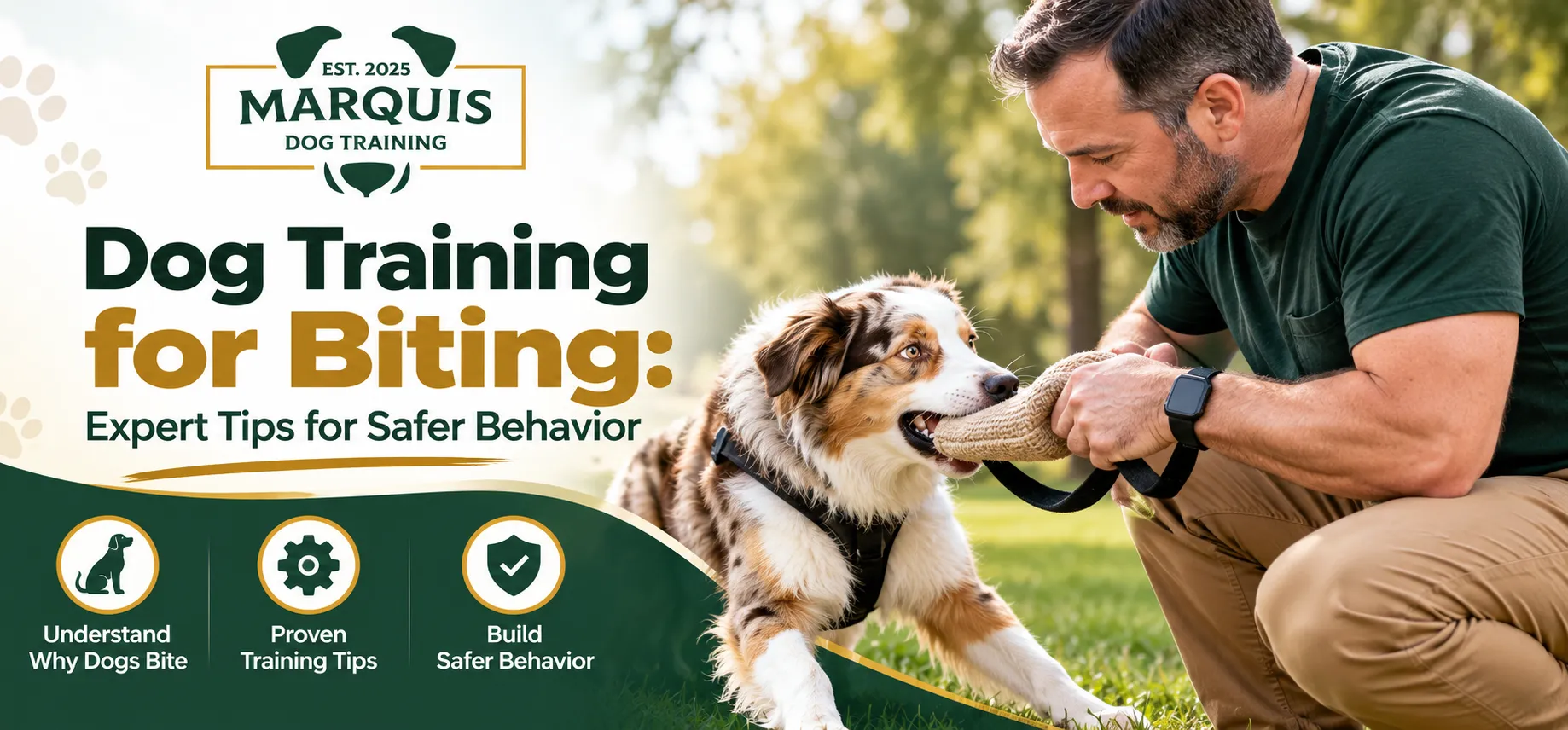

Dog biting can be confusing and stressful for any owner. A puppy may nip during play, while an adult dog may bite because of fear, frustration, guarding, pain, or overstimulation. Understanding the reason behind the behavior is an important first step toward changing it.
Effective dog training for biting focuses on teaching a dog what to do instead of simply punishing unwanted behavior. With clear boundaries, positive reinforcement, proper management, and consistent practice, many dogs can learn safer ways to interact with people.
Whether you are dealing with puppy mouthing or a more serious biting concern, the right approach can help create calmer interactions and improve the relationship between you and your dog.
Why Do Dogs Bite?
Before deciding how to respond, consider what may be causing the biting. Dogs rarely bite without a reason, even when the reason is not immediately obvious.
Common causes include:
- Puppy exploration: Young puppies investigate their world with their mouths.
- Teething: Sore gums can increase chewing and mouthing.
- Play: Excited dogs may use their mouths during energetic games.
- Fear: A nervous dog may bite when it feels threatened.
- Frustration: Dogs may bite when they cannot reach something they want.
- Resource guarding: Food, toys, beds, or other valuable items may trigger defensive behavior.
- Pain or discomfort: A sudden change in behavior may require veterinary attention.
Identifying the trigger helps you choose a safer and more effective training strategy.
Dog Training for Biting Starts With Consistency
One of the most important parts of dog training for biting is consistency. If biting sometimes results in attention or continued play, your dog may learn that the behavior works.
When your dog puts its teeth on your skin during play, calmly stop the interaction. Avoid shouting or physical punishment. Once the dog settles, redirect its attention toward an appropriate toy or another activity.
Reward calm behavior whenever you see it. Over time, your dog can learn that gentle interaction gets attention while biting causes the fun to stop.
Dog Training Puppy Biting: Teach Better Habits Early
Dog training puppy biting should begin as soon as possible. Puppies naturally mouth objects, but they need to learn that human hands, feet, and clothing are not chew toys.
Keep suitable chew toys available throughout the day. If your puppy starts biting your hands, calmly redirect the puppy toward a toy and praise the choice.
Reward Gentle Behavior
Positive reinforcement can make learning easier. Give your puppy attention, praise, or an appropriate reward when it:
- Plays without biting people
- Chews its own toys
- Sits calmly
- Releases an object when asked
- Settles after becoming excited
The goal is to show your puppy exactly which behaviors you want to see more often.
Watch for Overstimulation
Puppies often become mouthier when they are tired or overly excited. If biting increases during a long play session, give the puppy a calm break.
Scheduled rest, appropriate exercise, and predictable routines can help reduce unnecessary overexcitement.
How to Train a Dog to Stop Biting
If you are wondering how to train a dog to stop biting, start by identifying when and where the biting occurs.
For play-related biting, teach the dog that gentle interaction keeps the game going. If teeth touch skin, calmly end the interaction for a short period. Then restart with an appropriate toy or calm activity.
For dogs that bite because of fear or anxiety, avoid forcing them into situations that make them uncomfortable. Instead, work gradually on confidence and controlled exposure.
Useful skills include:
Leave It
This teaches your dog to move away from something it wants. Practice first with easy distractions before using the cue in more difficult situations.
Drop It
A reliable release cue can help prevent conflicts over toys or objects.
Place
Teaching a dog to settle on a bed or mat gives it a calm alternative when the household becomes busy.
Wait
This helps develop impulse control around food, doors, toys, and other exciting situations.
Common Mistakes to Avoid
Some reactions can accidentally make biting worse.
- Avoid physical punishment. Hitting, grabbing, or intimidating a dog can increase fear and defensive behavior.
- Do not encourage hand biting during play. Rough games may teach puppies that hands are acceptable targets.
- Do not ignore warning signals. Stiff body language, freezing, growling, backing away, or repeated lip licking may indicate that a dog is uncomfortable.
- Avoid inconsistent rules. Everyone in the household should follow the same basic response to biting.
- Do not rush difficult situations. A fearful or reactive dog needs gradual training rather than forced interaction.
When Should You Get Professional Help?
Not every biting problem should be handled alone. Professional guidance is especially important when a dog:
- Breaks the skin
- Bites repeatedly
- Guards food, toys, or people
- Shows significant fear or aggression
- Has unpredictable reactions
- Suddenly starts biting
- Is difficult to handle safely
A qualified trainer can identify triggers, assess the dog's behavior, and create a practical training plan based on the dog's needs.
Marquis Dog Training helps families build better behavior through practical, lifestyle-focused training. A personalized approach can help owners understand why their dogs react the way they do while developing safer, more reliable behaviors.
Frequently Asked Questions
1. Is puppy biting normal?
Yes. Puppies commonly mouth and nip while exploring, playing, and teething. However, they still need consistent guidance to learn appropriate behavior.
2. Can an adult dog learn to stop biting?
Many adult dogs can improve significantly with appropriate training. The approach depends on why the dog is biting and how severe the behavior is.
3. Should I punish my dog for biting?
Physical punishment is not recommended. It can increase fear and may make defensive behavior worse. Reward-based training and clear boundaries are safer approaches.
4. What should I do when my puppy bites my hand?
Calmly stop the interaction and redirect the puppy to an appropriate chew toy. Reward the puppy when it engages with the toy instead.
5. Why does my dog bite when playing?
Some dogs become overly excited during play and lose control of their impulses. Teaching calm play, taking breaks, and using toys instead of hands can help.
6. When is biting a serious concern?
Biting that breaks skin, happens without obvious warning, involves guarding or fear, or becomes increasingly frequent should be addressed with professional guidance.
Conclusion
Effective dog training for biting is not simply about stopping a dog from using its mouth. It is about understanding the cause, preventing unsafe situations, teaching alternative behaviors, and consistently rewarding good choices.
Whether you are working on learning how to train a dog to stop biting in an adult dog, patience and consistency matter. Avoid fear-based punishment and focus on clear communication and practical skills.
If biting is becoming difficult to manage, Marquis Dog Training can help you create a structured training approach designed around your dog's behavior and your family's everyday life.

























Sign in to leave a comment.