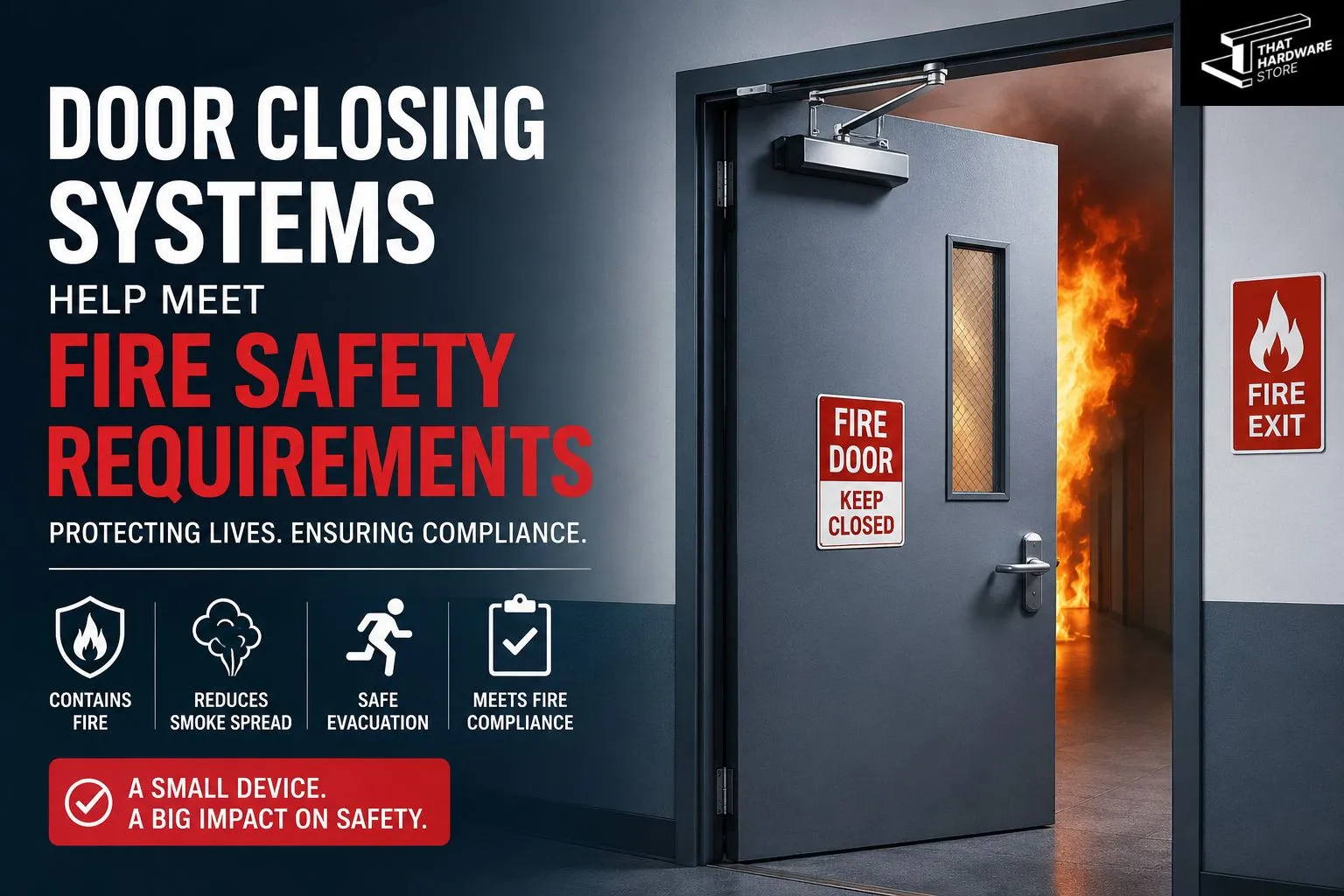

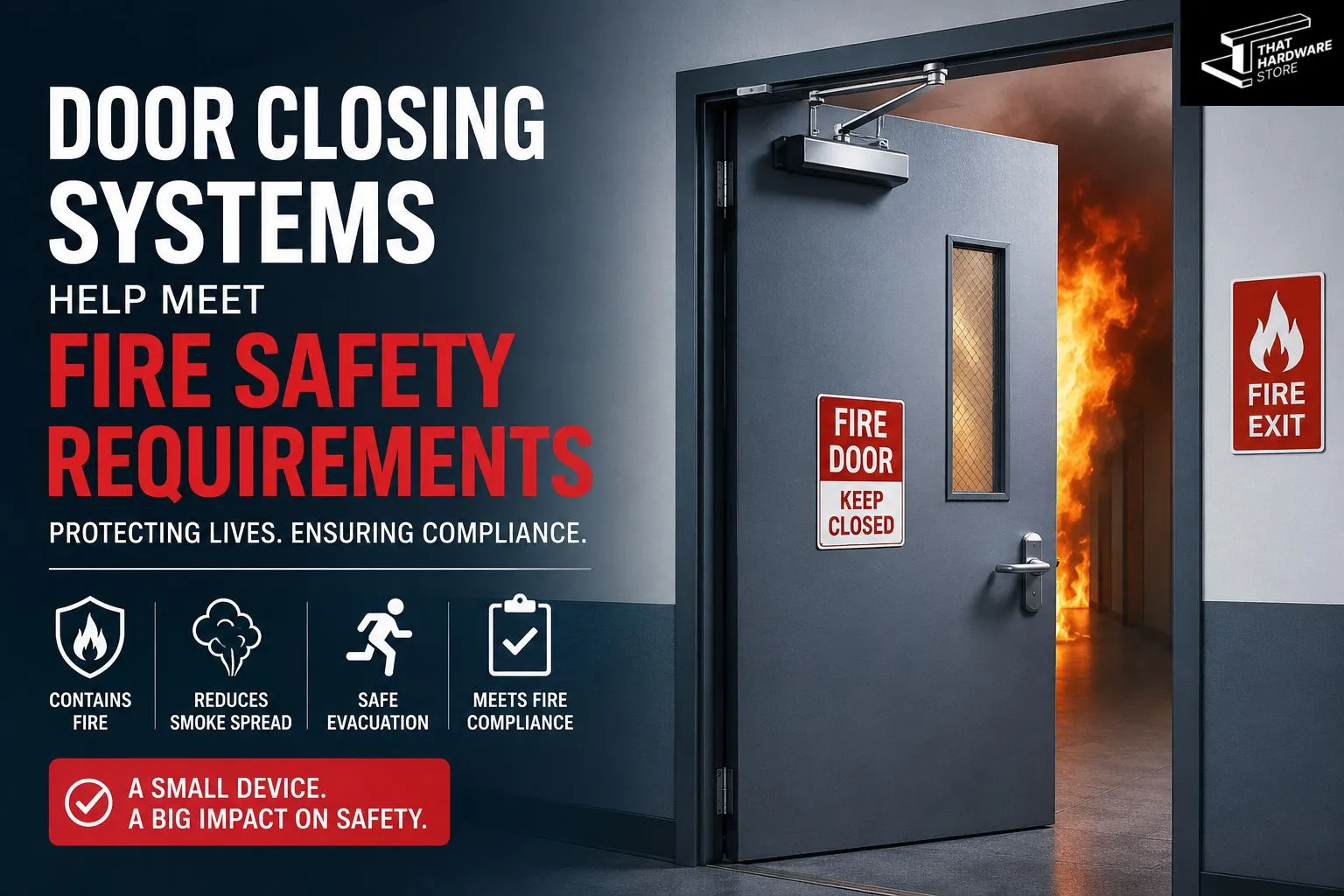
Fire safety is one of the most critical aspects of modern building design. Whether it is a commercial office, hospital, hotel, educational institution, or residential complex, every building must be equipped with systems that help prevent the spread of fire and smoke. While fire alarms, sprinklers, and extinguishers often receive the most attention, an equally important component is the door closing system.
A properly installed door closing system ensures that fire-rated doors automatically return to their closed position after being opened. This simple yet effective mechanism plays a vital role in containing fire, limiting smoke migration, and helping occupants evacuate safely during emergencies.
In this guide, we will explore how door closing systems contribute to fire safety compliance, why they are required in many buildings, and what factors should be considered when selecting door closers for fire-rated applications.
Understanding the Role of Fire-Rated Doors
Fire-rated doors are specially designed to withstand fire for a specified period, typically ranging from 30 to 120 minutes. Their primary purpose is to compartmentalize a building and slow the spread of flames, heat, and smoke.
However, a fire-rated door can only perform its intended function if it remains closed during a fire event. If occupants leave the door open, the protective barrier becomes ineffective. This is where door closing systems become essential.
By automatically closing the door after use, a door closer helps maintain the integrity of the fire compartment and supports overall building safety.
Why Door Closing Systems Are Important for Fire Safety
1. Prevent the Spread of Fire
One of the primary functions of a door closer is to ensure that fire doors remain closed when not in active use. Closed fire doors act as barriers that slow the movement of flames from one area to another.
Without a properly functioning commercial door closer, a fire can spread rapidly through open doorways, increasing damage and risk to occupants.
2. Limit Smoke Migration
Studies consistently show that smoke inhalation causes more fire-related injuries and fatalities than direct exposure to flames.
Automatic door closers help keep smoke contained within designated compartments, reducing its spread through corridors, stairwells, and escape routes. This provides occupants with safer evacuation paths and improves visibility during emergencies.
3. Support Safe Evacuation
Emergency exits and protected escape routes must remain functional during a fire. Self-closing door systems help maintain these protected zones by ensuring doors close automatically after use.
This allows people to move toward exits while minimizing exposure to smoke and heat.
4. Improve Fire Safety Compliance
Many building codes and fire safety regulations require self-closing mechanisms on fire-rated doors. Installing certified door closing systems helps property owners comply with applicable regulations and pass safety inspections more efficiently.
How Door Closing Systems Work
A door closer is a mechanical device designed to control the opening and closing motion of a door.
Most hydraulic door closers use spring tension and hydraulic fluid to regulate movement. When a door is opened, energy is stored in the spring. As the door is released, the spring gradually returns the door to its closed position while the hydraulic mechanism controls speed and force.
Modern door closer systems often include features such as:
- Adjustable closing speed
- Adjustable latching speed
- Backcheck function
- Delayed action closing
- Hold-open functionality (where permitted)
- Fire-rated certification
These features ensure smooth operation while maintaining safety requirements.
Types of Door Closing Systems Used in Fire-Rated Applications
Surface-Mounted Door Closers
Surface-mounted door closers are among the most commonly used options in commercial buildings. They are installed on the door or frame and offer excellent durability, easy maintenance, and reliable performance.
Concealed Door Closers
Concealed door closers are integrated within the door frame or leaf, providing a cleaner appearance while maintaining fire protection standards. They are often preferred in premium commercial interiors and hospitality projects.
Floor Spring Door Closers
Floor spring systems are commonly used for glass doors and heavy entrance doors. They provide controlled closing action while supporting higher door weights and traffic volumes.
Overhead Concealed Closers
These systems are hidden within the header section of the frame and are frequently used in architectural applications where aesthetics are important.
Industries That Depend on Fire-Rated Door Closers
Hospitals
Healthcare facilities require strict fire compartmentation to protect patients and staff. Door closing systems help isolate fire zones and maintain safe evacuation routes.
Hotels
Hotels experience constant foot traffic and require dependable self-closing doors to meet fire safety standards and protect guests.
Educational Institutions
Schools, colleges, and universities rely on fire-rated door hardware to protect students and staff while supporting emergency response plans.
Commercial Offices
Office buildings use door closer solutions to maintain compliance with building regulations and safeguard occupants during emergencies.
Industrial Facilities
Factories and warehouses often contain hazardous materials that increase fire risks. Proper door closer installation helps contain incidents and reduce damage.
Key Features to Look for in Fire-Rated Door Closing Systems
When selecting a door closer for fire-rated applications, consider the following factors:
Fire Certification
Choose products that have been tested and certified for use on fire-rated doors.
Door Size and Weight
Different door closers are designed for specific door weights and dimensions. Selecting the correct model ensures reliable operation.
Adjustable Closing Force
Adjustable force settings allow installers to fine-tune performance based on building requirements.
Durability
Commercial environments demand heavy-duty door closers capable of handling thousands of opening and closing cycles.
Accessibility Compliance
The closer should provide adequate closing force while remaining accessible for all users.
Common Mistakes That Affect Fire Door Performance
Even the best fire-rated doors can fail if the door closer is improperly selected or maintained.
Common issues include:
- Incorrect closer size
- Disabled closing mechanisms
- Improper installation
- Damaged arms or components
- Excessive closing speed
- Lack of regular maintenance
Routine inspections help ensure that self-closing fire doors continue to operate effectively throughout their service life.
Maintenance Best Practices
To maximize performance and compliance:
- Inspect door closers regularly.
- Check for oil leaks or visible damage.
- Verify that doors fully close and latch.
- Adjust closing speed when necessary.
- Replace worn components promptly.
- Schedule periodic professional inspections.
Preventive maintenance reduces downtime and helps maintain fire safety readiness.
Conclusion
Door closing systems are much more than convenience hardware. They are essential life-safety components that play a critical role in fire protection strategies across commercial, institutional, and residential buildings.
By ensuring that fire-rated doors close automatically, these systems help contain flames, restrict smoke movement, protect evacuation routes, and support compliance with fire safety regulations. Whether you are an architect, contractor, facility manager, or procurement professional, investing in high-quality door closer systems can significantly improve the safety and resilience of your building.
As fire safety standards continue to evolve, selecting reliable door closing systems and maintaining them properly remains one of the most effective ways to enhance building protection and occupant safety.
FAQ
Does closing doors help with fire?
Yes, closing doors helps slow the spread of fire, heat, and smoke between rooms. A closed door can create a protective barrier, improving occupant safety and providing more time for evacuation.
Why is it important to close doors during a fire emergency?
Closing doors during a fire emergency helps contain flames and smoke, protects escape routes, reduces property damage, and gives emergency responders more time to control the fire safely.
Are door closers required on fire doors?
Yes, most fire safety regulations require fire doors to have self-closing devices. Door closers ensure fire-rated doors automatically return to a closed position, maintaining their effectiveness during emergencies.
Why is closing windows and doors throughout a building so important during a fire?
Closing windows and doors limits oxygen supply to the fire, slows flame spread, reduces smoke movement, and helps contain the fire within a specific area, improving overall building safety.
Author's Bio
That Hardware Store is a trusted online destination for premium architectural hardware, furniture fittings, door hardware, kitchen accessories, and smart security solutions. With a focus on quality, functionality, and innovation, the team shares expert insights, buying guides, and industry knowledge to help homeowners, architects, interior designers, contractors, and builders make informed decisions. Through comprehensive resources and carefully curated products, That Hardware Store aims to simplify hardware selection while delivering reliable solutions for modern residential and commercial projects.























Sign in to leave a comment.