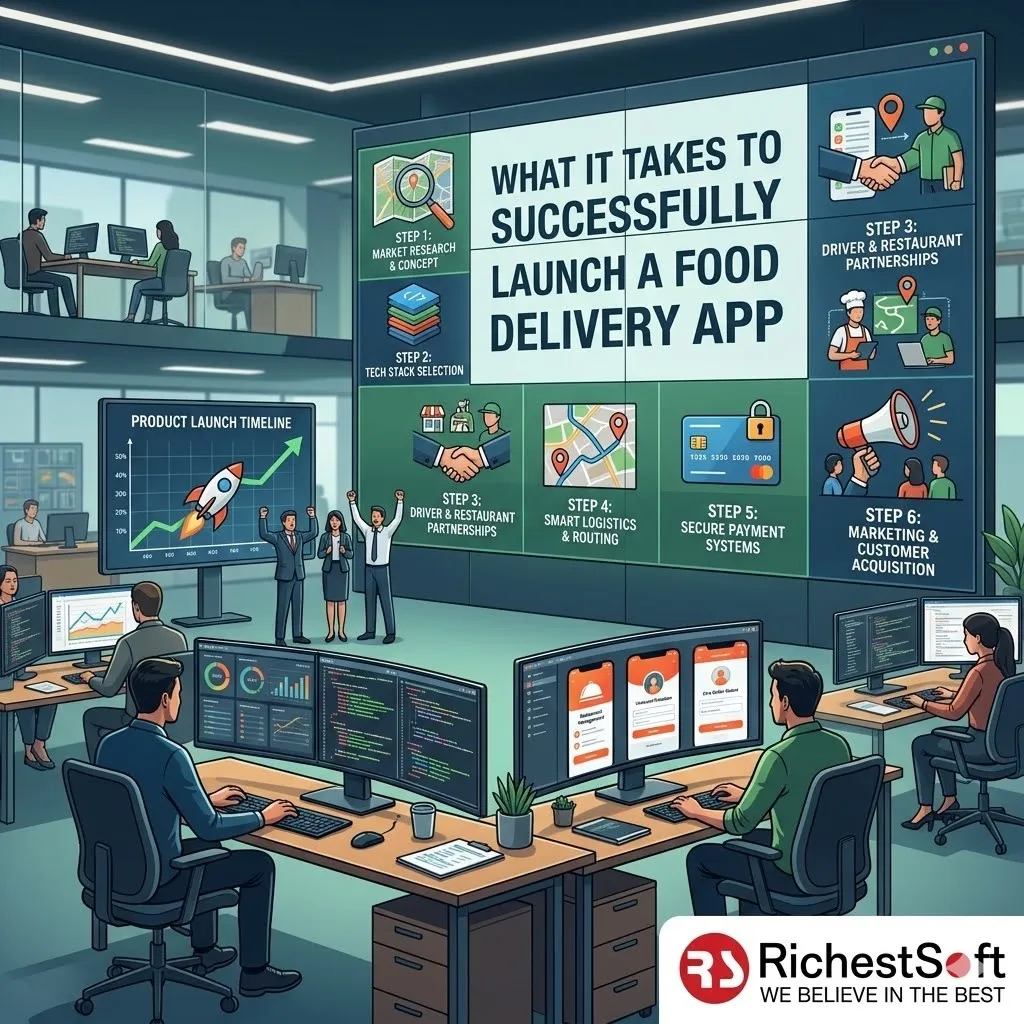

The food delivery industry has grown rapidly in the last ten years. This expansion is mainly due to new consumer habits and the rise of smartphones. Customers want convenience. Now, they expect to order food with a few taps and track deliveries in real time. Ultimately, modern users look for a smooth, digital experience from start to finish.
For entrepreneurs and businesses, launching a food delivery app presents a significant opportunity. However, success in this competitive space requires more than an idea. It needs a solid plan, the right tech, smooth operations, and a clear grasp of what users want.
This article looks at key elements for launching a food delivery app. It covers planning, essential features, technology, and strategies for scaling.
Understanding the Market Landscape
Before building a platform, it is critical to understand the market dynamics. The food delivery industry includes many stakeholders:
- Customers seeking convenience and variety
- Restaurants aiming to expand their reach
- Delivery partners managing logistics
Each group has unique needs, and a successful app must achieve a balance among all three.
Market research should focus on:
- Target audience behavior
- Competitor analysis
- Pricing models
- Service gaps
Knowing these factors helps you define a strong value proposition. It also positions your platform effectively.
Defining a Strong Business Model
A food delivery app must operate on a sustainable and scalable business model. Without a clear monetization strategy, long-term growth becomes difficult.
Common business models include:
- Commission-based model: Charging restaurants a percentage per order
- Delivery fee model: Customers pay for delivery services
- Subscription model: Offering premium features or free delivery for a monthly fee
- Advertising model: Restaurants pay for featured listings
Choosing the right model depends on your target market and competitive positioning.
Essential Features for Success
The functionality of your app plays a crucial role in user adoption and retention. A well-designed platform should provide a seamless experience for all users.
Customer App Features
- Easy registration and login
- Search and filter options
- Real-time order tracking
- Many payment methods
- Order history and reordering
Restaurant Panel Features
- Menu management
- Order notifications
- Inventory tracking
- Performance analytics
Delivery Partner Features
- Route optimization
- Order assignment
- Earnings tracking
- Status updates
These features ensure that all stakeholders can use the platform efficiently.
Focus on User Experience (UX)
User experience is crucial for success, as slow or complex interfaces drive users away quickly. A best doordash clone app focuses on seamless navigation, speed, and simplicity to retain users and boost engagement.
Key UX considerations include:
- Simple navigation
- Fast loading speed
- Clear design layout
- Minimal steps to complete an order
A well-optimized user experience increases engagement, improves retention, and enhances satisfaction.
Technology Stack and Development Approach
Choosing the right technology stack is essential for performance, scalability, and long-term maintenance.
Important components include:
- Frontend: User interface for mobile and web apps
- Backend: Server-side logic and database management
- APIs: Integration with payment gateways, maps, and notifications
- Cloud infrastructure: Ensures scalability and reliability
Businesses can choose between:
- Custom development: Fully tailored solution
- Ready-made solutions: Faster deployment with limited customization
The choice depends on budget, timeline, and long-term goals.
Real-Time Tracking and Logistics Management
Efficient logistics are the backbone of any food delivery platform. Customers expect accurate delivery times and real-time updates.
Key logistics features include:
- GPS-based tracking
- Automated dispatch system
- Route optimization
- Delivery time estimation
A well-managed logistics system reduces delays, improves efficiency, and enhances customer satisfaction.
Payment Integration and Security
Secure and flexible payment options are essential for building trust. Customers should have multiple ways to pay, including:
- Credit and debit cards
- Digital wallets
- UPI and online banking
- Cash on delivery
Security measures, like encryption and secure payment gateways, keep transactions safe. They also protect user data.
Marketing and User Acquisition Strategy
Launching an app is only the beginning. Attracting users requires a strong marketing strategy.
Effective approaches include:
- Search engine optimization (SEO)
- Social media marketing
- Paid advertising campaigns
- Referral and loyalty programs
Promotions, discounts, and partnerships with restaurants can also help in gaining initial traction.
Managing Competition
The food delivery market is highly competitive, with established players dominating the space. To succeed, new platforms must differentiate themselves.
Ways to stand out include:
- Offering unique features
- Focusing on niche markets
- Providing better pricing or faster delivery
- Enhancing customer support
A clear differentiation strategy helps in attracting and retaining users.
Scalability and Growth Planning
As your platform grows, it needs to manage more demand. It should do this without losing performance.
Scalability considerations include:
- Cloud-based infrastructure
- Load balancing
- Efficient database management
- Modular system design
Starting with growth in mind makes it easier to enter new markets and offer more services.
Customer Support and Feedback System
Customer support plays a crucial role in maintaining user satisfaction. We must resolve issues such as delayed orders or incorrect deliveries quickly.
An effective support system includes:
- In-app chat support
- Quick response time
- Complaint tracking
- Feedback collection
Listening to user feedback helps in improving services and building long-term relationships.
Legal and Compliance Considerations
Operating a food delivery platform involves adhering to various legal requirements.
These may include:
- Business licenses
- Food safety regulations
- Data protection laws
- Payment compliance standards
Ensuring compliance helps avoid legal issues and builds credibility.
Challenges in Launching a Food Delivery App
Despite the opportunities, several challenges must be addressed:
- High competition
- Effective logistics management
- Maintaining service quality
- Balancing supply and demand
- Customer retention
Overcoming these challenges requires continuous optimization and strategic planning.
Future Trends in Food Delivery Apps
The industry continues to evolve with advancements in technology. Some emerging trends include:
- AI-based recommendations
- Drone and autonomous deliveries
- Voice-enabled ordering
- Cloud kitchens and virtual brands
Staying updated with these trends can provide a competitive advantage.
Conclusion
To launch a successful food delivery app, you need smart planning. Use good technology and focus on user experience. It's not about building an app. It's about creating an ecosystem. This ecosystem connects customers, restaurants, and delivery partners efficiently.
Every step matters for success. This includes understanding the market and using scalable solutions. Businesses that innovate and improve operations often do well. When they focus on customer satisfaction, their success in this competitive industry grows.
A food delivery app can drive growth with the right approach. It provides convenience for users and creates new chances for businesses today.




























Sign in to leave a comment.