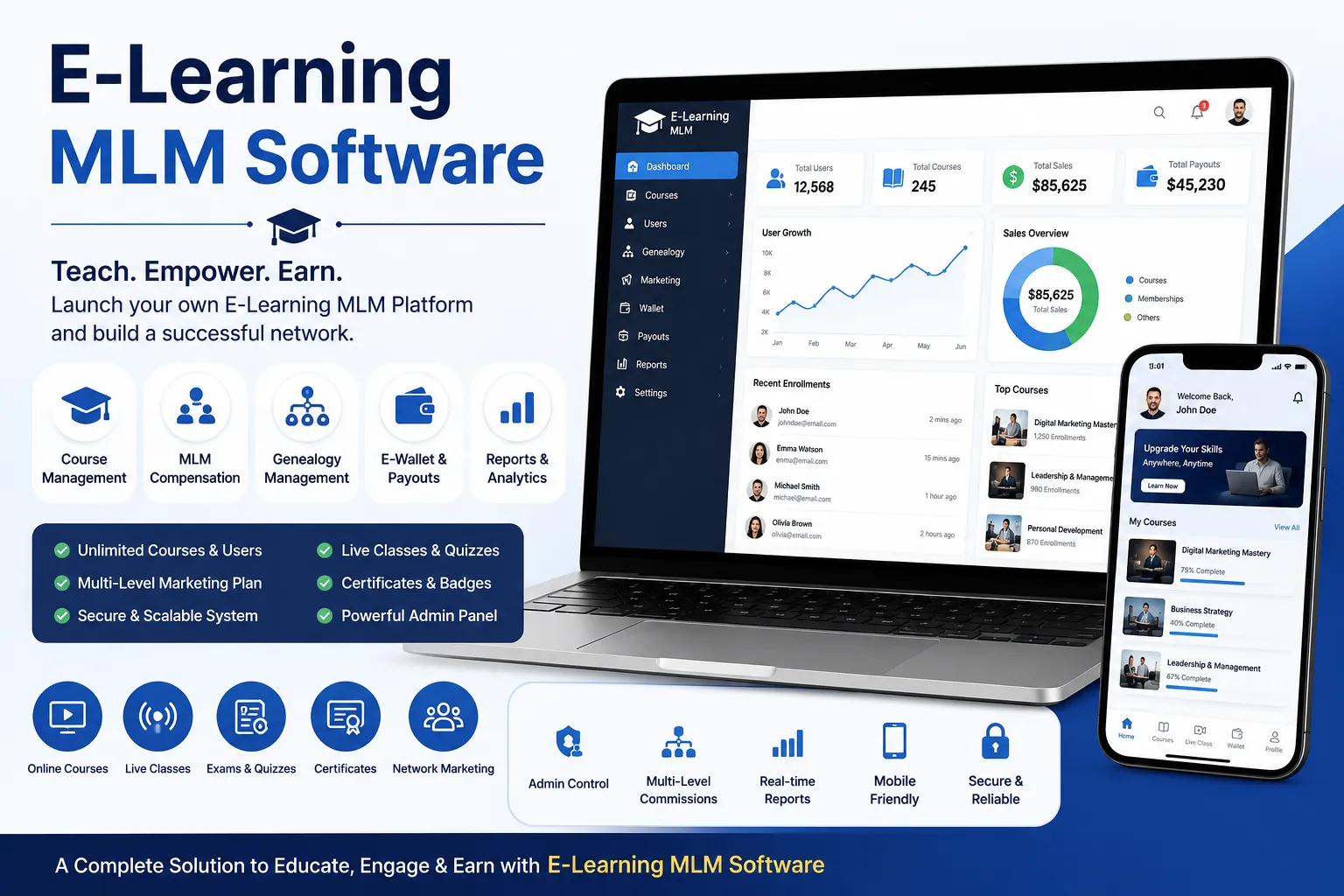

The overlap between e-learning platforms and multi-level marketing structures has produced a distinct category of software designed to manage both functions in one system. This article explains what that software does, how it is structured, and what considerations matter when evaluating it.
What Is E-Learning MLM Software?
E-learning MLM software is a platform that combines two separate functions:
- Course delivery — hosting and distributing digital educational content such as video lessons, quizzes, certificates, and learning paths.
- Network-based commission tracking — managing a distributor or referral network where members earn income based on enrollments made by people they recruit.
The software ties these two functions together so that a single dashboard handles both the education side (content, progress tracking, assessments) and the business side (downline management, commission calculations, payouts).
Core Features
Learning Management
- Course creation and upload (video, PDF, SCORM, quizzes)
- Student progress tracking and completion reports
- Certificate generation upon course completion
- Live or scheduled webinar integration
- Mobile-accessible course delivery
MLM Network Management
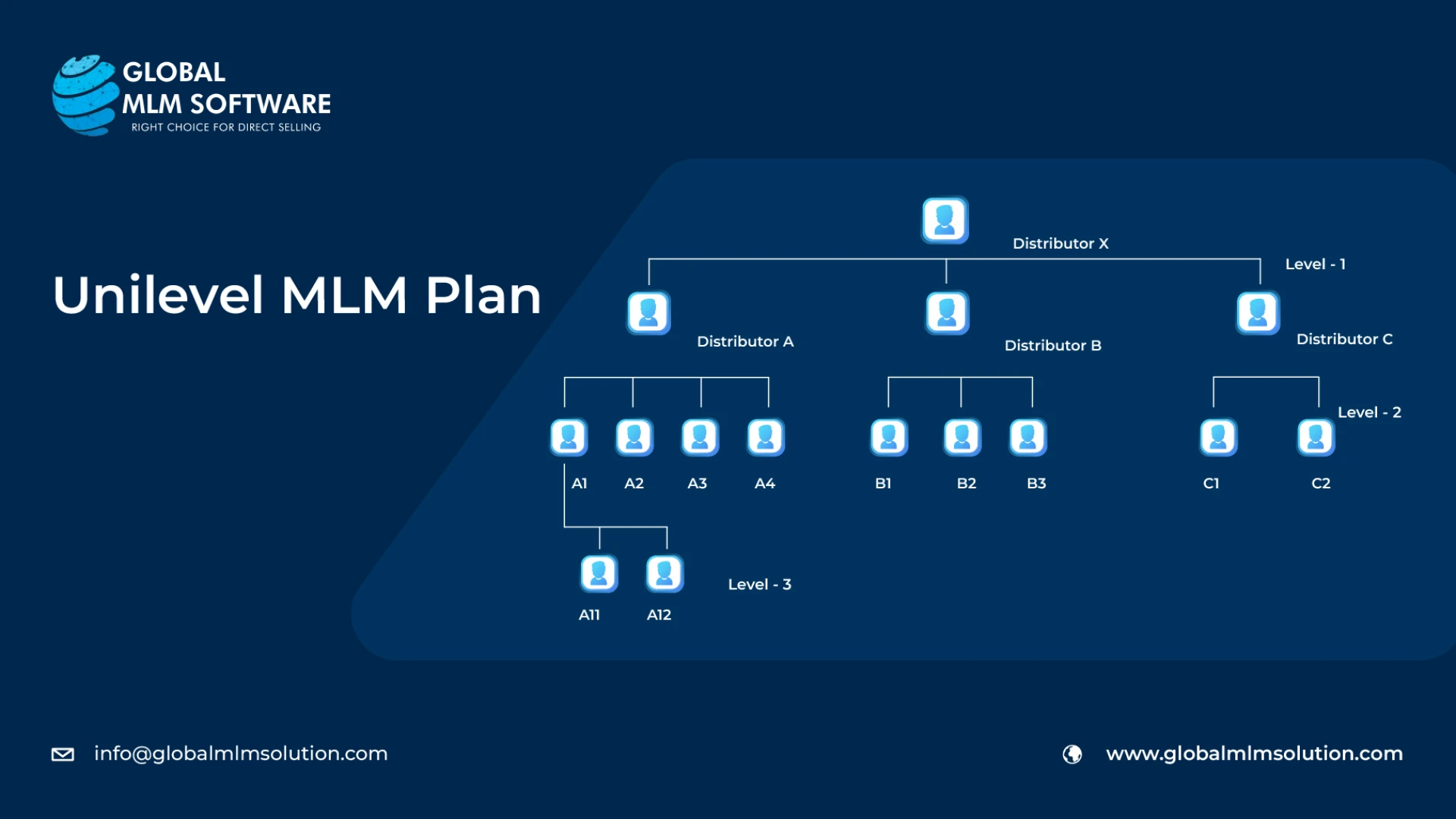
- Support for common compensation plan structures such as binary, unilevel, matrix, and board plans
- Downline visualization (tree or genealogy view)
- Real-time tracking of referrals and enrollment counts
- Rank or tier advancement based on defined performance metrics
Commission and Payout Handling
- Automated commission calculation based on the chosen plan
- Wallet systems for accumulating earnings
- Withdrawal request management
- Integration with payment gateways for payouts
User and Admin Controls
- Separate portals for administrators, distributors, and students
- KYC (Know Your Customer) document verification
- Role-based access and permissions
- Reporting dashboards covering sales, enrollments, and commissions
Common Compensation Structures Used
| Plan Type | Structure | How Commissions Flow |
|---|---|---|
| Binary | Two legs per distributor | Based on weaker leg volume |
| Unilevel | Unlimited width, limited depth | Percentage per level |
| Matrix | Fixed width and depth | Fills positions in set order |
| Board | Cycler-based | Members move through boards |
Each plan type affects how commissions are calculated and how the network expands. The software must be configured to match whichever plan the business has defined.
How Revenue Is Typically Generated
In an e-learning MLM setup, revenue comes primarily from course sales. A member purchases access to courses and also gains the right to refer others. When referred members purchase courses or memberships, the referring member earns a commission. That commission may pass up through multiple levels of the referral chain depending on the compensation plan in use.
This model differs from a standard e-learning marketplace where revenue is purely transactional between the platform and the learner.
Technical Aspects
Most e-learning MLM platforms are built as web applications with a backend for data management and a frontend for user interaction. Key technical details to look at include:
- Hosting: Cloud-hosted (SaaS) vs. self-hosted (script-based) options affect data control and monthly costs.
- Scalability: As network size grows, commission calculations become computationally heavier. The system needs to handle this without delays.
- Payment integrations: Support for local and international gateways varies by vendor.
- API availability: Allows integration with third-party tools such as CRM systems, email platforms, or external LMS tools.
- Security: Transactional platforms require SSL, encrypted user data, and role-based access controls.
Regulatory Awareness
MLM businesses are regulated differently across countries. Some jurisdictions draw a clear legal distinction between legitimate network marketing (where income is primarily product-driven) and pyramid schemes (where income is primarily recruitment-driven). Anyone operating in this space should:
- Understand local direct selling laws and MLM regulations.
- Ensure that the product (in this case, educational content) has genuine standalone value.
- Maintain transparent income disclosure for members.
- Consult legal counsel before launching, especially if operating across multiple countries.
Software alone does not determine compliance. Business model design and operational practices matter equally.
Use Cases
- Training companies that want their trainers or affiliates to expand reach and earn from referred enrollments.
- Corporate learning vendors exploring partner-driven distribution models.
- Coaching or self-development businesses that already operate referral programs and want to formalize them.
- Direct selling companies that offer training as part of their product catalog.
What to Evaluate Before Choosing a Platform
- Compensation plan flexibility — Does the software support the specific plan structure you need, or does it require you to adapt your plan to what the software supports?
- Content management depth — Can it handle the type and volume of content you intend to deliver?
- Reporting granularity — Are commission and enrollment reports detailed enough for auditing and member transparency?
- Customization scope — How much of the interface and logic can be modified without vendor involvement?
- Support and maintenance — What level of post-deployment support is included, and what are the upgrade terms?
- Total cost — Beyond the license or subscription fee, factor in setup, customization, hosting, and payment gateway charges.
Summary
E-learning MLM software addresses a specific operational need: running a content-based business through a referral or distributor network. The technology itself is a tool — its effectiveness depends on the quality of the educational content being delivered, the soundness of the compensation model, and the legal framework within which the business operates. Understanding what the software does and does not handle is the first step toward using it appropriately.


























Sign in to leave a comment.