Introduction
Artificial Intelligence is changing modern businesses. Companies use AI for automation, customer support, healthcare, retail, manufacturing, and security.
Two popular AI models are Edge AI and Cloud AI. Both help businesses process data and improve decision making.
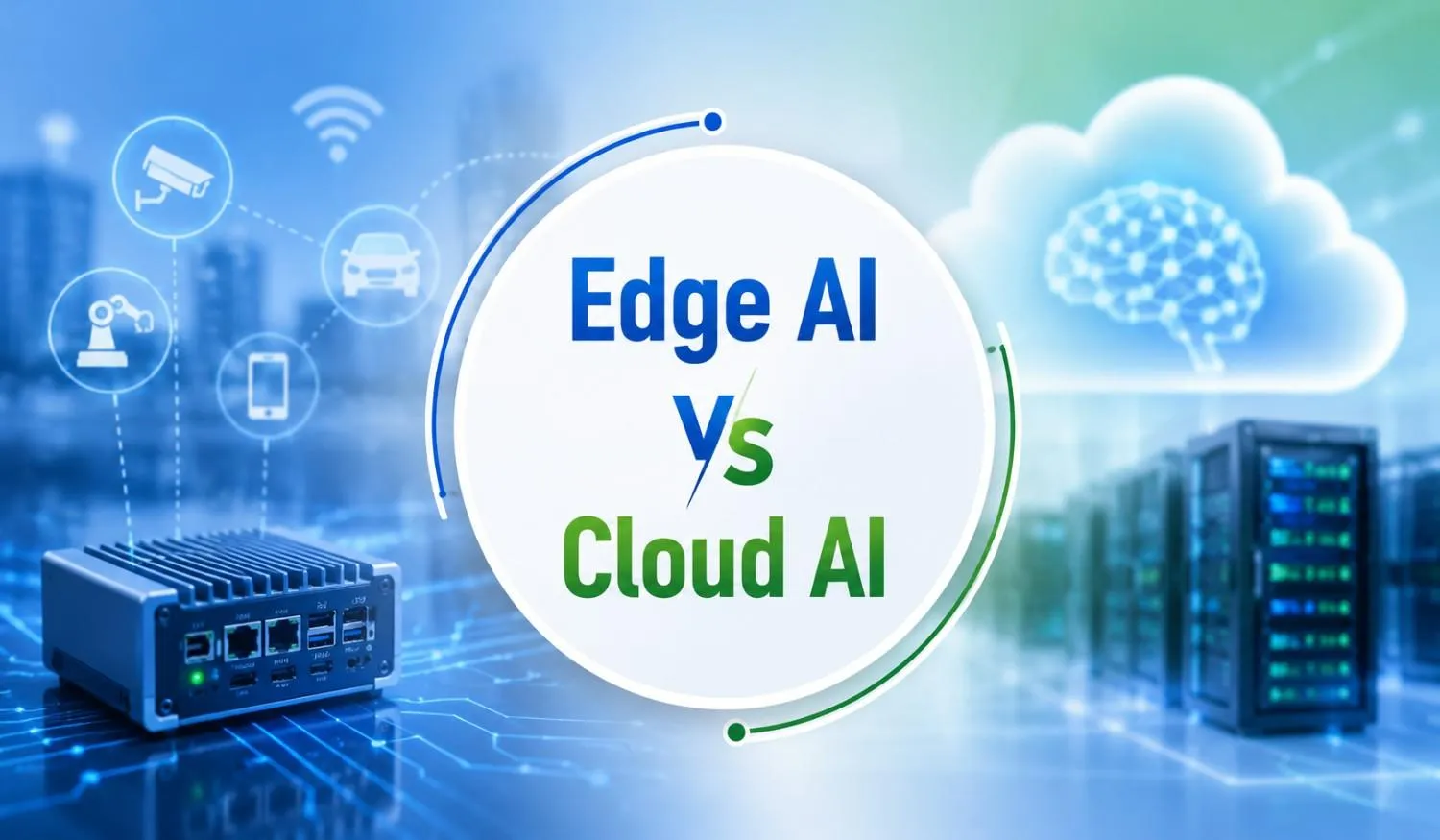
Edge AI works on local devices like smartphones, cameras, sensors, and IoT devices. Cloud AI processes data through cloud servers using the internet.
Businesses choose these technologies based on speed, security, cost, and scalability. Some companies need fast real-time processing, while others need large storage and computing power.
In 2026, the demand for AI solutions is growing very fast. Businesses are using smart technologies to improve efficiency and customer experience. Because of this, Edge AI and Cloud AI are becoming important for digital transformation.
This article explains the difference between Edge AI vs Cloud AI, including their benefits, challenges, use cases, and future importance.
What is Edge AI?
Edge AI is a technology that processes data directly on local devices instead of sending it to cloud servers.
Devices like smart cameras, drones, robots, smartphones, and self-driving cars use Edge AI.
Edge AI works close to the data source. This reduces delays and improves real-time performance.
For example, self-driving cars use Edge AI to detect traffic signs, roads, and nearby vehicles instantly. Smart cameras also use Edge AI for facial recognition and motion detection.
Edge AI systems use AI chips and machine learning models designed for local hardware. These systems provide fast processing with low power usage.
What is Cloud AI?
Cloud AI processes data using remote cloud servers and data centers. Information from devices is sent to the cloud for storage and analysis.
Cloud AI is useful for businesses handling large amounts of data. Cloud platforms provide strong computing power, large storage, and advanced AI tools.
Popular cloud providers include AWS, Microsoft Azure, and Google Cloud. These platforms help businesses build AI applications and automate processes.
Cloud AI is commonly used for:
- Customer analytics
- Recommendation systems
- Fraud detection
- Virtual assistants
- Enterprise software
However, Cloud AI depends on internet connectivity. Slow networks can affect performance.
Key Differences Between Edge AI vs Cloud AI
Data Processing
- Edge AI processes data on local devices.
- Cloud AI processes data on remote servers.
Speed and Latency
- Edge AI provides faster real-time responses.
- Cloud AI may have delays because data travels through the internet.
Internet Dependency
- Edge AI can work without stable internet.
- Cloud AI needs internet connectivity.
Storage and Computing Power
- Cloud AI has stronger computing power and larger storage.
- Edge AI devices have limited hardware resources.
Security and Privacy
- Edge AI keeps sensitive data on local devices.
- Cloud AI transfers data through servers, which may create privacy concerns.
Scalability
- Cloud AI is easier to scale using cloud resources.
- Edge AI scaling may require additional hardware.
Maintenance
- Cloud AI systems are easier to update centrally.
Edge AI devices may require individual maintenance.
Benefits of Edge AI
Faster Real-Time Processing
Edge AI provides instant responses. This is useful for healthcare systems, automation, and autonomous vehicles.
Better Privacy
Data stays on local devices, improving security and privacy.
Reduced Bandwidth Usage
Local processing reduces internet data usage and network costs.
Improved Reliability
Edge AI can continue working even during internet failures.
Energy Efficiency
Modern Edge AI devices are designed for low power consumption.
Benefits of Cloud AI
High Computing Power
Cloud platforms can process large amounts of data efficiently.
Easy Scalability
Businesses can increase cloud resources when needed.
Centralized Management
Companies can manage updates and security from one location.
Flexible Costs
Cloud AI often uses subscription-based pricing models.
Advanced AI Tools
Cloud providers offer machine learning and analytics tools for businesses.
Challenges of Edge AI
Limited Hardware Resources
Edge devices have less storage and computing power.
Higher Initial Costs
Businesses may need special AI hardware and chips.
Device Maintenance
Managing many devices can become difficult.
Complex Development
Edge AI applications may require advanced software optimization.
Challenges of Cloud AI
Internet Dependency
Cloud AI needs stable internet connectivity.
Latency Problems
Real-time applications may experience delays.
Privacy Risks
Sensitive data stored on cloud servers may create security concerns.
Ongoing Costs
Long-term cloud services can become expensive.
Use Cases of Edge AI
Edge AI is used in industries requiring fast processing.
Common examples include:
- Self-driving vehicles
- Smart surveillance cameras
- Industrial automation
- Healthcare monitoring
- Smart homes
- Drones and robotics
These applications need quick and reliable local processing.
Use Cases of Cloud AI
Cloud AI is ideal for centralized systems and large-scale analytics.
Common examples include:
- Customer analytics
- Recommendation engines
- Fraud detection
- Virtual assistants
- Business intelligence tools
- Enterprise software
Cloud AI helps businesses manage large datasets and centralized operations.
Future of Edge AI and Cloud AI
Both Edge AI and Cloud AI will continue growing in the future. Many businesses may use hybrid AI systems combining both technologies.
Edge AI will become more powerful with advanced AI chips and faster processors. Industries like healthcare, retail, transportation, and manufacturing will increase Edge AI adoption.
Cloud AI will continue supporting large-scale analytics, machine learning, and enterprise applications. Cloud platforms will also improve automation and security features.
The growth of 5G technology will improve Edge AI connectivity and reduce latency. Faster communication between devices and cloud systems will improve business operations.
AI technology will continue transforming industries worldwide. Businesses that understand Edge AI and Cloud AI can make better technology decisions.
Why Choose BigDataCentric
BigDataCentric helps businesses build smart and modern digital solutions. The company provides services in AI, cloud computing, big data, IoT, web development, and mobile app development. Their experienced team creates secure, scalable, and customized software solutions based on business needs. BigDataCentric focuses on quality development, smooth performance, and timely project delivery. The company also offers long-term support and maintenance services to help businesses grow with reliable technology solutions.
Key Reasons to Choose BigDataCentric:
- Expert team in AI, cloud, and big data technologies
- Customized and scalable software solutions
- Affordable services with quality development
- Transparent communication and on-time delivery
- Long-term support and global client trust
Conclusion
Edge AI and Cloud AI are important technologies for modern businesses. Edge AI focuses on fast local processing, while Cloud AI provides centralized computing power and scalability.
Businesses should choose the right AI solution based on speed, security, scalability, and budget. Industries requiring real-time responses often prefer Edge AI. Businesses handling large-scale analytics usually benefit more from Cloud AI.
Many companies may combine both technologies for better performance and flexibility. Understanding the differences between Edge AI vs Cloud AI helps businesses build smarter and future-ready AI systems.




















Sign in to leave a comment.