
Introduction:
In today's fast-paced world, the financial industry is facing challenges related to security and fraud. With the increasing use of technology, the number of cyber threats is also increasing. Edge computing can help financial services companies in addressing these challenges by providing enhanced security and reducing fraud. This article will explore the ways in which edge computing is being used to improve security and reduce fraud in the financial industry.
What is Edge Computing?
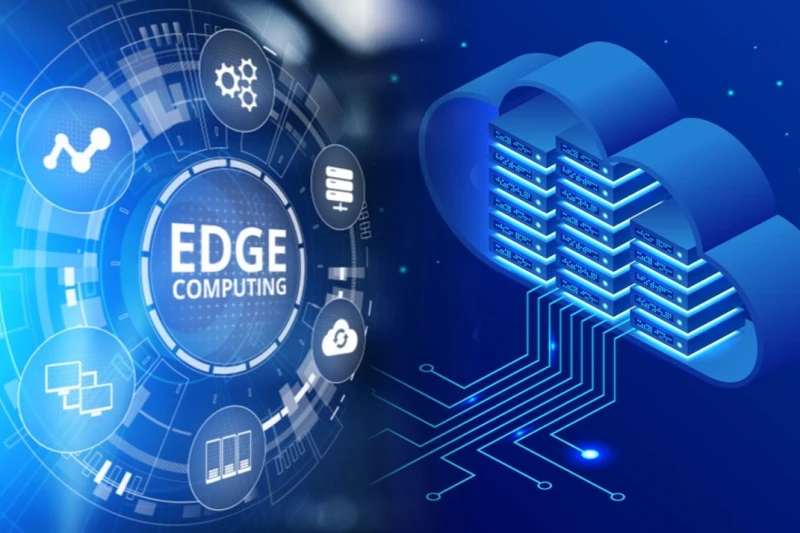
Edge computing refers to the practice of processing data at the edge of a network, rather than in a centralized data center. This allows for faster processing times and reduced latency, as data does not need to be transmitted over long distances. Edge computing can be used in a variety of industries, including finance, to improve the performance of applications and services.
How Edge Computing is Used to Enhance Security in Financial Services
One of the major ways in which edge computing is used to enhance security in financial services is through the use of edge-based security devices. These devices, such as firewalls and intrusion detection systems, can be placed at the edge of a network to monitor and protect against cyber threats. This can help to prevent attacks before they reach the data center, reducing the risk of data breaches.
Additionally, edge computing can be used to implement security protocols such as multifactor authentication and encryption. This can help to protect sensitive data and prevent unauthorized access. Furthermore, Edge computing enables financial services to store their data in a decentralized manner, reducing the risk of a single point of failure and increasing the resilience of their systems against cyber attacks.
How Edge Computing is Used to Reduce Fraud in Financial Services
Another way in which edge computing is being used to improve security in financial services is through the use of edge-based analytics. By analyzing data at the edge of a network, financial services companies can quickly identify and respond to suspicious activity, reducing the risk of fraud.
Moreover, With edge computing, financial services companies can perform real-time fraud detection and prevention, by using machine learning and artificial intelligence algorithms. These technologies can help to detect patterns and anomalies that indicate potential fraud, and then take action to prevent it. This can be particularly useful for detecting fraudulent transactions in areas such as credit card usage or online banking.
Challenges and Limitations
One of the main challenges of edge computing is the management and maintenance of edge devices. Since these devices are often deployed in remote locations, it can be difficult to access them for updates and maintenance.
Moreover, the cost of deploying and maintaining a large network of edge devices can be high, and financial services companies must weigh the costs against the benefits of edge computing.
Another challenge is the data privacy and compliance concerns, as the data being processed at the edge needs to be protected and should be compliant with the relevant laws and regulations.
Conclusion
Edge computing is an important technology that can help financial services companies to enhance security and reduce fraud. By processing data at the edge of a network, companies can quickly identify and respond to suspicious activity, reducing the risk of data breaches and fraud. However, there are challenges associated with edge computing, including the management and maintenance of edge devices, and the costs associated with deployment. Nonetheless, with careful planning and implementation, financial services companies can take advantage of the benefits of edge computing to improve their overall security and reduce the risk of fraud.
0









Sign in to leave a comment.