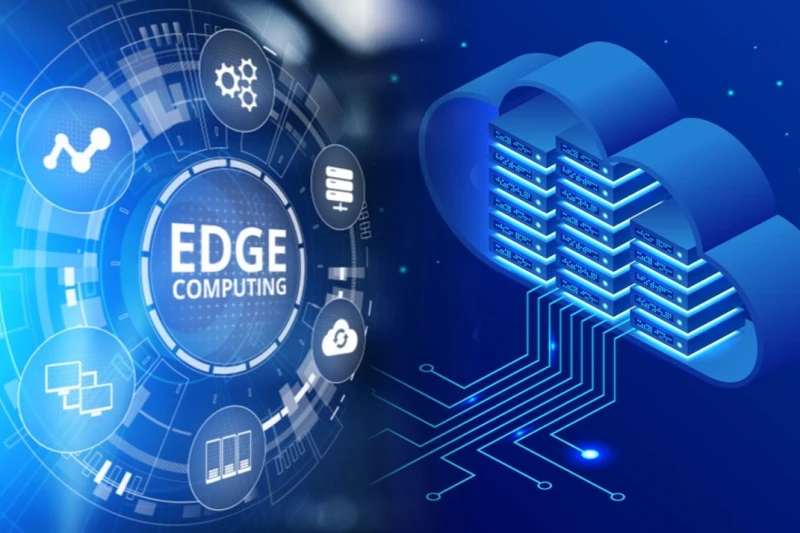

Edge computing transforms data processing by bringing computing power closer to where it is created. Rather than using remote cloud servers, edge computing handles data in settings, eliminating latency and making things more efficient. This is critical in sectors where real-time action is vital, including healthcare, manufacturing, and smart cities.
Furthermore, by processing data close to its source, you can respond quicker, enhance security, and save bandwidth.
Want to know more? This blog will teach you how edge computing provides real-time data, smartening and streamlining your business operations.
1. Minimizing Latency to Make Quicker Decisions
One mechanism by which edge computing provides real-time data for intelligent decision-making is by reducing latency. Latency refers to the period between data transfer and processing. With cloud computing, data must be transmitted to a central server that can be remotely located, thus causing latency and hindering real-time decision-making.
In addition, edge computing solves this by processing data much nearer to where it is generated, significantly reducing response time. This is important in use cases like autonomous vehicles, where a small delay time could be fatal.
2. Improving Data Security and Privacy
When information is transferred over long distances to a cloud server, it is exposed to cyber-attacks. Edge computing ensures data processing remains near its source, making it less likely to be hacked. This comes in handy in sectors such as finance and healthcare, where data needs to be safeguarded.
When you are processing data locally, you reduce the potential for data breaches and more effectively address the needs of privacy regulations. Edge computing allows you to have greater control over data security and privacy, and you can store sensitive data within your environment with access available only to approved users.
3. Minimizing Bandwidth and Cloud Expenses
Getting all that information transmitted back and forth to the cloud is not only costly but also time-consuming. With edge computing, information is processed locally, so devices do not need to speak to the cloud 24/7, cutting down on bandwidth use and costs.
This is what edge computing manages:
- Only the most pertinent information is sent up to the cloud with edge computing, reducing the amount of data transmitted.
- Lower costs for cloud storage because information is handled at the edge; you do not need to send and store everything there.
- All that congestion is eliminated, and your network is faster and more responsive.
- Most edge devices are capable, even in the absence of the internet, of providing uninterrupted services.
- Workload partitioning by edge computing enables better resource utilization.
Such operating and financial improvements help firms reduce expenses without affecting performance or reliability.
4. Enhancing IoT Performance
Smart devices powered by the Internet of Things (IoT), including smart cameras, sensors, and wearable devices, help gather, analyze, and share data. When IoT devices depend on the cloud for computing, unavoidable latency can result. So, at that time, edge computing addresses this challenge by processing data at the source. This ensures faster response times and real-time insights.
Take smart cities, for instance, where traffic sensors analyze roadway conditions in real-time and control signals accordingly without requiring permission from the cloud. This both speeds traffic and backs up traffic, making it seem as if traffic flow has improved dramatically while it actually is the opposite, an artificial reduction in congestion. By bringing processing power near to devices, edge computing enables IoT applications to become more responsive to evolving situations, more intelligent, and more efficient.
5. Enabling AI and Machine Learning Applications
Both machine learning (ML) and artificial intelligence (AI) rely on large data sets to make accurate predictions. Traditionally, this information is transmitted over to external cloud servers for computation, leading to latency. Edge computing enables AI to be placed where data is created, giving the ability to analyze data in real time.
In sectors such as retail, AI-enabled cameras can monitor consumers’ shopping patterns in real time and immediately reorient store structures to guide shoppers for a more effective shopping encounter.
Furthermore, in the field of agriculture, intelligent sensors are able to sense the state of the soil and offer recommendations for when to water. There is no need for reliance on the cloud. With the right mix of AI and edge computing, you’re empowered to make real-time, data-driven decisions without being cloud-dependent.
6. Fueling a Global Innovation Ecosystem for New Healthcare Technologies
In healthcare, the value of immediate, real-time data is illustrated in patient monitoring and emergency response. Edge computing enables hospitals to process data locally, which means faster and more accurate diagnoses. For example, in the event of a cardiac incident, wearables can continuously monitor a user's heart rate and detect any abnormality in real time, alerting physicians instantly and without a break in patient care.
By using edge computing, hospitals can reduce their dependence on cloud-based data centers, improving response times and patient care overall. In rural areas, this is particularly beneficial, as clinicians are able to get vital health information with minimal internet speed and connection. We owe it to patients to ensure that edge computing continues to transform healthcare into a more intelligent, efficient, and ultimately more life-saving industry.
Conclusion
Edge computing changes the way data is processed by moving it closer to its intended application. Lowering latency, increasing security, reducing costs, and allowing for real-time communication are transforming industries like healthcare and retail.
By using the power of edge computing, you can pave the way for smarter, faster, and more reliable decisions, driving efficiency and innovation across your organization. Edge computing is the secret ingredient to a data-driven future, whether in smart cities, autonomous vehicles, or industrial automation.

























Sign in to leave a comment.