
In India, every few minutes, a person is being rushed to a hospital with a blocked artery. And most doctors will tell you the only way for you to feel better is by using stents or bypass surgery, but a non-surgical alternative in heart therapy is challenging this status quo: EECP Treatment for Heart Blockage.
If you haven’t heard about it in your hospital’s waiting room, it’s not just you. But if you are someone with multiple blockages, a history of angina, or just plain sick and tired of living under the shadow of a recurring heart event, this might just be the best thing you’ve read so far today.
What is EECP Treatment for Heart Blockage?
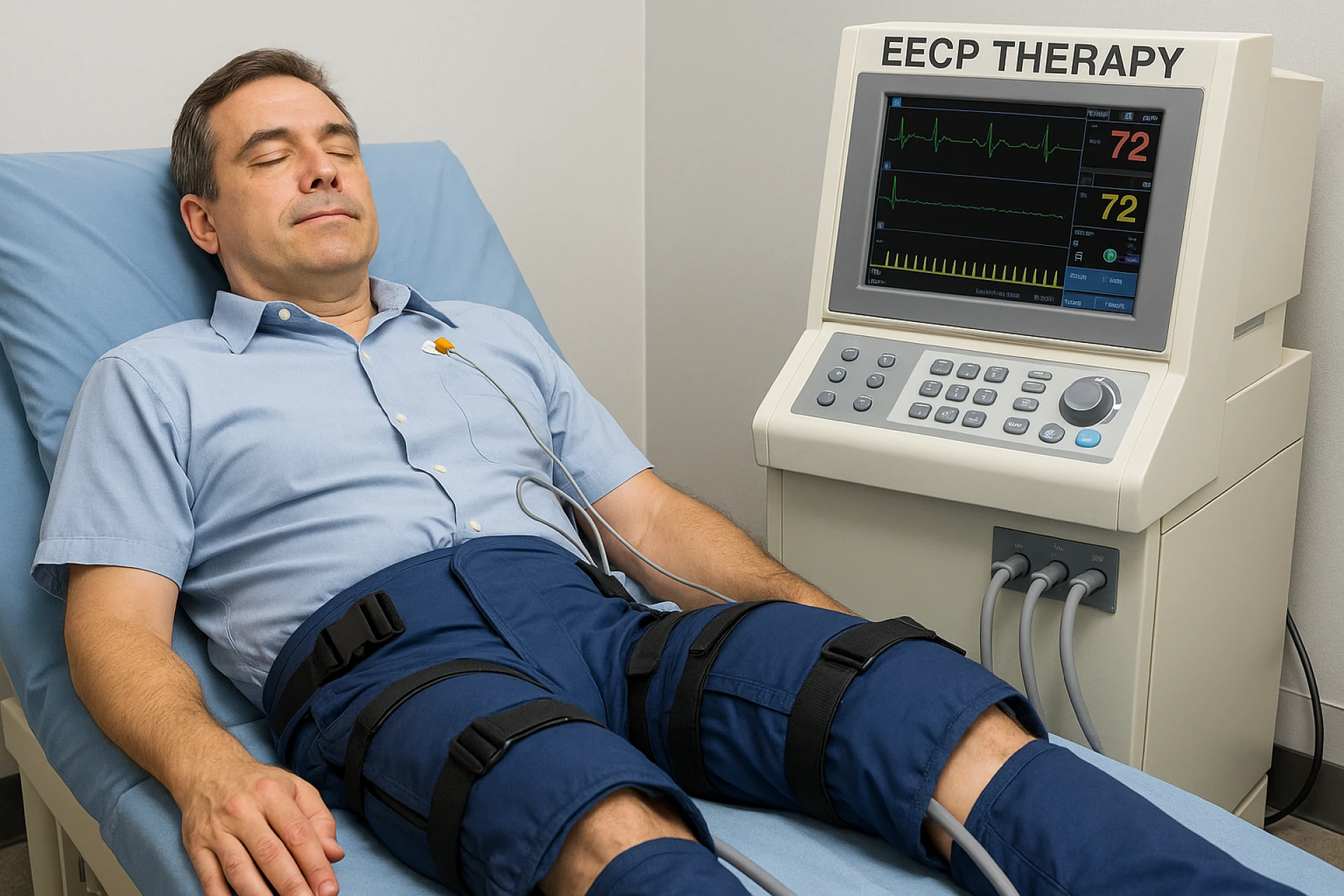
EECP (Enhanced External Counter Pulsation) is a non-invasive treatment that increases blood flow to your heart by gently squeezing your legs in time with your heartbeat. This causes the body to generate new paths around the clogged arteries, effectively forming its own bypass.
But this is not some theoretical concept or fringe medicine. EECP is:
- US FDA-approved
- Supported by studies at Harvard, the Mayo Clinic, and JACC
- It is used globally
- Available as an official treatment through government and private hospitals all over India
And yet, many people are still wondering: Why haven’t I heard about this before?
The Hard Truth About Heart Blockages
Most heart blockage patients are not told all their options
Here’s what usually happens when someone is diagnosed with heart blockage:
An angiography report is handed to them.
Doctor: “90% heart blockage.” The physician says, “There’s a 90% blockage. You need a stent or bypass right away.”
The patient, fearful, concurs.
Very few are told:
“There is a non-invasive treatment as well, called EECP, which can help restore blood flow naturally without surgery.” And this ignorance is costing people not just money, but quality of life.
What sets EECP apart from other heart blockage treatments?
There’s a side-by-side comparison most hospitals won’t even show you:
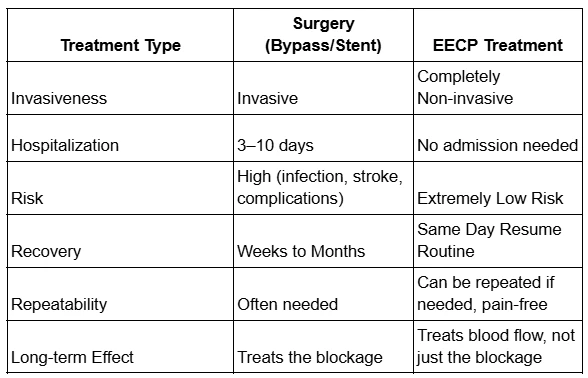
This is where the true magic of EECP occurs:
It doesn’t mess with the blocked artery — it makes new ones around it. The result?
Your heart gets more oxygen, more blood, and you feel dramatically better, without a scalpel ever touching your body.
What's Involved in the EECP Treatment for Heart Blockage?
No ICU. No anesthesia. No fear.
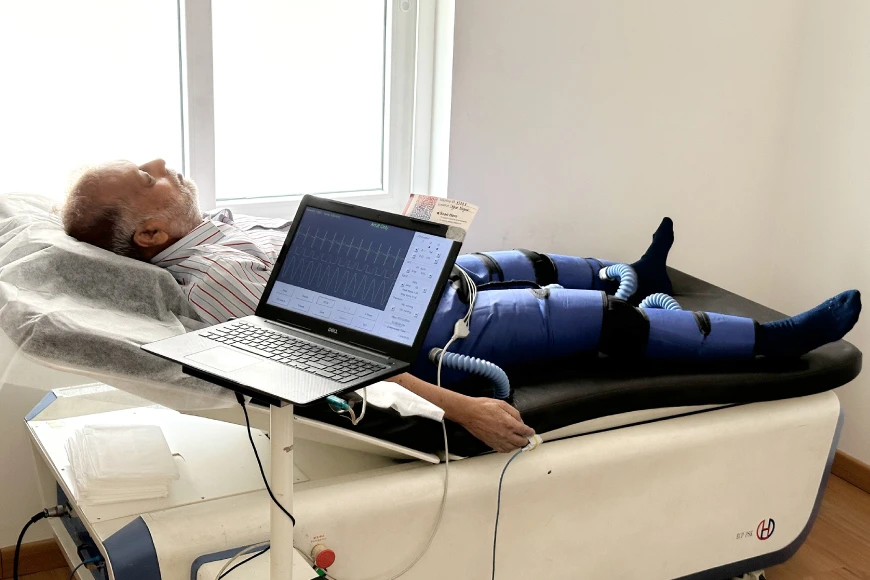
Here’s what the therapy is actually like:
- You recline on a special treatment table.
- Pneumatic cuffs are fastened around your legs and thighs.
- These cuffs expand and contract in rhythm with your pulse.
- In doing so, more blood is sent returning towards the heart during diastole (the time when the heart relaxes).
- Over time, the heart establishes new blood channels — known as collateral circulation.
- One session is approximately 1 h , and 35–40 sessions per treatment course are provided over a few weeks.
The Most Underrated EECP Outcomes
Let’s move beyond theory and look at what’s happening in patients who undergo EECP for heart blockage:
1. Angina Reduces or Disappears Completely patients
Patients with chronic chest pain have reported zero episodes post-EECP, even those with 90–95% blockages.
2. Exercise Tolerance Improves
From being breathless at 100 meters to walking 2 km daily, EECP patients regain stamina without strain.
3. Medication Dependency Reduces
In several documented cases, patients can cut down on nitrates, beta-blockers, and statins under guided care.
4. Mental Well-Being Rises
The constant fear of “another attack” reduces. Patients report better sleep, confidence, and stress reduction.
Is there Scientific proof that EECP works for Heart blockage?
Yes. And here’s the data:
- A 5-year follow-up study published in Circulation showed significant improvement in blood supply and angina reduction post-EECP.
- The International EECP Registry tracked thousands of patients and found 75-85% long-term success in symptom relief.
- India’s SAAOL Heart Centre has thousands of documented cases where EECP has reversed patient symptoms and improved quality of life.
Who can be considered a Candidate for EECP in Heart Blockage?
- Patients with multiple or diffuse blockages
- Those unfit for surgery due to age or comorbidities
- Individuals who have had stents/bypass, but symptoms returned
- People want a non-surgical approach to prevent future heart attacks
- Young heart patients who want a sustainable recovery
How to Choose a Good EECP Center?
- It is important to select the right EECP provider. Look for:
- US FDA-approved EECP machines
- Cardiologists trained or EECP-certified practitioners
- A more comprehensive approach (diet, stress, lifestyle support)
- The Echocardiography and lipid profiling for transparent monitoring of progress
You're Entitled to Know All Your Options
EECP Treatment for Heart Blockage is not a miracle. It’s medicine meeting wisdom. It does not guarantee overnight cures. But it does offer something surgeries rarely do:
A chance to heal without harm. If you or someone you care about has been informed that there’s no choice but surgery, stop. Ask about EECP. Research the clinics. Speak to patients because you are certainly entitled to expect it.


























Sign in to leave a comment.