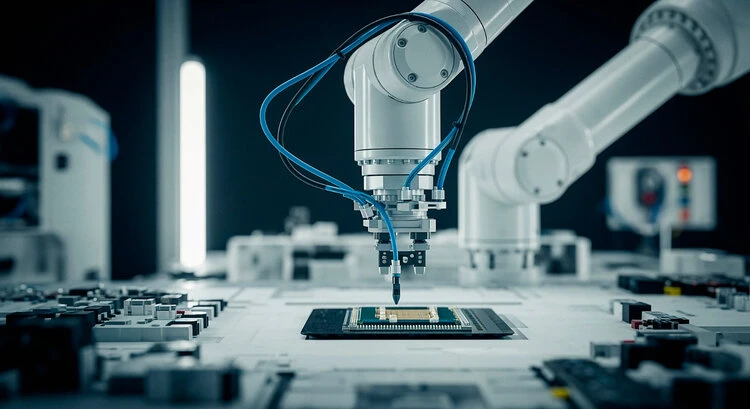

If you’re considering electronics and communication engineering (ECE) or trying to understand the electronics and communication engineering syllabus, it helps to know what the degree is trying to build in you.
ECE sits between hardware and systems: signals moving through wires and air, circuits that shape those signals, and embedded devices that turn signals into action. A BTech in electronics and communication can prepare you for very different careers—semiconductor roles, embedded/IoT, communications, even software—depending on which parts of the syllabus you actually become competent in.
This blog breaks down what you typically study, how the years fit together, and how to use the syllabus so it translates into real capability.
1) What electronics and communication engineering really is
ECE is about designing and working with electronic systems that sense, process, and transmit information.
That includes:
- electronic circuits (analog and digital)
- signals and systems (how information behaves and how we process it)
- communication systems (how data moves over channels—wireless or wired)
- embedded systems (hardware + software working together)
- VLSI/semiconductors (how chips are designed and how logic is implemented)
ECE is “engineering-heavy” because it relies on math, measurement, and careful design constraints. Therefore, the syllabus emphasizes fundamentals before specialization.
2) Electronics and communication engineering syllabus: typical year-wise structure
Year 1: Foundations (math + basics)
Common components:
- engineering mathematics (calculus, linear algebra, probability basics)
- basic programming (C/Python depending on curriculum)
- physics/electrical basics
- general engineering courses (varies)
Why it exists:
ECE becomes math-driven very quickly (signals, control, communication). A weak foundation makes later subjects feel like memorization instead of understanding.
Year 2: Electronics fundamentals (circuits + devices)
Typical subjects:
- Network Theory (circuit analysis)
- Electronic Devices and Circuits (diodes, BJTs, MOSFETs basics)
- Analog Electronics
- Digital Electronics / Logic Design
- Signals and Systems (often introduced here)
What you gain:
You begin to understand how electronic systems are built from components, and how signals behave inside those systems.
Year 3: Communication + embedded + system-level thinking
Typical subjects:
- Analog and Digital Communication
- Microprocessors & Microcontrollers
- Electromagnetic Theory
- Control Systems (in many programs)
- Digital Signal Processing (DSP)
- Communication Networks / Computer Networks (sometimes)
What you gain:
You move from “circuits on paper” to systems that communicate, compute, and control.
Year 4: Specialization + capstone
Common directions through electives:
- VLSI design, HDL (Verilog/VHDL), FPGA
- Embedded systems, IoT
- Wireless and mobile communication
- Antennas and microwave engineering
- Robotics/control, sensor systems
- Signal processing applications
Plus:
- major project / capstone
- internship / industry project (in stronger programs)
What you gain:
This year is where you build a profile. The project and electives decide what you look like to employers.
3) Core subjects you’ll typically see (and what each is for)
Circuit analysis / Network theory
Teaches how to analyze current, voltage, impedance, frequency response.
Why it matters: it’s the base for analog design, RF basics, and debugging.
Electronic devices (diodes, transistors, MOSFETs)
Teaches how components behave physically and electrically.
Why it matters: you can’t design or troubleshoot circuits without understanding device behavior.
Analog electronics
Amplifiers, feedback, op-amps, filters.
Why it matters: sensors, audio, power regulation, and signal conditioning still rely on analog fundamentals.
Digital electronics
Logic gates, combinational/sequential circuits, state machines.
Why it matters: it’s the base for embedded design, processors, FPGA/VLSI thinking.
Signals and systems
Time/frequency domain thinking, system response, transforms basics.
Why it matters: it explains how real signals behave and how systems modify them—core for DSP and communications.
Digital signal processing (DSP)
Sampling, filtering, spectral analysis.
Why it matters: communications, audio/image processing, radar-like applications, and many sensor pipelines rely on DSP.
Communication systems
Analog and digital communication, modulation, noise, channel concepts.
Why it matters: it’s the foundation for wireless, networking at the physical layer, and RF systems.
Microprocessors and microcontrollers / Embedded systems
Programming hardware, interfacing sensors/actuators, real-time behavior.
Why it matters: a large share of ECE jobs revolve around embedded systems, IoT devices, and hardware-software integration.
Electromagnetics / antennas (often challenging but important)
Fields, waves, transmission lines, antenna basics.
Why it matters: essential for RF/wireless design and understanding signal propagation.
4) What a BTech in electronics and communication can lead to (realistic pathways)
ECE is flexible, but the pathway depends on what you choose to get good at:
Pathway A: Embedded systems / IoT (very common)
Build competence in:
- C/C++ for microcontrollers
- interfacing sensors, communication protocols (UART/I2C/SPI)
- basic PCB concepts, debugging tools
- RTOS basics (optional but valuable)
Pathway B: VLSI / semiconductor roles (high specialization)
Build competence in:
- digital design fundamentals
- Verilog/VHDL
- timing, verification basics
- FPGA projects and structured lab work
Pathway C: Communications/RF
Build competence in:
- communication theory
- DSP
- RF concepts + antennas (electives matter)
- simulation tools exposure (if available)
Pathway D: Software roles (possible, but you must deliberately build for it)
Many ECE students move into software, but it requires:
- DSA practice
- programming projects
- internship alignment
ECE gives you problem-solving and systems thinking, but software hiring is skill-tested, therefore your preparation must be explicit.
5) How to use the syllabus so it becomes employable skill
A practical approach is to tie subjects to projects:
- After digital electronics: build a small state-machine-based system on a basic dev board
- After microcontrollers: build a sensor device that logs data and communicates it (Bluetooth/Wi-Fi module)
- After DSP: implement a filter or signal analysis project with real data
- After communication systems: build a simulation or practical modulation demo
- In final year: choose a capstone aligned to a pathway (embedded/VLSI/comm)
This works because employers trust demonstrable builds more than grades.
Conclusion
Electronics and communication engineering is a hardware-and-systems discipline built around circuits, signals, communication, and embedded computing. The electronics and communication engineering syllabus typically progresses from math and circuit foundations to devices, signals, communication systems, embedded systems, and then specialization through electives and a capstone. A BTech in electronics and communication can lead to embedded/IoT, VLSI, communications/RF, or even software—depending on what you choose to master and what you build as proof through projects and internships.





























Sign in to leave a comment.