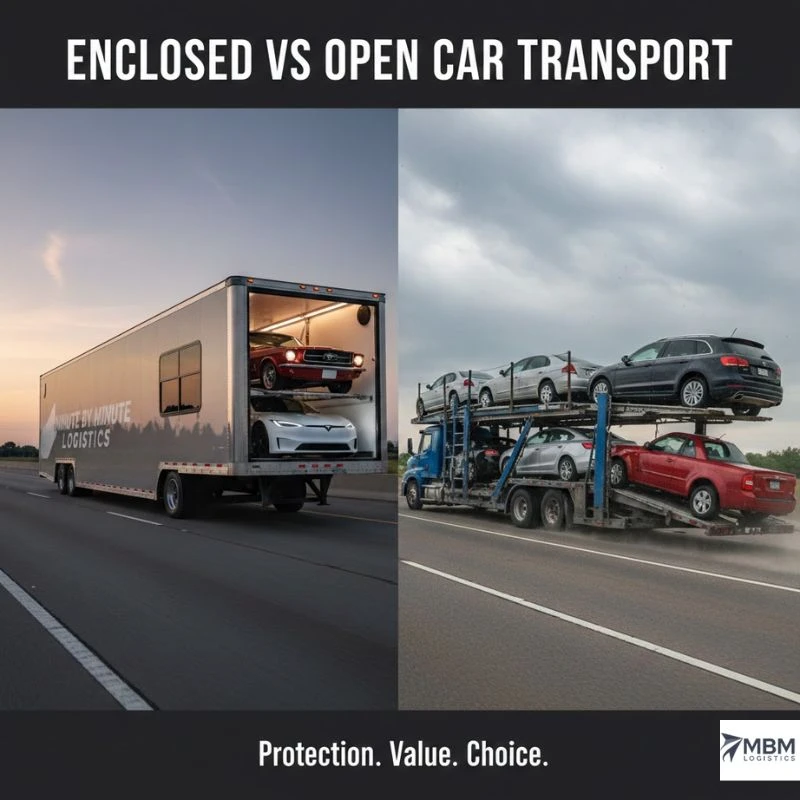

What You Really Need to Know Before Shipping
If you’ve ever bought a car out of state or planned a relocation, you’ve probably stared at an auto transport quote and thought: “Do I really need enclosed shipping, or is open transport fine?” It’s a common question—but the answer isn’t always straightforward.
Whether you’re moving a family sedan from New York to Los Angeles, shipping a classic Mustang from Dallas to Miami, or transporting a Tesla Model S Plaid across the country, the choice between open and enclosed transport can cost hundreds or thousands of dollars. Here’s a deep dive based on real industry experience.
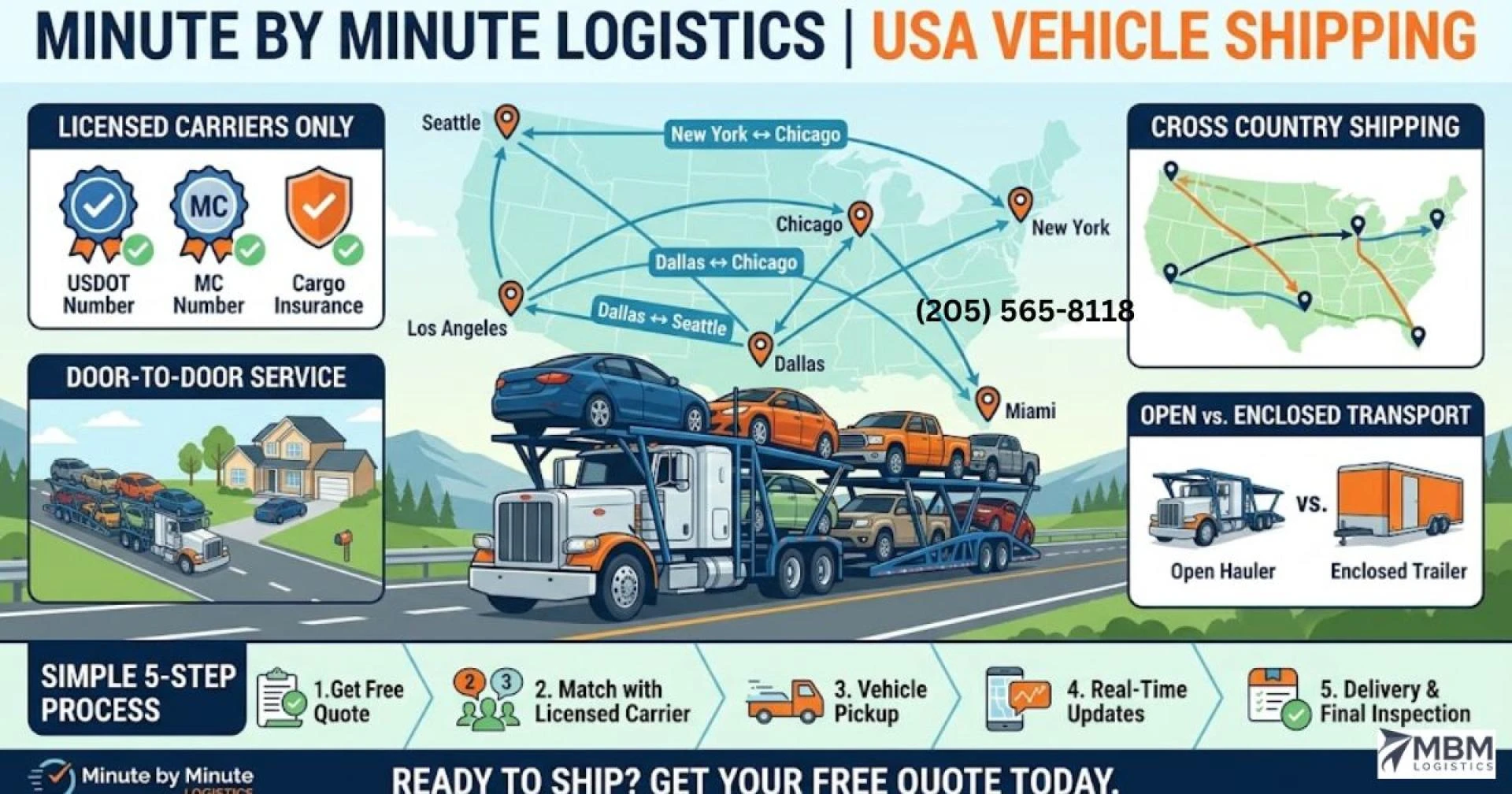
Door-to-Door Auto Transport: Convenience Meets Logistics
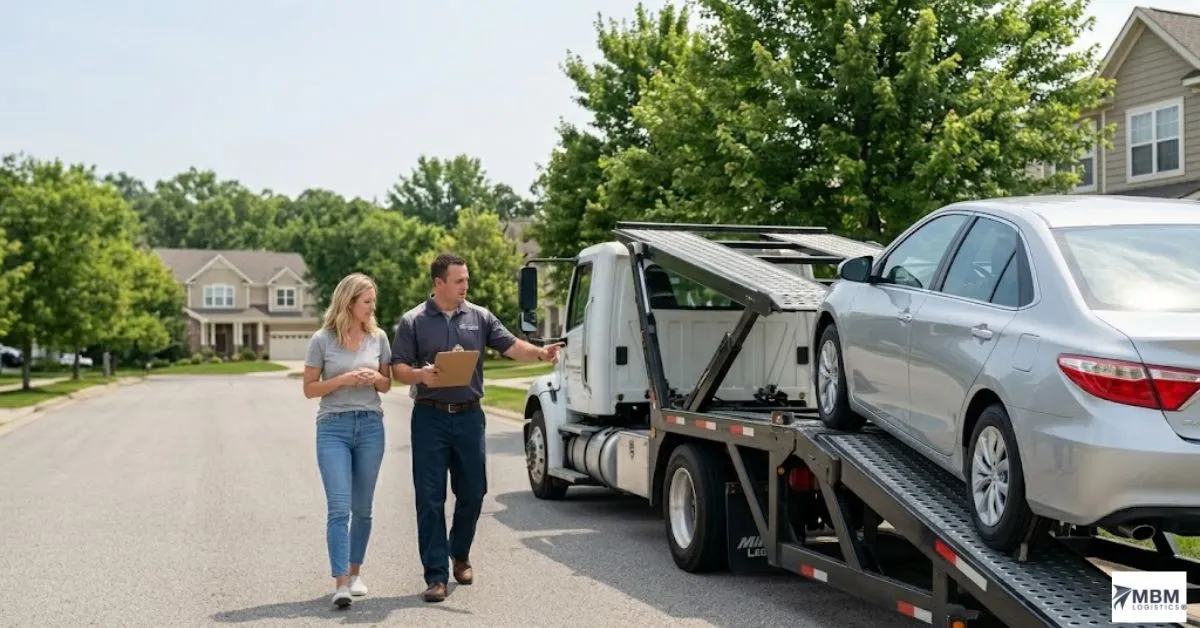
Most people assume all vehicle shipping is the same. It’s not. One of the most considerable advances in auto transport is door-to-door service, in which your car is picked up near your home and delivered to your destination.
Why this matters:
- Fewer steps, fewer risks of misplacement or damage
- You don’t have to drive or tow your car to a terminal.
- Real-time tracking is usually available.
Even with door-to-door service, you’ll face the choice: open or enclosed.
Open Car Hauler Transport: Affordable, Reliable, and Often Safe
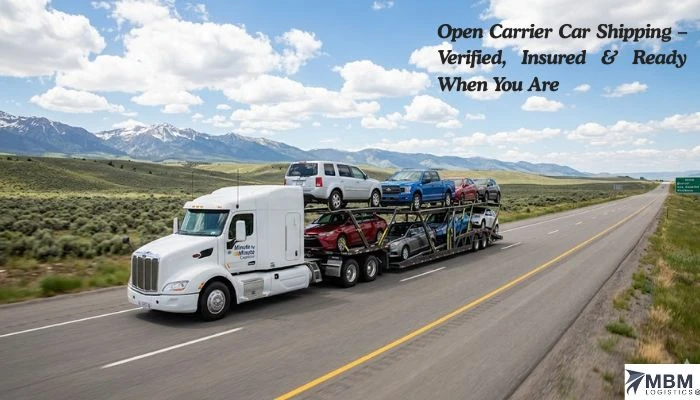
Open carriers are what you see on highways stacked with seven or eight cars on a double-decker trailer. It’s the most common method of transport and usually the most economical.
When open transport works best:
- Daily drivers, sedans, compact SUVs
- Standard pickup trucks or family vehicles
- Routes that are frequently traveled (like Chicago → Atlanta or LA → Phoenix)
Real-World Cost Examples:
- NYC → Miami: ~$900
- Dallas → Los Angeles: ~$1,150
- Chicago → San Francisco: ~$1,300
Despite exposure to weather and road debris, open transport is remarkably safe. “Over 95% of vehicles shipped via open carriers arrive without any damage,” says Mark Reynolds, a logistics manager at a national auto transport company. Minor scratches or dust can occur, but statistically, severe damage is rare.
Enclosed Car Transport: Protection When It Matters Most
Enclosed transport is for vehicles where risk isn’t an option. The car rides in a fully enclosed trailer, protected from weather, road debris, and public exposure.
Who should consider enclosed transport:
- Owners of exotic or luxury vehicles (Ferrari, Lamborghini, Bentley)
- Classic or collector cars
- High-end electric vehicles like Tesla Plaid or Rivian R1T
- Vehicles with custom paint or finishes
Typical Costs:
- NYC → Miami: ~$1,600–$1,800
- Dallas → Los Angeles: ~$1,800–$2,000
- Chicago → San Francisco: ~$2,000–$2,200
“Enclosed shipping isn’t just about avoiding scratches,” says Jenna Holt, a transport broker who coordinates celebrity vehicle moves. “It’s about minimizing risk to irreplaceable assets. Many clients ship Ferraris or vintage Mustangs enclosed simply because replacement isn’t an option.”
Click here to Calculate Your Cost To Ship
Why Celebrity Car Shipping Illustrates the Difference
Hollywood and high-profile clients provide a glimpse into real-world decision-making.
- Jay Leno uses enclosed transport for his classic car collection to prevent even minor cosmetic damage.
- Dwayne “The Rock” Johnson ships custom trucks between California, Georgia, and Florida using enclosed carriers.
- Kim Kardashian reportedly ships luxury vehicles enclosed for both protection and privacy.
The lesson: enclosed shipping isn’t a luxury—it’s insurance for irreplaceable or highly customized vehicles.
Factors That Really Affect Car Shipping Costs
If you’re deciding between open and enclosed, it’s critical to understand what drives price:
- Distance and Route Popularity High-traffic lanes (East Coast → Florida, Texas → California) are cheaper because more carriers travel them.
- Vehicle Size and Condition: SUVs and trucks cost more than sedans. Inoperable cars require special equipment, adding fees.
- Season and Timing: Summer and holidays often spike costs. Expedited car shipping services in the USA can double the price if you need priority pickup.
- Type of Carrier: Experienced, licensed carriers cost more but reduce risk dramatically.
Expedited Shipping: When Timing Trumps Cost
Sometimes speed matters more than cost. Expedited auto shipping shortens transit time, often for a premium.
- Corporate relocations
- Auction purchases
- Film production vehicles
Real-world example: A Tesla shipped from NY → LA typically costs ~$1,300 open, but with expedited door-to-door shipping, it can approach $1,700. “Expedited service prioritizes your load,” says Holt. “It’s not just faster—it gives peace of mind for valuable or time-sensitive shipments.”
Open vs Enclosed: Choosing the Right Option
Here’s a simple framework based on risk, value, and timing:
- Open Transport: Daily drivers, replaceable cars, budget-focused, flexible timeline
- Enclosed Transport: Luxury, exotic, collector cars, high emotional or financial value, strict timeline
Most people overestimate the risk of open transport, paying $500–$1,000 more than necessary. At the same time, under-protecting a high-value vehicle can be financially and emotionally costly.
Real Case Studies
Case 1: Family Sedan, Chicago → Miami (Open Transport)
- Vehicle: 2018 Honda Accord
- Cost: $950
- Delivery: 5 days
- Outcome: Minor dust, no damage
Case 2: Classic 1967 Mustang, Dallas → Los Angeles (Enclosed)
- Vehicle: Mint-condition restored Mustang
- Cost: $2,000
- Delivery: 7 days
- Outcome: Arrived in perfect condition, owner satisfied
Case 3: Tesla Model S, NYC → San Francisco (Expedited + Enclosed)
- Cost: $2,500
- Delivery: 5 days
- Outcome: On-time, fully protected
These examples illustrate why one-size-fits-all advice doesn’t work—vehicle type, route, value, and timing all matter.
FAQs
Q1: Will my paint get scratched on an open trailer?
Minor dust can happen. Severe damage is rare, especially with experienced carriers.
Q2: Is enclosed transport overkill for a daily SUV?
Usually yes. Open transport is sufficient unless the SUV is customized or particularly valuable.
Q3: Does door-to-door service cost extra?
Most licensed carriers now include it. It improves convenience and reduces risk.
Q4: How long does cross-country shipping take?
- Under 500 miles: 1–3 days
- 1,000–2,000 miles: 4–7 days
- Coast-to-coast: 7–10 days
Q5: How can I verify a carrier?
Check FMCSA license, insurance coverage, and reviews on TransportReviews.com.
Q6: Are expedited car shipping services worth it?
Yes, if timing is critical or the vehicle is high-value. Otherwise, standard service is sufficient.
Final Takeaways
- Open isn’t unsafe; it’s just more exposed.
- Enclosed isn’t just luxury; it’s risk management for valuable vehicles.
- Carrier quality matters more than trailer type.
- Plan—distance, route, season, and timing —dramatically affect cost.
- Decision = Risk Tolerance + Vehicle Value + Timing
When done right, shipping a car is stress-free, predictable, and safe, whether you choose open or enclosed transport.
At Minute by Minute Logistics, we provide the expertise, the transparency, and the dedicated service — all the tools you need to feel confident.
Contact Us
Email: [email protected]
Phone: +1 (205) 565–8118
Follow Us: Facebook | Instagram | LinkedIn
Ready to Book?

Sign in to leave a comment.