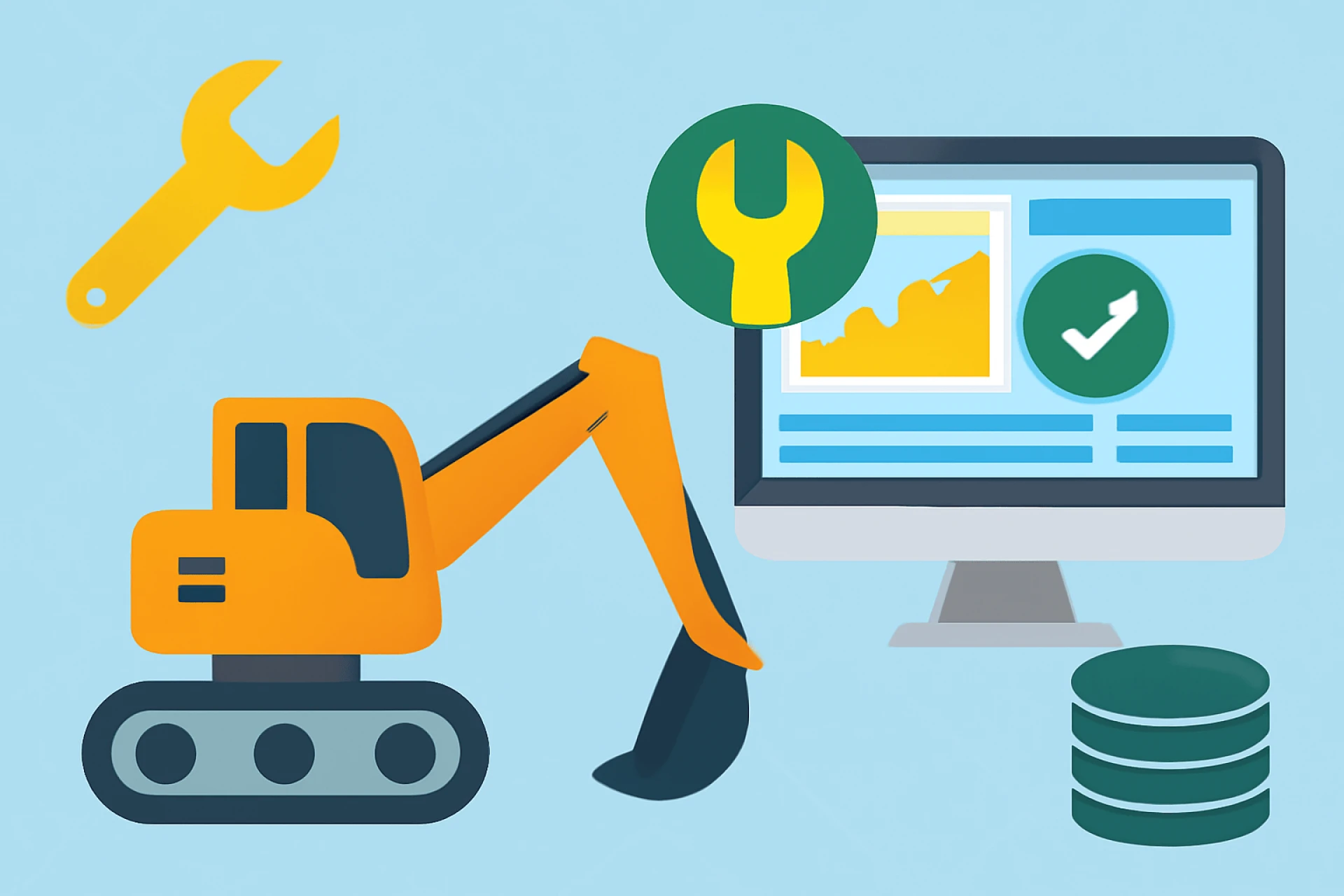
Construction companies rely heavily on machinery and equipment to keep projects running smoothly and efficiently. However, maintaining this equipment can be a time-consuming and costly process if not managed properly.
Equipment maintenance software has revolutionized the way construction companies handle the maintenance and management of their fleets.
By automating maintenance schedules, tracking performance, and providing valuable data, this software helps businesses increase efficiency, reduce downtime, and significantly lower operational costs.
In this article, we’ll explore how construction equipment maintenance software can enhance your company’s efficiency and help you manage equipment costs more effectively.
Why Efficient Equipment Maintenance is Crucial for Construction Businesses
The construction industry is fast-paced, and delays can lead to significant financial losses. Equipment downtime is one of the biggest culprits behind these delays.
Whether it's a crane breaking down on-site or an excavator being unavailable due to maintenance, these issues can halt work and impact timelines.
Proper equipment maintenance is essential for ensuring that machines are in optimal working condition and ready for use when needed.
Regular maintenance not only extends the life of equipment but also improves safety and prevents costly repairs.
Equipment maintenance software helps businesses stay on top of maintenance schedules, ensuring that machines are serviced on time and minimizing the risk of unexpected breakdowns.
How Construction Equipment Maintenance Software Boosts Efficiency
1. Automated Maintenance Scheduling
One of the most significant benefits of equipment maintenance software is its ability to automate maintenance schedules.
In the past, construction companies often relied on manual systems or spreadsheets to track when equipment needed servicing. This process was prone to errors, and maintenance tasks were sometimes missed or delayed.
With maintenance software, companies can automate the scheduling of routine maintenance tasks based on machine hours, fuel usage, or time intervals.
For example, the software can automatically generate reminders when a machine reaches a certain number of operating hours, prompting maintenance teams to perform oil changes, replace filters, or inspect critical components.
This proactive approach to maintenance helps prevent unexpected breakdowns, extends the lifespan of equipment, and improves overall productivity.
2. Tracking Equipment Performance in Real-Time
Equipment maintenance software provides real-time monitoring of equipment performance, allowing managers to track key metrics such as fuel consumption, engine temperature, tire pressure, and operating hours.
By collecting this data, businesses can identify potential issues before they lead to costly repairs or downtime.
For example, if the software detects that an excavator is consuming more fuel than usual, maintenance teams can investigate the issue before it becomes a bigger problem.
By continuously monitoring equipment performance, businesses can take a proactive approach to maintenance, ensuring that machines are always in top working condition.
3. Predictive Maintenance to Prevent Unexpected Downtime
One of the most powerful features of equipment maintenance software is its predictive maintenance capabilities.
By analyzing historical data and performance trends, the software can predict when a piece of equipment is likely to fail or require servicing. This allows businesses to schedule maintenance ahead of time, minimizing the risk of unexpected breakdowns and costly downtime.
For example, if the software notices that a specific type of equipment has frequently required repairs after a certain number of operating hours, it can alert the maintenance team to perform a preemptive check before the equipment experiences a failure.
Predictive maintenance helps businesses avoid the cost and disruption of emergency repairs and ensures that equipment is always ready for use when needed.
4. Reduced Maintenance Costs and Unnecessary Repairs
One of the key advantages of equipment maintenance software is its ability to reduce maintenance costs. Traditional maintenance methods often involve reactive repairs, where equipment is only serviced after it breaks down.
This approach can be costly and lead to expensive emergency repairs that could have been avoided with proper maintenance.
With automated scheduling, real-time monitoring, and predictive maintenance, businesses can address potential issues before they require costly repairs.
Additionally, the software provides data on which equipment requires frequent repairs, helping businesses identify machines that may need to be replaced or retired, preventing unnecessary repair costs in the long term.
5. Improved Resource Allocation and Fleet Management
Managing a fleet of construction equipment can be a logistical challenge, especially when dealing with multiple job sites. Equipment maintenance software helps businesses optimize fleet management by providing a centralized platform for tracking equipment usage, location, and maintenance schedules.
By having a clear view of the entire fleet’s status, businesses can allocate equipment more effectively and ensure that the right machines are available for each project.
For example, if a machine is underutilized at one job site, it can be reassigned to another site where it’s needed. This improves resource allocation, reduces idle time, and ensures that equipment is being used to its full potential.
How Construction Equipment Maintenance Software Reduces Operational Costs
1. Minimizing Downtime
Equipment downtime is costly, not only in terms of repair costs but also in lost productivity. Equipment maintenance software helps reduce downtime by ensuring that machines are well-maintained and available when needed.
By automating maintenance schedules and predicting failures, businesses can address issues before they cause equipment to break down, leading to fewer disruptions and smoother project timelines.
2. Reducing Emergency Repair Costs
Emergency repairs are often more expensive than planned maintenance due to the urgent nature of the work and the need for specialized parts or labor.
By using equipment maintenance software to proactively monitor equipment performance, businesses can identify problems early and schedule repairs before they escalate.
This approach helps reduce the frequency of emergency repairs, lowering overall maintenance costs.
3. Extending Equipment Lifespan
Regular maintenance and proactive care significantly extend the life of construction equipment.
By using equipment maintenance software to stay on top of service schedules and monitor performance, businesses can avoid premature equipment failure and get more years of use out of their assets.
This not only saves money on replacements but also ensures that machines are running efficiently for longer periods, improving overall fleet performance.
Conclusion
Construction equipment maintenance software is a powerful tool that helps businesses streamline maintenance processes, reduce downtime, and lower operational costs.
By automating maintenance scheduling, tracking equipment performance, and implementing predictive maintenance, companies can ensure that their equipment remains in optimal working condition, ready to tackle the next project.
In an industry where time is money, the ability to keep equipment running smoothly is crucial for maintaining productivity and profitability.
Investing in equipment maintenance software not only helps businesses improve operational efficiency but also ensures that they can better manage costs and extend the lifespan of their valuable assets.























Sign in to leave a comment.