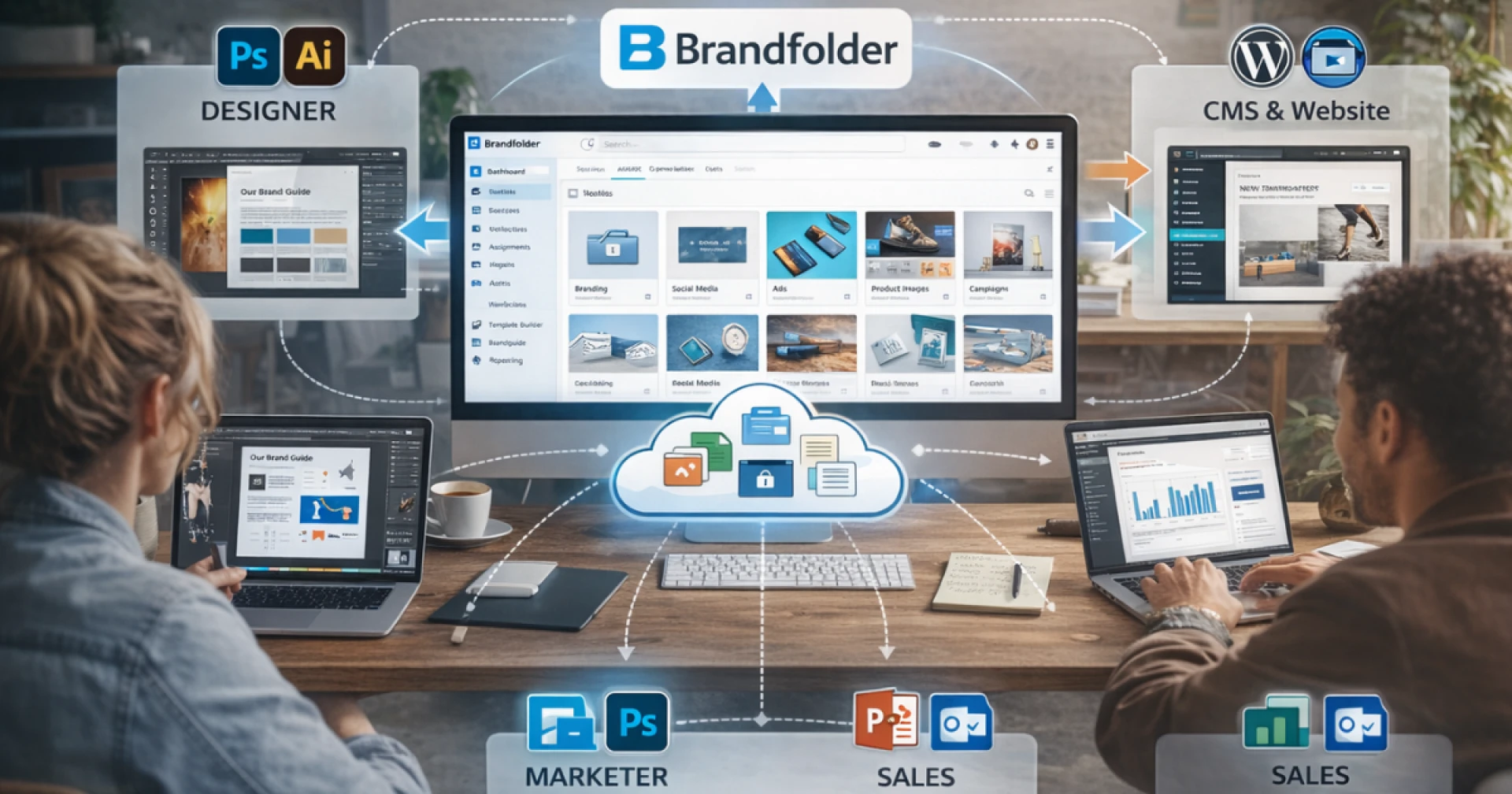

Migrating to a new Digital Asset Management system is often treated as a technical milestone. Teams focus on data transfer, folder structures, metadata cleanup, and permission settings. These tasks are necessary, but they do not define success. The real measure of a DAM migration is not how much content is moved, it’s how many people consistently use the system after launch.
A platform like Brandfolder can provide strong governance and structured asset management. However, governance alone does not guarantee adoption. If users do not interact with the system during their daily work, the migration delivers limited value.
The transition only succeeds when asset access becomes part of everyday workflows.
The Adoption Gap
Many digital asset management migrations slow down during the first few months. The platform is live, assets are uploaded, and permissions are configured. Yet teams continue to rely on shared drives, local folders, or email attachments.
This adoption gap often happens because users feel that visiting the new system requires extra effort. If they must leave their working tools, log into a separate interface, search for assets, download them, and then upload them again into their projects, the process feels disconnected from how they normally work.
Common signs of an adoption gap include:
- Teams download assets once and store them locally
- Designers receiving repeated requests for files that already exist
- Sales using outdated presentations because they avoid logging in
- Marketing teams are recreating visuals instead of searching the DAM
- Low daily login activity despite a completed migration
These patterns show that the challenge is not technical. It is behavioral. When accessing the DAM feels like an additional task, employees look for shortcuts. Over time, the system becomes underutilized, and the migration loses momentum.
The Integration-First Strategy
To prevent adoption issues, organizations should design their rollout around integration from the beginning. Instead of treating the DAM as a standalone destination, they should extend it directly into the tools employees already use.
An in-app DAM connector allows teams to search, preview, and place assets inside platforms such as Adobe Creative Cloud, Microsoft 365, Google Workspace and more. This means the DAM is no longer a separate tab in the browser. It becomes part of the working environment.
An integration-first rollout offers several advantages:
- Immediate access to approved assets inside creative and business tools
- Reduced the need to switch between multiple platforms
- Faster placement of visuals into presentations, layouts, and documents
- Stronger alignment between governance and execution
- Higher visibility of the DAM in everyday workflows
When integration is available from Day One, the new system feels less disruptive. Teams do not need to change where they work. They only change how they access assets.
This approach increases usage naturally because employees encounter the DAM within the context of real tasks rather than as an external system they must remember to visit.
Minimizing the Learning Curve
Large-scale migrations often require extensive training sessions. New dashboards and unfamiliar search methods can overwhelm teams that are already managing deadlines. If employees feel that mastering the new platform requires significant effort, adoption slows.
Providing asset access inside familiar tools reduces this pressure. Designers continue working inside their creative software, and sales teams remain in slides creating PowerPoint presentations. Marketing managers stay within the document and collaboration platforms they already understand. The interface for accessing assets appears within those tools, making the transition smoother.
This model reduces the need for large retraining programs because:
- Users interact with assets in environments they already know
- The workflow feels continuous rather than interrupted
- Productivity remains stable during the transition period
- Learning happens gradually through daily use
Instead of scheduling multiple training sessions to encourage adoption, organizations allow familiarity to drive engagement. Employees experience value immediately, which builds confidence in the new system.
Protecting the Investment Through Adoption
Leadership teams evaluate DAM transitions based on long-term returns. They expect improvements in brand consistency, efficiency, and collaboration. However, these outcomes depend entirely on active usage.
When asset access is embedded into daily workflows, adoption becomes measurable and visible. Sales teams regularly insert approved visuals into presentations. Marketing teams pull campaign assets directly into documents. Designers retrieve and update files without manual downloads.
This continuous interaction demonstrates that the investment is delivering operational value. Instead of questioning whether employees are using the DAM, leadership can see that asset activity aligns with everyday tasks.
An integration-first strategy protects the migration effort because it connects governance with execution. The system is not simply implemented. It is embedded.
Building a Sustainable Transition
A successful transition to Brandfolder is defined by sustained engagement across departments. Technical completion is only the first step. Long-term success depends on whether employees view the system as helpful and efficient.
By addressing the adoption gap early and prioritizing integration from the start, organizations reduce friction and align the DAM with real work habits. Asset access becomes simple, immediate, and consistent across teams.
When the DAM supports how people already work, adoption follows naturally. When adoption is strong, the migration achieves its purpose: improving workflows, strengthening brand control, and ensuring that the investment continues to deliver value well beyond launch.



























Sign in to leave a comment.