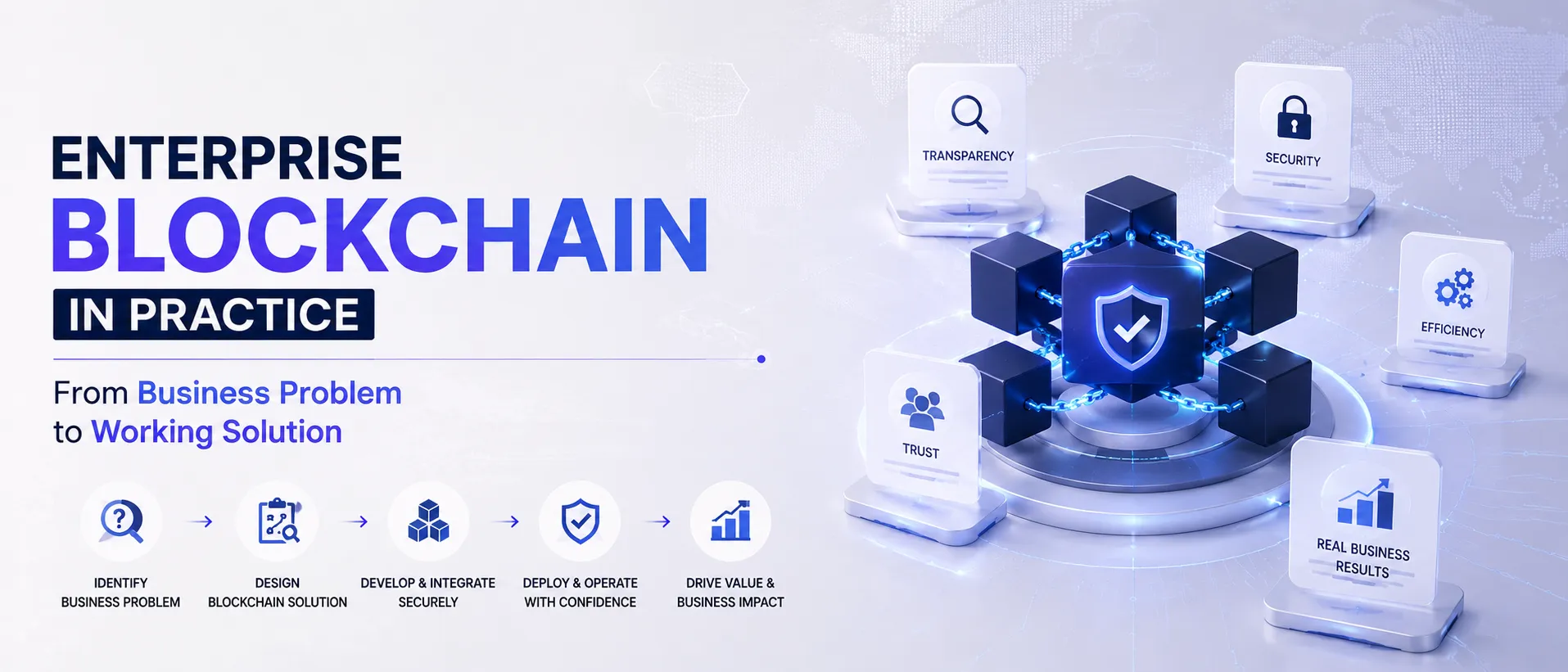

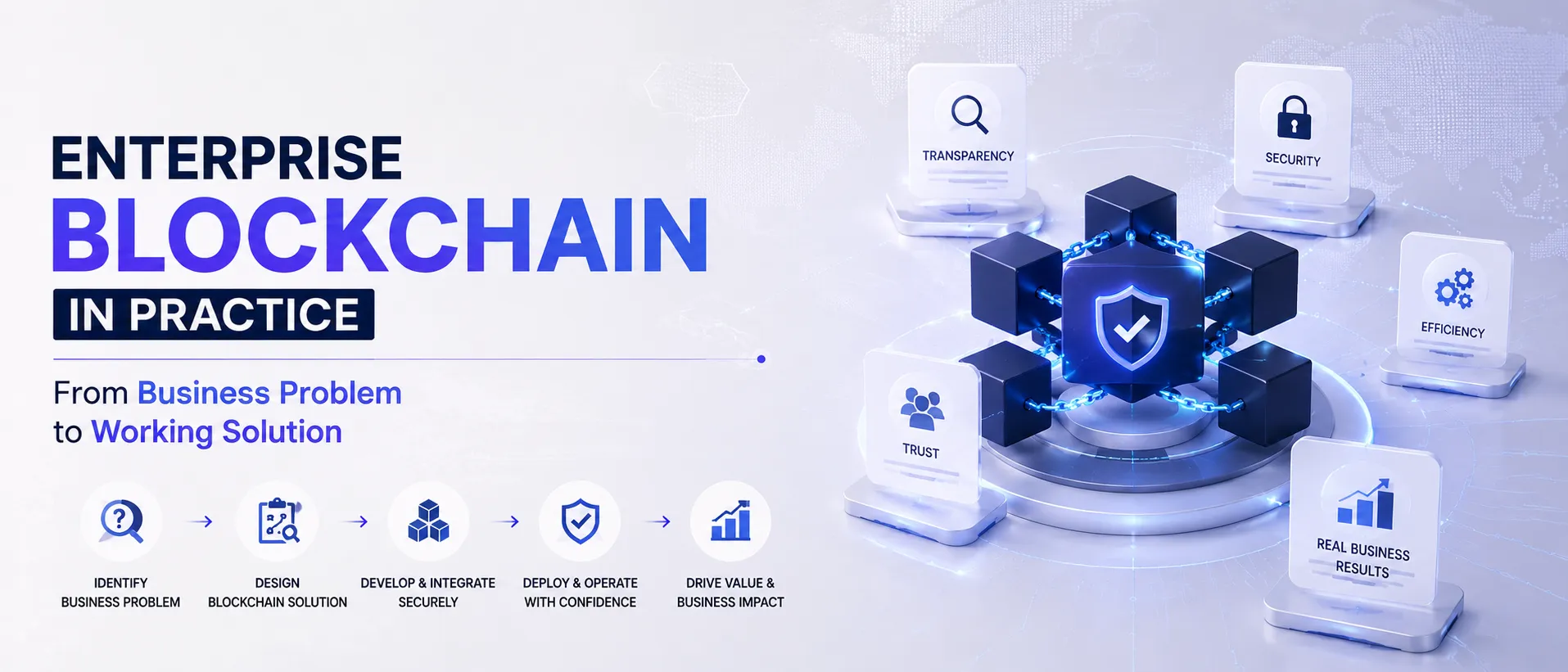
A lot of enterprise blockchain projects start backwards. Someone up top hears blockchain could speed up settlements or fix a supply chain visibility mess, and suddenly there's a mandate to "explore blockchain" floating around with almost no clarity on what it's actually supposed to fix. Real enterprise blockchain development solutions work the opposite way.
They start with an actual business problem first, then figure out whether blockchain's even the right tool for it. Sounds obvious written out like that. Gets skipped constantly anyway.
Here's roughly what that process looks like done properly, from a messy, real-world business problem all the way to something running in production.
The Question Everyone Skips
Before touching any technology at all, there's one question worth asking honestly. Does this actually need blockchain? A lot of business problems get solved better and cheaper with a normal database. Blockchain earns its spot when there's real shared trust needed between parties who don't fully trust each other or when an immutable trail genuinely matters for compliance or settling disputes later. Skip this question and companies end up building expensive blockchain infrastructure for something a regular system would've handled just fine.
Starting From the Actual Problem, Not the Technology
Vague goals like "improve transparency" or "modernize our systems" need to get narrowed way down into something specific. Which transaction is slow? Which record keeps getting disputed by parties? Where does trust between partners actually break down today, in a real, describable way? A sharp problem statement shapes everything downstream, and skipping this tends to produce something technically impressive that doesn't fix anything anyone actually cares about.
Enterprise projects also rarely involve just one company. Suppliers, partners, regulators, and sometimes even competitors who need to share data without fully trusting each other. Figuring out exactly who needs access to what and who's allowed to see which pieces shapes the whole architecture long before anyone writes a line of code.
Picking the Right Kind of Setup
Not every enterprise use case needs a public blockchain. Honestly, most don't.
Private or permissioned networks fit situations where participants are known and trust needs managing carefully between specific parties. Consortium setups work when several organizations need shared control without any single one running the whole show. Public chains make sense in narrower cases, usually where broad, permission-less verification genuinely matters to what's being built.
Getting this choice wrong is one of the more common reasons enterprise blockchain projects quietly stall out or get abandoned a year later without much fanfare.
Where Old Systems Make Everything Harder
This is usually the hardest part of any enterprise blockchain solution, and it rarely gets enough attention early on. Most large organizations run on systems that were never built with blockchain anywhere in mind, and ripping all of that out isn't realistic, ever. Integration work has to bridge old and new without breaking what already works, and that takes a completely different kind of planning than building something fresh from scratch.
A few things tend to matter here in practice. Middleware needs to connect legacy databases to the blockchain layer without forcing a full system overhaul nobody has budget for. Some data needs to stay off-chain deliberately, for privacy or performance reasons, and that has to be handled carefully. APIs need to let existing internal tools talk to the new system without forcing every team to relearn their entire workflow overnight.
Governance Questions Nobody Wants to Deal With Early
Who can propose changes to the network? Who approves new participants joining? What actually happens when there's a dispute between organizations sharing the same system.
These questions matter just as much as the technical build itself, and projects that leave governance vague until later tend to hit real friction once actual organizations with real, sometimes conflicting interests start using the thing.
Building It in Phases Instead of One Giant Rollout
Strong enterprise blockchain solutions get built and tested in stages, not launched company-wide all at once.
- A narrow pilot with a small group proves the concept before wider rollout happens
- Feedback from that pilot shapes what gets built next, instead of blindly following whatever the original plan said
- Integration points get tested individually before the full system goes live together
- Each phase gets its own security and performance review, not one big review crammed in at the very end
Catching problems this way, while they're still cheap to fix, beats discovering them after a full company rollout already happened and everyone's watching.
Security and Compliance Can't Wait Until Later
Enterprise environments carry regulatory weight a typical startup blockchain project never has to think about. Data residency rules, industry-specific compliance standards, and audit requirements regulators actually check on. Building this in from the start, instead of retrofitting it after the fact, tends to save a genuinely enormous amount of cost and disruption down the road.
What Separates Projects That Actually Launch
A few patterns show up again and again among enterprise blockchain projects that actually make it to production. They start with a specific, well-defined problem instead of a vague mandate to go explore some technology. They pull in the right stakeholders early, including the ones likely to resist the change. They pick the network type that actually fits the use case instead of defaulting to whatever's trendy that year. And they plan for legacy system integration from day one instead of treating it as some detail to sort out later.
Worth Asking Before Any of This Starts
What specific business problem is actually being solved here, described plainly? Does this genuinely need blockchain, or would a normal system do just as well? How is this going to integrate with what's already running? Who governs the network once several organizations are actually using it together?
Clear, honest answers here matter a lot more than an impressive technical demo that never quite makes it to real deployment.
Final Thoughts
Enterprise blockchain works when it starts with a real business problem and works backward toward the right technical answer, not the other way around. Picking the right network type, planning integration with legacy systems, sorting governance out early, and rolling things out in careful phases all matter more than the underlying technology itself. Teams like Ment Tech Labs that have been through this before tend to ask about the actual business problem first, long before the conversation ever turns to which blockchain to use, and honestly, that order alone says a lot about how the rest of a project tends to go.




























Sign in to leave a comment.