Enterprise Digital Transformation Services Explained: Strategy, Tools & ROI

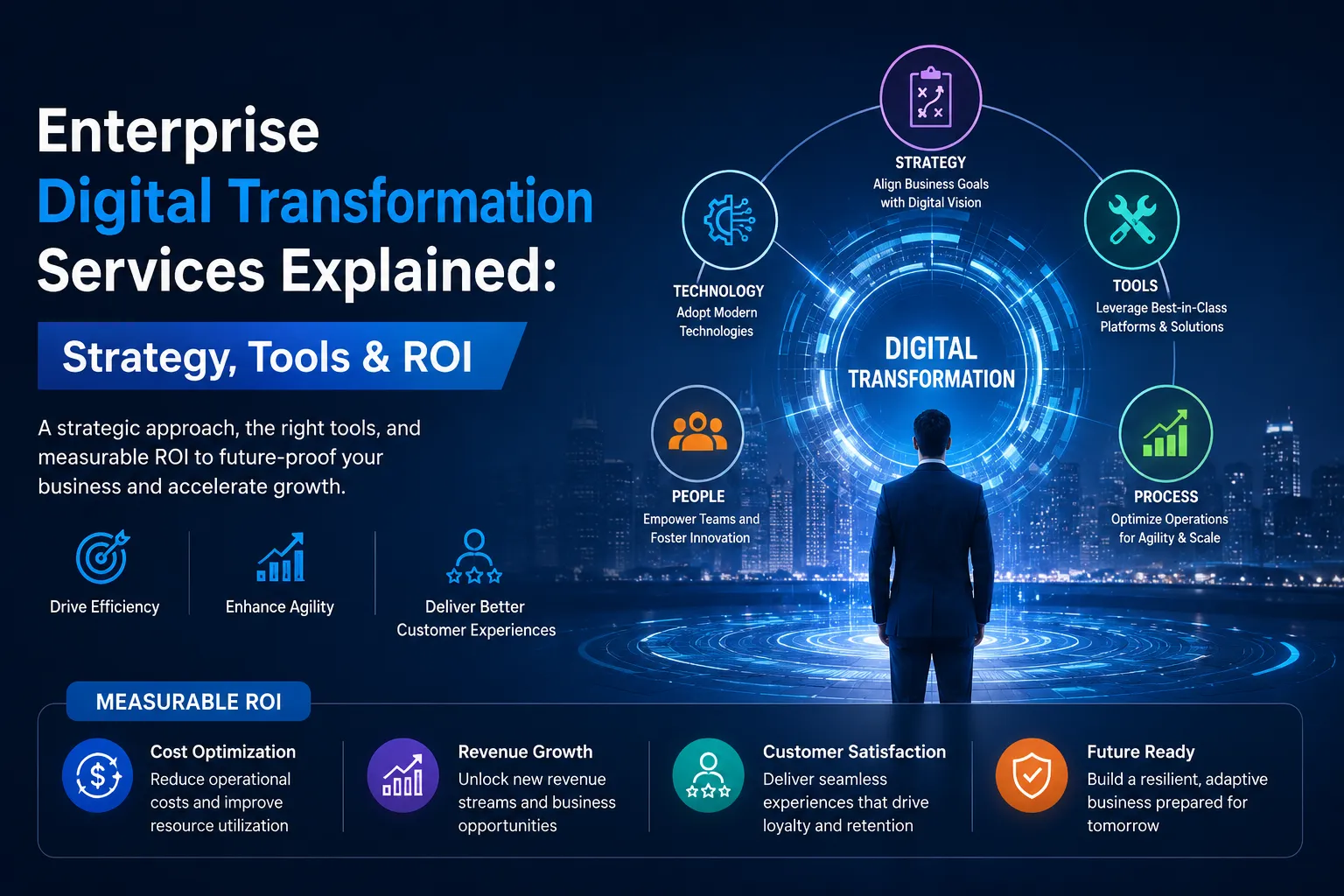
Businesses today are operating in one of the most competitive and technology-driven environments ever. Companies are expected to deliver faster services, personalized customer experiences, secure digital platforms, and highly efficient operations — all while adapting to changing market demands. This shift has made enterprise digital transformation services one of the biggest priorities for organizations in 2026.
From cloud migration and AI automation to data analytics and enterprise software modernization, digital transformation is helping businesses become more agile, scalable, and profitable. Companies across industries are investing heavily in digital-first strategies to improve operational efficiency and long-term growth.
But many businesses still struggle to understand what enterprise digital transformation actually involves, which tools are required, and how companies measure ROI from transformation initiatives.
In this guide, we’ll explain enterprise digital transformation services, the strategies behind successful transformation, the most important tools businesses are using in 2026, and how organizations are generating measurable business returns from digital modernization.
What Are Enterprise Digital Transformation Services?
Enterprise digital transformation services refer to technology solutions and strategic processes that help organizations modernize operations, improve customer experiences, and optimize internal systems using advanced digital technologies.
Digital transformation goes beyond simply adopting new software. It involves redesigning business operations to improve efficiency, scalability, collaboration, and innovation.
These services often include:
- Cloud transformation
- Enterprise software modernization
- Business process automation
- AI and machine learning integration
- Data analytics implementation
- Cybersecurity upgrades
- Mobile and web application development
- Legacy system migration
- Customer experience transformation
The goal is to create smarter and more connected business systems that improve overall performance and profitability.
Why Enterprise Digital Transformation Matters in 2026
Customer expectations have changed dramatically over the past few years.
Modern consumers expect:
- Instant digital access
- Personalized experiences
- Faster support
- Mobile-friendly services
- Real-time communication
At the same time, businesses face increasing competition, rising operational costs, cybersecurity threats, and evolving market conditions.
Traditional systems often create problems such as:
- Slow workflows
- Limited scalability
- Poor collaboration
- Data silos
- High maintenance costs
- Inefficient operations
This is why businesses are increasingly investing in enterprise digital transformation services to modernize operations and remain competitive.
Organizations that adopt digital-first strategies are often more agile, innovative, and customer-focused.
Enterprise Digital Transformation Strategy Explained
A successful digital transformation strategy is not only about technology adoption. It requires proper planning, clear business goals, and long-term execution.
1. Defining Business Objectives
The first step is identifying the company’s primary goals.
Businesses may focus on:
- Improving operational efficiency
- Reducing costs
- Enhancing customer experience
- Increasing scalability
- Improving data management
- Accelerating innovation
Without clear objectives, transformation projects often become disorganized and ineffective.
2. Assessing Existing Systems
Enterprises must evaluate their current infrastructure, workflows, and technology stack.
This helps identify:
- Legacy system limitations
- Security vulnerabilities
- Integration gaps
- Performance bottlenecks
A detailed assessment allows businesses to prioritize modernization efforts more effectively.
3. Creating a Digital Roadmap
A transformation roadmap outlines:
- Technology adoption timeline
- Budget planning
- Resource allocation
- Team responsibilities
- Implementation stages
Businesses that follow structured roadmaps are more likely to achieve successful transformation outcomes.
4. Prioritizing Customer Experience
Customer experience is now one of the biggest drivers of digital transformation.
Businesses must focus on:
- Faster communication
- Omnichannel experiences
- Personalized interactions
- Self-service capabilities
- Mobile accessibility
Customer-focused transformation strategies often generate stronger long-term ROI.
Key Tools Used in Enterprise Digital Transformation
Cloud Computing Platforms
Cloud infrastructure is the foundation of modern digital transformation.
Popular cloud platforms include:
- Amazon Web Services (AWS)
- Microsoft Azure
- Google Cloud Platform
Cloud systems help businesses:
- Improve scalability
- Reduce infrastructure costs
- Enable remote work
- Improve collaboration
- Increase flexibility
Cloud adoption continues growing rapidly in 2026 because businesses require more scalable and flexible infrastructure.
Business Process Automation Tools
Automation tools streamline repetitive workflows and improve efficiency.
These systems automate tasks such as:
- Invoice processing
- HR operations
- Customer support
- Reporting
- Data entry
Popular automation technologies include:
- Robotic Process Automation (RPA)
- Workflow automation platforms
- AI-powered process management systems
Automation reduces operational costs and improves productivity.
Artificial Intelligence and Machine Learning
AI has become a major part of enterprise digital transformation.
Businesses use AI for:
- Predictive analytics
- Customer personalization
- Fraud detection
- Chatbots
- Intelligent automation
- Demand forecasting
Machine learning helps organizations analyze large datasets and identify valuable business insights.
AI-driven businesses often make faster and smarter decisions.
Data Analytics and Business Intelligence Tools
Modern enterprises generate enormous amounts of data daily.
Analytics platforms help businesses:
- Track KPIs
- Monitor performance
- Analyze customer behavior
- Forecast trends
- Improve decision-making
Business intelligence tools convert raw data into actionable insights that support growth strategies.
Cybersecurity Solutions
As businesses become more digital, cybersecurity becomes increasingly important.
Transformation strategies now include:
- Multi-factor authentication
- Threat monitoring
- Data encryption
- Zero-trust architecture
- AI-based threat detection
Strong cybersecurity protects both business operations and customer trust.
Customer Relationship Management (CRM) Systems
CRM systems help businesses improve customer engagement and sales processes.
Popular CRM platforms support:
- Lead management
- Customer analytics
- Personalized marketing
- Customer communication
- Sales automation
Improved customer management directly impacts business growth and retention.
Benefits of Enterprise Digital Transformation Services
Improved Operational Efficiency
Automation and modern systems reduce manual work and streamline workflows.
This helps businesses:
- Save time
- Reduce costs
- Improve productivity
- Increase operational speed
Better Customer Experiences
Digital transformation enables businesses to provide:
- Personalized services
- Faster support
- Mobile-friendly experiences
- Omnichannel communication
Satisfied customers are more likely to become repeat buyers.
Faster Decision-Making
Real-time analytics and AI-powered insights help organizations make smarter decisions quickly.
Increased Scalability
Modern cloud-based systems allow businesses to scale operations more efficiently.
Enhanced Collaboration
Digital platforms improve communication and collaboration across teams and departments.
Stronger Competitive Advantage
Businesses that modernize operations can adapt faster to changing market conditions.
Measuring ROI in Enterprise Digital Transformation
One of the biggest questions businesses ask is how to measure transformation ROI.
Common ROI Metrics Include:
- Increased revenue
- Reduced operational costs
- Improved productivity
- Higher customer retention
- Faster project delivery
- Lower downtime
- Better employee performance
For example, automation may reduce processing time from hours to minutes, directly improving operational efficiency and reducing labor costs.
Similarly, personalized customer experiences often increase conversion rates and customer lifetime value.
Industries Benefiting From Digital Transformation
Healthcare
Healthcare organizations use digital transformation for:
- Telemedicine
- Electronic health records
- AI diagnostics
- Patient management systems
Retail and eCommerce
Retail businesses improve operations through:
- Personalized shopping experiences
- Inventory automation
- Mobile commerce
- Customer analytics
Finance
Banks and financial companies use digital transformation for:
- Mobile banking
- Fraud detection
- AI-driven support
- Digital payments
Manufacturing
Manufacturers use smart technologies such as:
- IoT systems
- Predictive maintenance
- Supply chain automation
Logistics
Logistics companies optimize operations through:
- Route tracking
- Warehouse automation
- Real-time shipment monitoring
Common Challenges in Enterprise Digital Transformation
Resistance to Change
Employees often struggle to adapt to new technologies and workflows.
Training and leadership support are essential.
Integration Complexities
Connecting modern systems with legacy infrastructure can be technically difficult.
High Initial Investment
Large-scale transformation projects require significant upfront investment.
However, long-term ROI often outweighs initial costs.
Data Security Concerns
As businesses become more digital, cybersecurity risks also increase.
Strong protection strategies are critical.
How to Choose the Right Digital Transformation Partner
Choosing the right technology partner is one of the most important decisions for successful transformation.
Businesses should evaluate:
- Industry expertise
- Technical capabilities
- Scalability experience
- Security knowledge
- Post-deployment support
Experienced providers understand enterprise-level challenges and help businesses implement solutions more effectively.
Many organizations work with companies like Apptunix for enterprise digital transformation services because experienced teams can help streamline modernization strategies while reducing technical risks and operational inefficiencies.
Future Trends in Enterprise Digital Transformation
Hyperautomation
Businesses are automating entire workflows using AI and robotic automation systems.
AI-Driven Decision Intelligence
AI systems are increasingly supporting strategic business decisions.
Low-Code and No-Code Platforms
Businesses are building applications faster with simplified development platforms.
IoT and Smart Infrastructure
Connected devices are improving operational visibility and efficiency.
Sustainable Digital Transformation
Organizations are using technology to improve sustainability and reduce environmental impact.
Final Thoughts
Enterprise digital transformation services are helping businesses modernize operations, improve customer experiences, enhance efficiency, and drive long-term growth in 2026. From cloud computing and AI to automation and advanced analytics, digital transformation enables organizations to become more agile, scalable, and competitive in rapidly changing markets.
Businesses that invest in strong digital transformation strategies today are positioning themselves for future innovation and success. By choosing the right tools, focusing on customer experience, and working with experienced technology partners, enterprises can achieve measurable ROI while building smarter and more resilient business operations.







Sign in to leave a comment.