

A start-up can accept a colocation provider's word that security is handled. A large enterprise procurement team cannot — and increasingly won't. Data Center Security evaluated to enterprise-grade standards means documented evidence, contractual SLA commitments, and audit-ready reporting, not just hardware present on-site, and procurement teams reviewing enterprise-grade data center perimeter security solutions are applying considerably more rigorous evaluation criteria than a smaller tenant typically would.
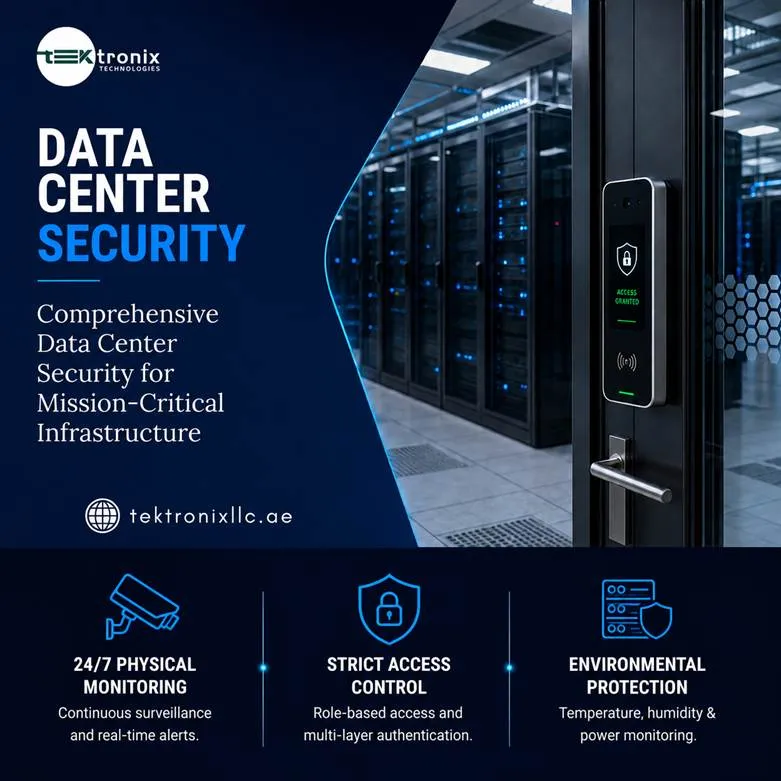
Large UAE enterprises — banks, telecom operators, government-adjacent entities, and multinational corporations — bring procurement processes shaped by internal risk committees, external auditors, and often global compliance frameworks that a single-location small business never has to satisfy. When that same enterprise selects a data center partner, whether hosting owned infrastructure or leasing colocation space, the security bar rises considerably above what a smaller organisation would specify or accept.
What "Enterprise-Grade" Means Beyond Standard Facility Security
Standard facility security satisfies a general tenant base with reasonable, broadly applicable controls. Enterprise-grade security satisfies a far more demanding set of stakeholders simultaneously — internal audit, external regulators, cyber insurance underwriters, and often client-facing contractual security commitments the enterprise itself has made downstream to its own customers.
That difference shows up practically in documentation depth. A standard facility might describe its access control policy in a page of marketing copy. An enterprise-grade facility produces detailed audit logs, third-party penetration test results, and formal incident response documentation on request, because enterprise procurement teams will ask for exactly that evidence before signing a contract.
Physical Security Standards Enterprise Tenants Expect
Data Center Access Control with Enterprise-Level Audit Trails
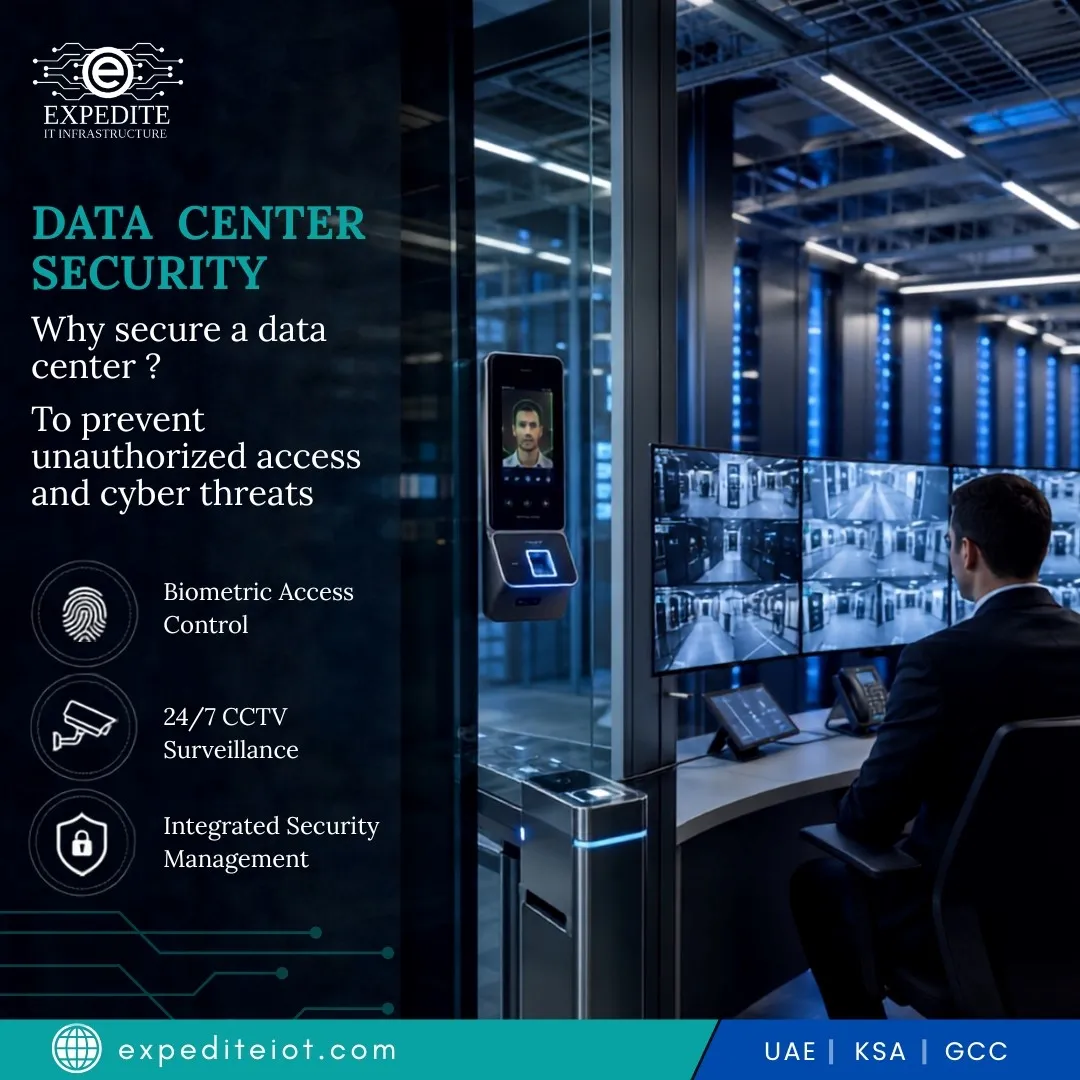
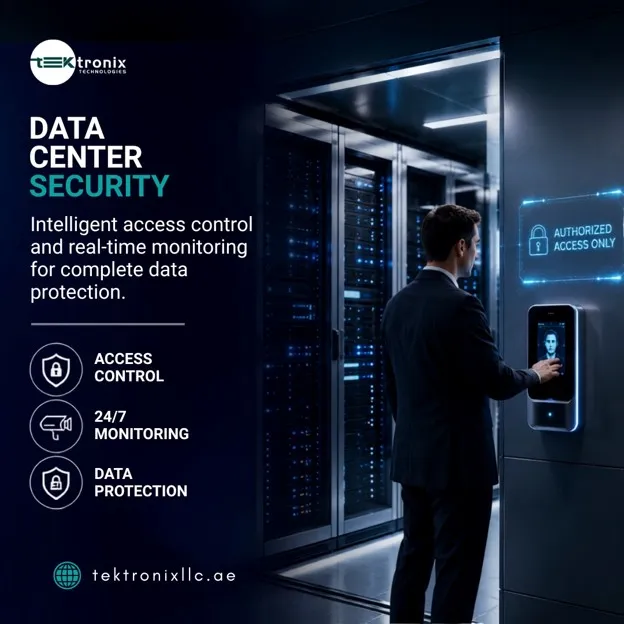
Enterprise-grade Data Center Access Control produces detailed, exportable audit trails covering every entry and exit, individually attributed rather than aggregated by role, since enterprise auditors typically expect to trace a specific access event back to a specific named individual during a compliance review.
Data Center Surveillance Meeting Enterprise SLA Commitments
Beyond basic coverage, enterprise-grade Data Center Surveillance typically comes with documented retention period guarantees and uptime commitments for the surveillance infrastructure itself, since a camera outage during an incident undermines the very evidence an enterprise tenant would need during an investigation.
Data Center Intrusion Detection Across Multi-Tenant Facilities
In shared enterprise colocation environments, Data Center Intrusion Detection needs per-cage or per-suite granularity, giving each enterprise tenant confidence that their specific space is monitored independently rather than relying on facility-wide coverage that might not distinguish which tenant's area was actually affected.
Network Security Standards for Enterprise Workloads
Cybersecurity for Data Center Environments Supporting Regulated Enterprises
Enterprise workloads in regulated sectors demand Cybersecurity for Data Center environments that extend well past basic network protection, incorporating regular third-party penetration testing, formal vulnerability disclosure processes, and documented patch management SLAs that a smaller facility might handle informally without the same contractual rigour.
Data Center Encryption Meeting Enterprise Compliance Mandates
Enterprise buyers typically require Data Center Encryption that satisfies specific compliance mandates their own industry imposes — banking-grade key management standards, healthcare data protection requirements, or sector-specific certifications — rather than accepting generic encryption claims without documented alignment to their actual regulatory obligations.
Data Center Firewalls for Enterprise Multi-Tenant Segmentation
At enterprise scale, Data Center Firewalls need to support considerably more granular segmentation policies, often managed through the enterprise's own network security team rather than left entirely to the facility operator, requiring collaborative configuration rather than a one-size-fits-all facility default.
Data Center Threat Detection Integrated with Enterprise SOC Operations
Large enterprises typically run their own security operations centre and expect facility-level Data Center Threat Detection to integrate directly with that existing SOC, feeding alerts into the enterprise's own monitoring platform rather than requiring security staff to separately monitor a facility-specific dashboard disconnected from their primary tooling.
Business Continuity and Vendor Risk Management
Enterprise procurement extends well beyond the security controls themselves into vendor risk management practices that smaller buyers rarely formalise. Enterprise risk teams typically require documented business continuity plans from the facility operator, evidence of financial stability, and often a right-to-audit clause allowing the enterprise's own security team to conduct periodic on-site assessments rather than relying solely on the operator's self-reported compliance.
Contractual SLAs matter considerably more at this scale too. An enterprise agreement typically specifies exact uptime commitments, defined incident notification timelines, and financial penalties for security control failures, transforming security from a vague operational promise into an enforceable contractual obligation with real financial consequences attached to non-performance.
Building an Internal Business Case for Enterprise-Grade Requirements
Security and facilities teams proposing enterprise-grade requirements internally often need to justify the additional cost and procurement complexity to finance and executive stakeholders who may initially view standard facility security as sufficient. The strongest business case typically centres on quantifiable risk transfer: documented SLAs and audit rights genuinely shift liability toward the facility operator in a way informal assurance never do, which matters considerably when a board or insurer eventually asks who bears responsibility for a security failure.
Framing the incremental cost of enterprise-grade security against the potential cost of a regulatory finding, a failed client audit, or a denied insurance claim usually makes the business case straightforward, since these downstream costs typically dwarf the premium enterprise-grade facilities charge over standard commercial offerings.
Common Gaps Enterprises Discover During Due Diligence
Even facilities marketing themselves as enterprise-ready frequently fall short in specific, recurring areas once a thorough due diligence process begins. Audit trail granularity is a common gap, where a facility can show that access occurred but cannot reliably attribute it to a specific individual rather than a shared team credential, undermining the accountability enterprise auditors specifically look for.
Incident notification timelines represent another frequent shortfall, where a facility's standard contract promises notification "promptly" or "as soon as practicable" rather than a specific, contractually binding timeframe measured in hours. Enterprise buyers should treat vague notification language as a negotiation point rather than accepting it as standard industry practice, since more specific commitments are usually available for facilities genuinely prepared to serve enterprise clients.
Data Center Security UAE: Enterprise Procurement Considerations
Enterprise buyers evaluating Data Center Security UAE-wide typically run formal RFP processes weighing security documentation as heavily as pricing, recognising that a facility unable to produce detailed compliance evidence during procurement is unlikely to provide it reliably during an actual incident later.
Data Center Security Dubai — Enterprise Tenant Due Diligence
Enterprise tenants evaluating Data Center Security Dubai facilities typically conduct formal due diligence covering DESC compliance documentation, third-party security certifications, and often an on-site facility audit by their own security team before finalising a colocation agreement, particularly for workloads carrying regulatory sensitivity.
Data Center Security Abu Dhabi — Enterprise Government and Institutional Requirements
Enterprises with government or institutional ties pursuing Data Center Security Abu Dhabi deployments often face additional NESA-aligned documentation requirements as part of formal procurement, with security evidence forming a mandatory component of vendor qualification rather than a supplementary consideration reviewed after commercial terms are settled.
Standards and Compliance Frameworks Enterprise Buyers Reference
Enterprise procurement teams typically benchmark facilities against ISO 27001 for information security management, Uptime Institute Tier certification for infrastructure resilience, and the UAE Information Assurance Standard (NESA/SIA) for facilities supporting critical or government-adjacent workloads. Enterprises in regulated sectors additionally reference PCI DSS for payment data, sector-specific banking regulations, and UAE PDPL for personal data handling, often requiring the facility to demonstrate alignment with whichever combination of frameworks applies to the enterprise's specific regulatory footprint.
Why Enterprise Organisations Choose Tektronix for Data Center Security
Tektronix LLC supports enterprise-grade data center security programmes for banks, telecom operators, and multinational corporations across the UAE, deploying access control, surveillance, and intrusion detection infrastructure from Genetec, Milestone, HID Global, and Honeywell configured to satisfy formal enterprise procurement and audit requirements. Every engagement includes documentation prepared specifically for enterprise due diligence processes, integration support for connecting facility-level threat detection with the client's existing SOC tooling, and ongoing compliance reporting aligned with the specific regulatory frameworks the enterprise operates under.
Enterprise procurement teams evaluating data center partners can review Tektronix's data center perimeter security solutions to understand the documentation and integration depth available for formal vendor qualification processes.
Conclusion
Enterprise buyers evaluate Data Center Security through a considerably more demanding lens than smaller tenants, expecting documented evidence rather than marketing assurances at every stage of procurement. Enterprise-grade Data Center Access Control with individually attributed audit trails, SLA-backed Data Center Surveillance, and per-tenant Data Center Intrusion Detection satisfy the physical security scrutiny large organisations apply. On the network side, regulated-grade Cybersecurity for Data Center practices, compliance-mapped Data Center Encryption, enterprise-configurable Data Center Firewalls, and SOC-integrated Data Center Threat Detection close the corresponding digital gaps enterprise risk committees expect addressed. As Data Center Security UAE procurement standards continue rising — including Data Center Security Dubai due diligence processes and Data Center Security Abu Dhabi institutional requirements — facilities capable of producing genuine, documented evidence rather than assurances alone will consistently win enterprise business over competitors offering comparable hardware without comparable proof.

























Sign in to leave a comment.