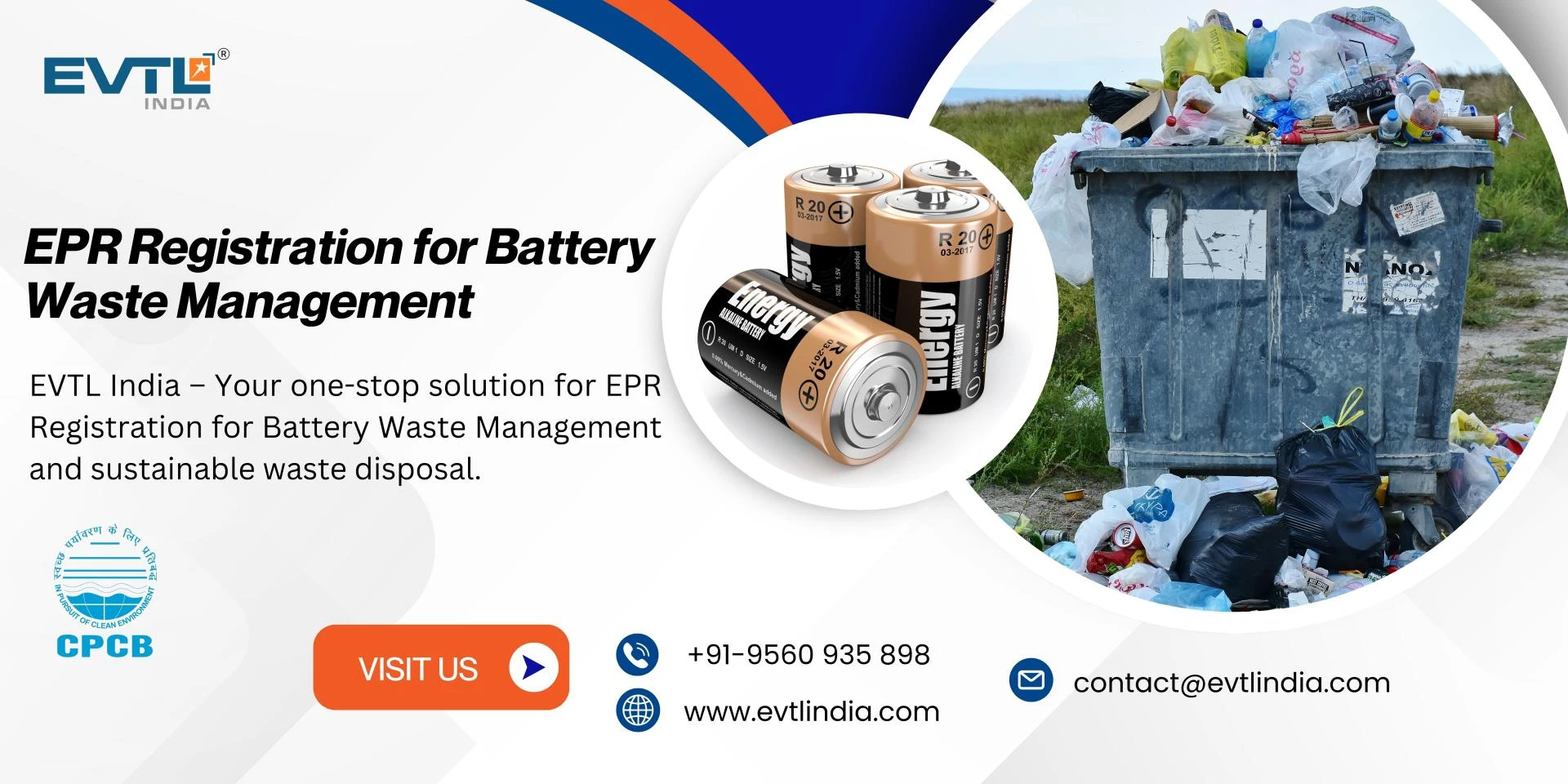

EPR Registration for Battery Waste Management is Simple with EVTL India
The increasing adoption of electric vehicles (EVs) is significantly reshaping the transportation sector. However, this transition presents a critical challenge: the responsible management of battery waste. Regulations surrounding End-of-Life Vehicles (ELV) and Extended Producer Responsibility (EPR) are becoming increasingly vital to ensure both environmental sustainability and public safety. This article examines the intricacies of EPR for Battery Waste , emphasizing the streamlined process provided by EVTL India.
Understanding End-of-Life Battery Management
The management of end-of-life batteries (ELVB) encompasses the entire lifecycle of EV batteries, from initial utilization to ultimate disposal. This essential phase guarantees that valuable materials are recovered and reused while hazardous substances are safely handled. Global regulations on ELVB are becoming more stringent, requiring producers to assume responsibility for the environmental effects of their products throughout their entire lifecycle. This entails obligations for the collection, processing, and recycling of batteries once we are no longer functional.
The Significance of EPR Registration for Battery Waste Management
Extended Producer Responsibility (EPR) is a regulatory framework that reallocates the responsibility for managing the environmental repercussions of products from consumers to producers. In relation to EV batteries, EPR registration mandates manufacturers to establish and implement systems for the collection, processing, and recycling of end-of-life batteries. This proactive strategy mitigates environmental contamination, conserves resources, and fosters a circular economy. Additionally, adherence to EPR regulations is essential for retaining market access and circumventing potential penalties.
Essential Documents Required for EPR Registration
The documentation required for EPR Registration may vary by jurisdiction and product type. EVTL India is available to assist companies in collecting and organizing the necessary paperwork. Required documents may include:
- Product Specifications: Comprehensive details regarding the battery’s composition, materials, and dimensions.
- Manufacturing Information: Insights into the manufacturing process and volume of production.
- Market Data: Information regarding the product's market distribution and sales statistics.
- Financial Documentation: Financial records demonstrating the company's capacity to fulfill EPR obligations.
- Environmental Management Strategy: A thorough outline of the company's approach to battery waste management.
EVTL India's Solutions for Addressing Challenges
EVTL India addresses these challenges through:
Regulatory Surveillance: The company consistently monitors regulatory developments and adapts its services to ensure compliance.
Data Management Solutions: We utilize robust data management systems for accurate and efficient data handling.
Financial Advisory Support: We provide financial planning services to assist companies in budgeting for EPR compliance.
Collaboration with Stakeholders: EVTL India facilitates communication and partnerships with all relevant stakeholders.
Conclusion
EVTL India is one of the leading EPR Consultant in India, helping manufacturers obtain our EPR licenses hassle-free. EPR registration for battery waste management is now an essential component of responsible business practices in the electric vehicle era. EVTL India offers an efficient and comprehensive approach to EPR registration, enabling companies to navigate the complexities of these regulations adeptly. By collaborating with EVTL India, organizations can achieve compliance, minimize their environmental footprint, and contribute to a more sustainable future.
























Sign in to leave a comment.