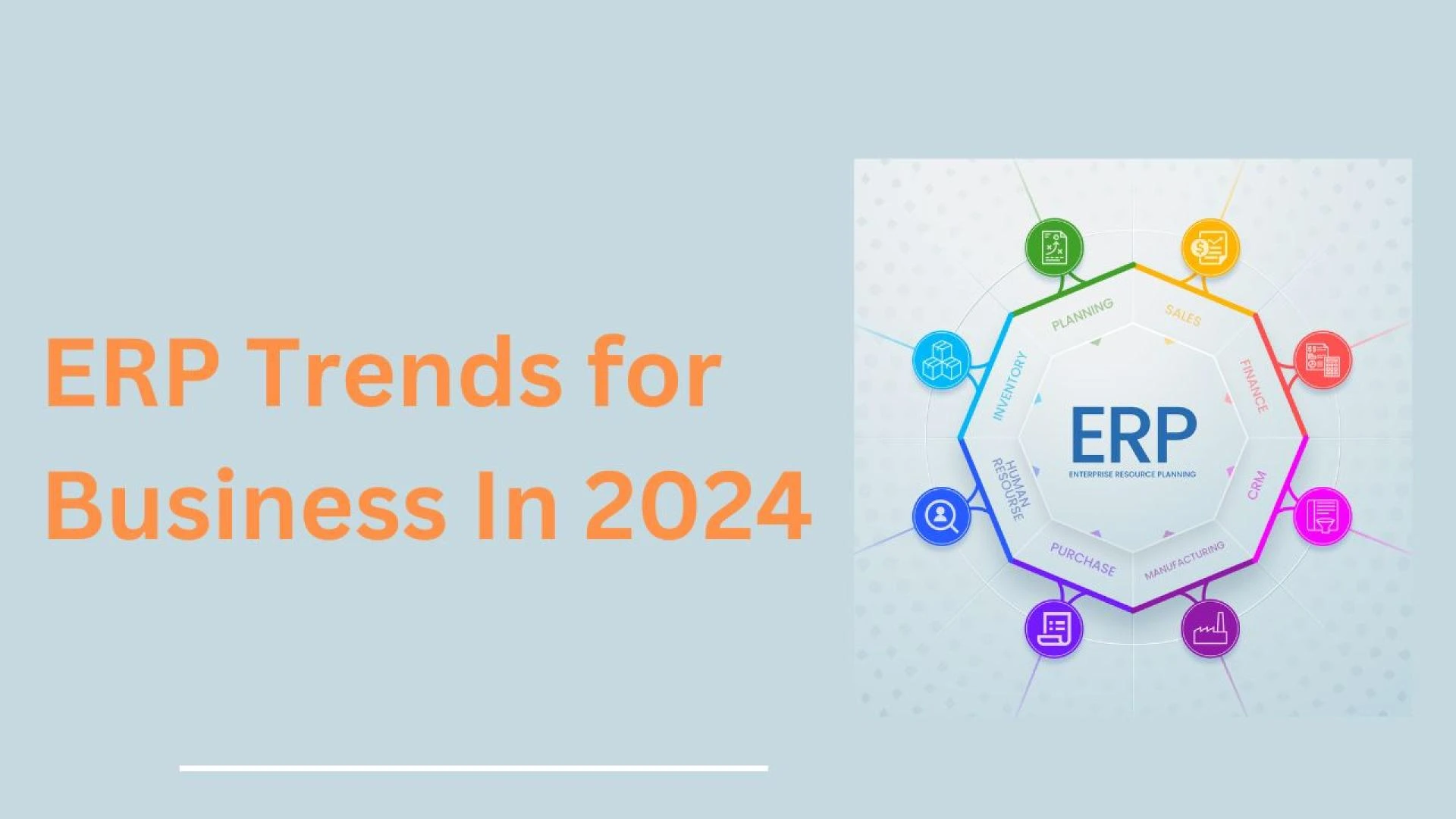

In the rapidly evolving landscape of business technology, Enterprise Resource Planning (ERP) systems stand as the backbone of operations for many organizations. As we step into 2024, the digital transformation journey continues to accelerate, bringing forth a plethora of ERP trends poised to reshape the way businesses operate. In this blog, we delve into the key ERP trends that are shaping the business landscape in 2024.
Cloud-Based ERP Adoption: Cloud computing has become the cornerstone of modern business infrastructure, offering unparalleled flexibility, scalability, and accessibility. In 2024, we witness a surge in cloud-based ERP adoption as businesses seek to streamline operations, reduce IT overheads, and enhance collaboration across distributed teams. Cloud-based ERP solutions provide the agility required to adapt to changing market dynamics while offering seamless integration with other cloud services.
AI and Machine Learning Integration: Artificial Intelligence (AI) and Machine Learning (ML) are revolutionizing ERP systems by enabling intelligent automation, predictive analytics, and personalized insights. In 2024, ERP platforms are increasingly leveraging AI-driven algorithms to automate routine tasks, optimize resource allocation, and forecast demand with greater accuracy. From predictive maintenance in manufacturing to dynamic pricing strategies in retail, AI-powered ERP solutions empower businesses to make data-driven decisions in real-time.
Blockchain for Enhanced Security and Transparency: With cyber threats on the rise, data security and integrity have become paramount concerns for businesses worldwide. In 2024, we observe a growing interest in integrating blockchain technology into ERP systems to enhance security and transparency across supply chains, financial transactions, and regulatory compliance processes. Blockchain-powered ERP solutions offer immutable ledgers, cryptographic verification, and decentralized consensus mechanisms, ensuring trust and accountability in complex business ecosystems.
Internet of Things (IoT) Connectivity: The proliferation of IoT devices continues to transform how businesses collect, analyze, and leverage real-time data for operational insights. In 2024, ERP vendors are capitalizing on IoT connectivity to enable seamless integration between physical assets, sensors, and ERP systems. From monitoring equipment performance in manufacturing plants to optimizing fleet management in logistics, IoT-enabled ERP solutions empower businesses to unlock new levels of efficiency and agility.
Enhanced User Experience with UX/UI Innovations: As ERP systems become more pervasive across organizations, there is a growing emphasis on enhancing the user experience (UX) and user interface (UI) design. In 2024, ERP vendors are investing heavily in intuitive interfaces, role-based dashboards, and mobile-friendly applications to simplify complex workflows and improve user productivity. By prioritizing usability and accessibility, modern ERP solutions empower employees at all levels to harness the full potential of enterprise data.
Vertical-Specific Customization: Every industry has unique requirements and regulatory standards that demand tailored ERP solutions. In 2024, we witness a shift towards vertical-specific customization, with ERP vendors offering industry-focused modules, compliance frameworks, and best practices out-of-the-box. Whether it's healthcare, finance, or manufacturing, businesses can now leverage ERP systems that are purpose-built to address their specific needs, driving greater efficiency and innovation.
Ecosystem Integration and Open APIs: In today's interconnected business landscape, ERP systems must seamlessly integrate with a myriad of third-party applications, services, and ecosystems. In 2024, ERP vendors are embracing open APIs (Application Programming Interfaces) and interoperable standards to facilitate smoother integration with CRM systems, e-commerce platforms, HR software, and beyond. By fostering an ecosystem of interconnected solutions, businesses can orchestrate end-to-end processes and unlock new revenue streams with ease.
Focus on Sustainability and ESG Compliance: With mounting pressure to address environmental, social, and governance (ESG) concerns, businesses are increasingly incorporating sustainability metrics into their ERP systems. In 2024, ERP platforms are integrating features for tracking carbon emissions, managing waste reduction initiatives, and ensuring ethical sourcing practices throughout the supply chain. By embedding sustainability into core business processes, organizations can demonstrate their commitment to responsible stewardship while driving long-term value creation.
Shift Towards Hybrid ERP Deployments: While cloud-based ERP solutions offer unparalleled agility and scalability, some organizations still prefer to maintain certain critical workloads on-premises due to regulatory requirements or data sovereignty concerns. In 2024, we observe a growing trend towards hybrid ERP deployments, where businesses leverage a mix of cloud-based and on-premises infrastructure to strike the right balance between flexibility and control. Hybrid ERP architectures enable seamless data synchronization, disaster recovery, and compliance management across distributed environments.
Emphasis on Cybersecurity and Data Privacy: As businesses digitize their operations and embrace cloud-based ERP solutions, safeguarding sensitive data against cyber threats and privacy breaches becomes paramount. In 2024, ERP vendors are doubling down on cybersecurity measures, including advanced encryption protocols, multi-factor authentication, and proactive threat detection mechanisms. Moreover, with the enforcement of stringent data privacy regulations such as GDPR and CCPA, ERP systems are evolving to offer granular consent management, data anonymization, and privacy-enhancing technologies to ensure compliance and build trust with customers and stakeholders.
In conclusion,
the year 2024 heralds a new era of innovation and Digital transformation in the realm of ERP systems. From cloud-based deployments and AI-driven insights to blockchain-enabled security and IoT connectivity, businesses are embracing these trends to stay ahead of the curve and drive sustainable growth in an increasingly competitive landscape. By harnessing the power of emerging technologies and embracing a customer-centric approach, organizations can unleash the full potential of their ERP investments and pave the way for a prosperous future.
























Sign in to leave a comment.