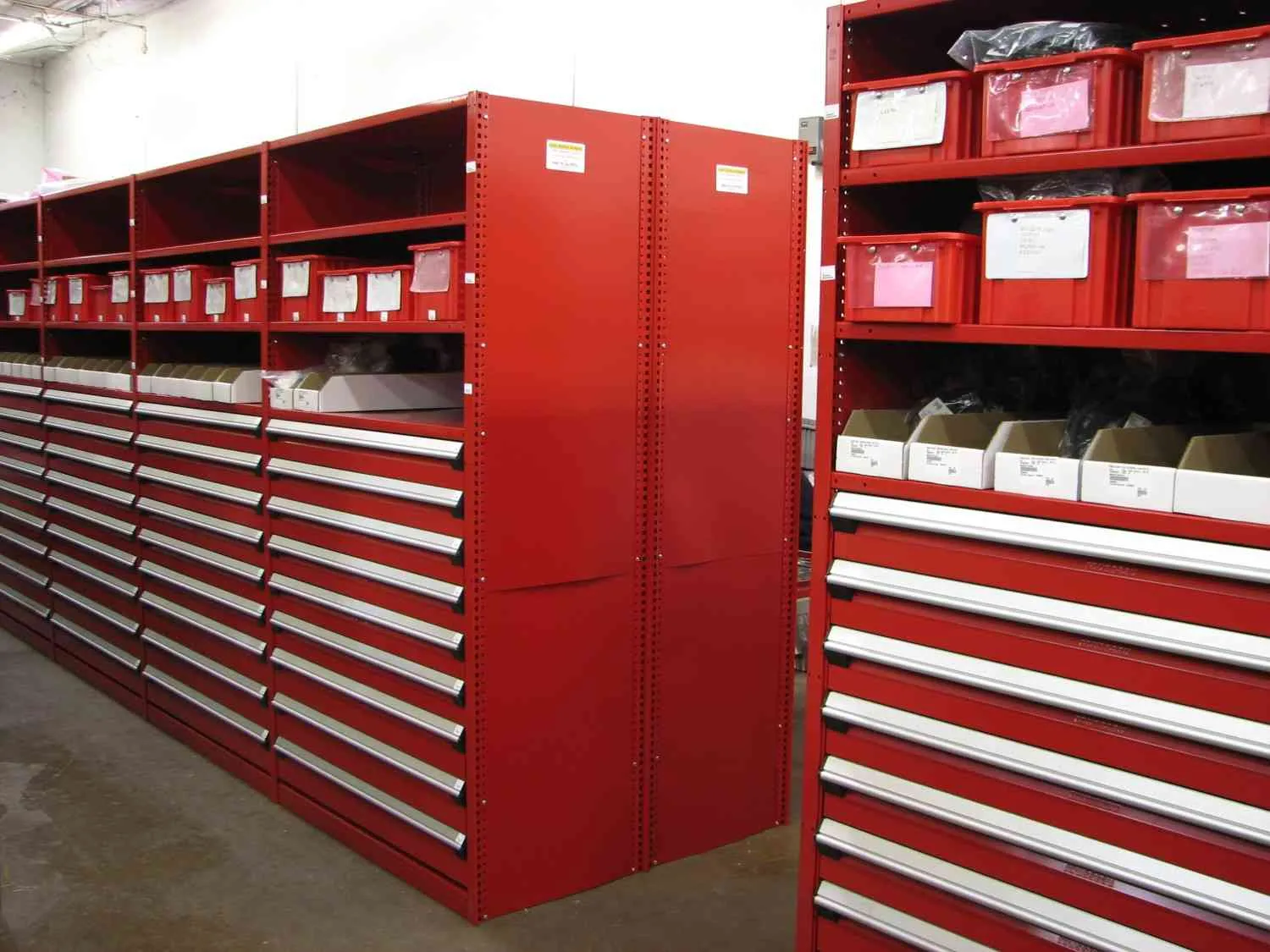


Direct Answer: ESD-safe industrial workstations protect static-sensitive components by combining grounded work surfaces, dissipative flooring, and controlled connection points into a single, repeatable setup. For aerospace and electronics assembly lines, the right workstation design must also support tool accountability, tight tolerances, and consistent workflow, not just static control.
Introduction
Every year, electrostatic discharge quietly damages components that pass every visual inspection. The failure doesn’t show up on the line. It shows up months later, in the field, when a circuit board or avionics component fails without warning. For aerospace and electronics manufacturers, that risk is exactly why ESD-safe industrial workstations in Seattle, WA have become a standard part of facility planning rather than an afterthought.
This guide breaks down what actually makes a workstation ESD-safe, how to design one that works for aerospace assembly, and what most buying guides leave out.
What Makes a Workstation Actually ESD-Safe?
A workstation isn’t ESD-safe just because it has a metal frame or an anti-static mat sitting on top of it. True protection depends on the whole system working together:
- A dissipative work surface that safely channels static charge to ground instead of trapping it
- A grounded frame and common ground point connecting the surface, mats, and equipment
- Wrist strap and grounding cord connections built into the bench, not added as an afterthought
- ESD-safe flooring or floor mats in the surrounding work area
- Properly trained operators using ESD-rated tools, garments, and packaging
Miss any one of these, and the rest of the setup can’t fully protect the components being handled. This is one of the most common gaps in facilities that assume a single anti-static mat is enough.
Why Aerospace and Electronics Lines Need a Different Approach
Aerospace and electronics assembly work isn’t uniform. A single production line might handle everything from delicate avionics boards to heavier structural components in the same shift. That mix creates two competing demands: static protection and organized, high-density tool storage.
This is where aerospace tool storage layout becomes just as important as the workstation itself. When tools, fasteners, and inspection equipment are stored close to the point of use, technicians spend less time moving between stations and less time exposing sensitive components to unnecessary handling. A well-planned layout reduces both static risk and lost productivity at the same time.
Designing ESD-Safe Modular Workstations: A Step-by-Step Approach
- Map the Electrostatic Protected Area (EPA). Before selecting furniture, define which zones require full ESD protection versus general assembly space. This prevents overspending on protection where it isn’t needed and underspending where it is.
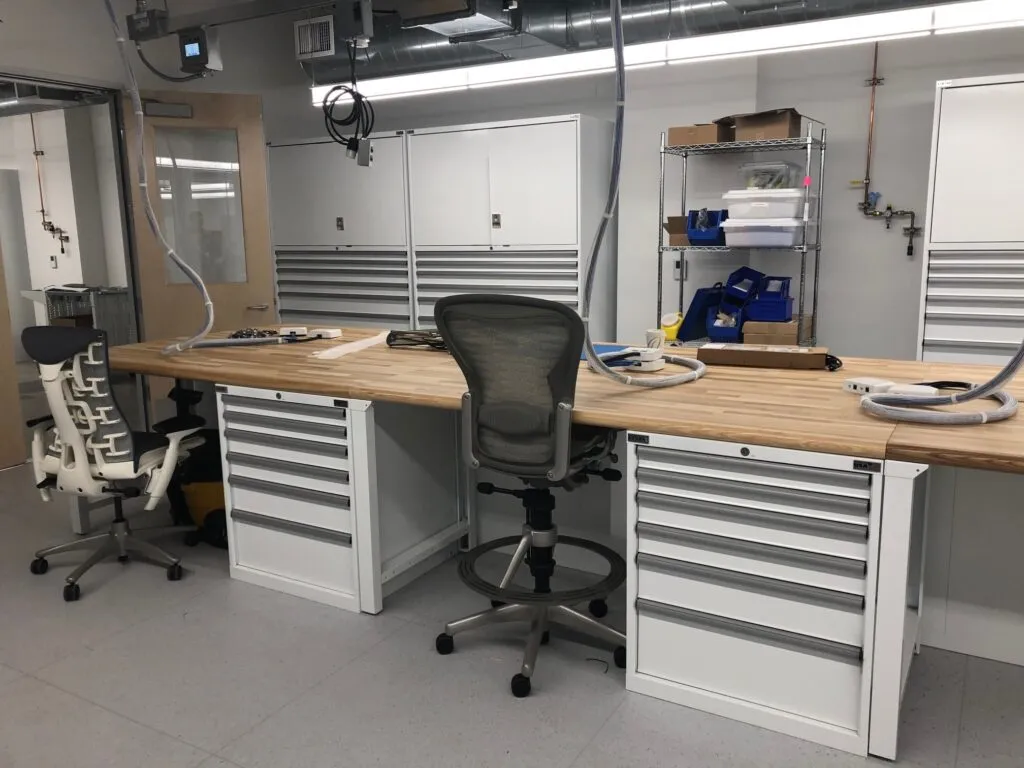
- Choose modular components over fixed benches. Modular systems allow technical assembly benches to be reconfigured as product lines change, without rebuilding the ESD grounding system from scratch.
- Integrate storage into the workstation, not around it. Drawers, bins, and dividers built into the bench keep tools within reach and reduce the movement that increases the chance of static buildup or misplaced components.
- Standardize grounding across every station. Every bench on the line should ground to the same reference point. Inconsistent grounding between stations is a common, hard-to-diagnose source of ESD failures.
- Growth plan. Aerospace and electronics programs change often. A modular workstation should be easy to extend, reconfigure, or relocate as new products or lines are introduced.
What Most Guides Leave Out
Many resources on ESD workstations focus almost entirely on the work surface material and stop there. Two areas deserve more attention:
Layout and workflow, not just the bench itself, determine how consistently ESD protocols are followed on a busy line
Storage integration matters as much as grounding; technicians who have to leave the protected area to retrieve tools reintroduce risk every time they do
A workstation strategy that only addresses the surface material is solving half the problem.
Getting the Design Right for Your Facility
Designing ESD-safe industrial workstations for aerospace storage solutions in Seattle, WA, isn’t a one-size-fits-all decision. It depends on the sensitivity of the components being handled, how the line is laid out, and how often processes change. Workspace Northwest works with manufacturers and engineering teams to plan workstation and storage layouts that support both static protection and day-to-day workflow efficiency.
Conclusion
ESD-safe industrial workstations are about more than a protective surface; they’re a system that combines grounding, storage, and workflow design to keep sensitive components safe throughout the assembly process. For aerospace and electronics facilities, getting the layout and storage integration right is just as important as the ESD materials themselves. Workspace Northwest helps facilities plan workstation and storage solutions built around how their teams actually work.
Frequently Asked Questions
What is an ESD-safe industrial workstation?
A workstation with grounded, static-dissipative surfaces and connections, built using Arlink modular systems and Lista worksurfaces, designed to protect sensitive electronics from static discharge throughout assembly and testing, while supporting technician comfort and precision.
Do all aerospace assembly lines need ESD protection?
Not every zone requires it. We start with an ESD & technical site assessment, reviewing component handling, grounding points, and technician movement to identify exactly which areas need full ESD protection, avoiding unnecessary cost elsewhere.
Can modular ESD workstations be reconfigured later?
Yes. Our Arlink and Rousseau modular systems let you reconfigure benches, storage, and micro-component layouts as your operation scales or workflows evolve, without compromising grounding or ESD protection across the workstation.
What’s the biggest mistake facilities make with ESD workstations?
Overlooking total grounding. Effective ESD protection requires dissipative surfaces, grounding points, and controlled technician movement working together, not just a single mat or component in isolation.
How does tool storage affect ESD protection?
Vidmar micro-bin and high-density storage keep components and tools within a technician’s reach at the workstation, reducing movement outside the protected area that could reintroduce static risk.


























Sign in to leave a comment.