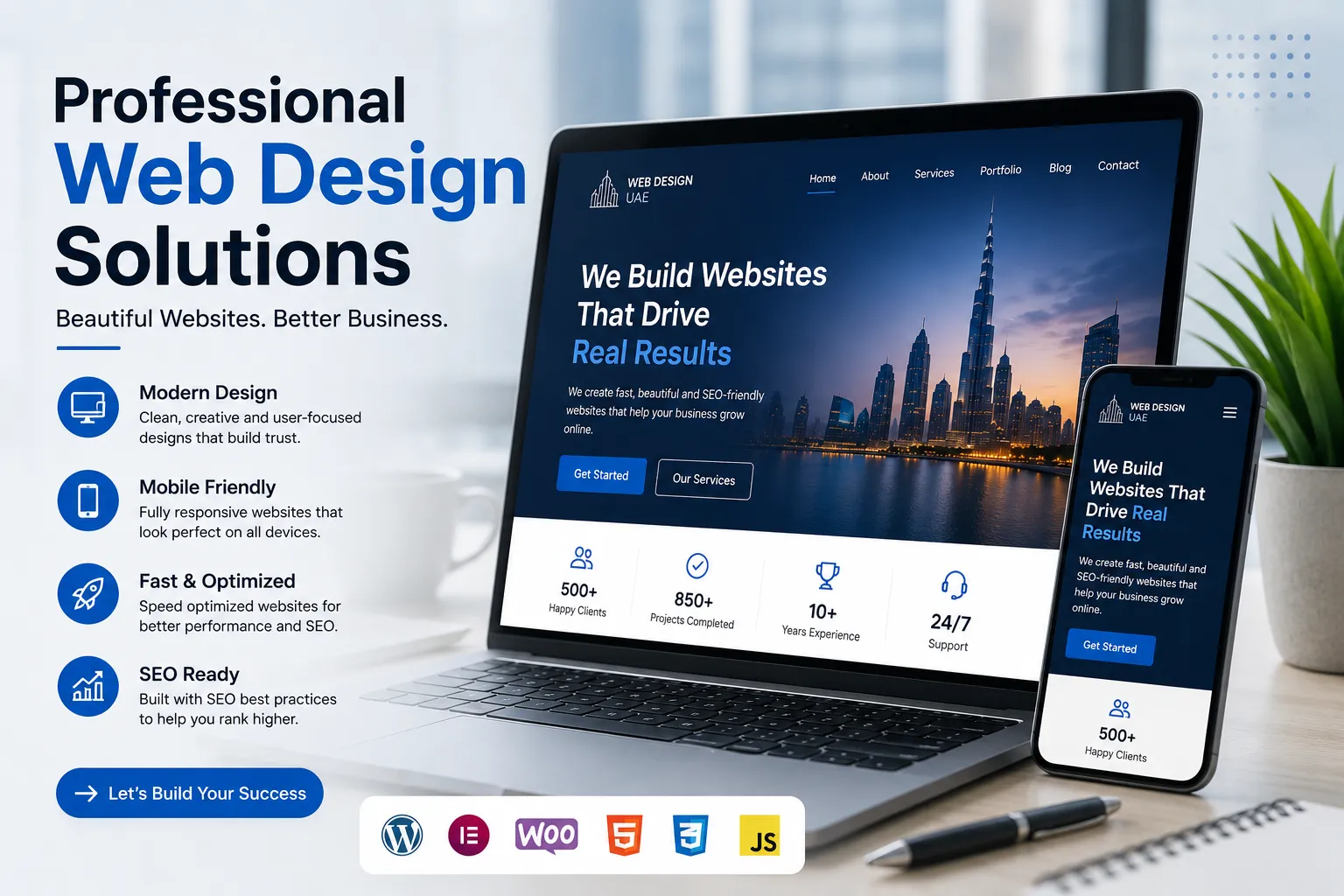

Getting more visitors to your website is not always the best way to generate more business. WEB Design UAE businesses can often achieve better results by improving the percentage of existing visitors who become enquiries, customers, or leads. If your website already receives regular traffic but produces fewer conversions than expected, focusing on conversion rate optimization can help you get more value from the visitors you already have. Small improvements to your design, content, navigation, calls to action, forms, and trust signals can make a significant difference without requiring a larger marketing budget.
Understand Your Current Conversion Rate
Before making changes, you need to understand how your website is currently performing. Your conversion rate represents the percentage of visitors who complete a desired action, such as submitting a contact form, requesting a quotation, making a booking, calling your business, or purchasing a product.
Review your website analytics and identify which pages receive the most visitors and which pages generate the most conversions. A page may receive thousands of visitors but produce very few enquiries, while another page with less traffic may generate highly valuable leads. Understanding these differences helps you focus your optimization efforts where they are most likely to produce results.
Create a Clear Value Proposition
Visitors should understand what your business offers almost immediately after arriving on your website. If your homepage or landing page uses vague headlines and general marketing statements, customers may not understand why they should continue exploring your website.
Create a clear value proposition that explains your service, target audience, and main benefit. Tell visitors what problem you solve and why your business is worth considering. The message should be simple enough to understand quickly while providing enough information to encourage visitors to explore further.
Improve Your Homepage
Your homepage often receives visitors from multiple sources, so it needs to guide different types of customers toward the information they need. A cluttered homepage can make it difficult for visitors to understand where they should go next.
Use a clear structure with an engaging headline, supporting description, primary call to action, service overview, trust signals, and relevant supporting content. Avoid trying to place every piece of information on the homepage. Instead, provide enough useful information to generate interest and guide visitors toward dedicated service and contact pages.
Strengthen Your Calls to Action
A weak call to action can prevent interested visitors from taking the next step. Buttons such as “Click Here” or “Submit” do not tell customers what benefit they will receive. A stronger CTA explains the action and gives visitors a reason to complete it.
Use phrases such as “Request a Free Quote,” “Book a Consultation,” “Discuss Your Project,” or “Contact Our Team.” Place CTAs at logical points throughout your pages, particularly after sections that explain your services or demonstrate your credibility. Make the buttons noticeable without allowing them to overwhelm the overall design.
Simplify Contact Forms
Long forms can reduce conversions because visitors may not want to provide unnecessary information before speaking with your business. If your form contains too many fields, customers may abandon it even when they are interested in your services.
Review every field and determine whether it is genuinely necessary for the initial enquiry. In many cases, a simple form asking for a name, contact information, and brief project details may be enough. Make sure your forms are easy to complete on mobile devices and provide clear confirmation after submission.
Build Trust With Testimonials
Customers may hesitate to contact a business if they cannot find evidence that other people have had positive experiences. Testimonials, reviews, case studies, and portfolio examples can reduce uncertainty and make visitors more comfortable taking the next step.
Use genuine customer feedback and place it near important conversion points. For example, a service page can include testimonials after explaining the benefits of the service and before the final CTA. Real examples of previous work can also help visitors understand the quality and capabilities of your business.
Improve Your Service Pages
Your service pages should do more than list the services your business provides. They should explain what each service involves, who it is suitable for, what benefits it provides, and how customers can get started.
Create dedicated pages for important services rather than putting everything into one general page. Use clear headings, relevant examples, FAQs, testimonials, and strong CTAs. Visitors who arrive through search engines or advertisements should be able to find information that directly matches what they were looking for.
Optimize Your Website for Mobile
A website may convert well on desktop computers but perform poorly on smartphones. Mobile visitors expect pages to load quickly and provide easy access to important information. Small buttons, difficult menus, unreadable text, and complicated forms can all reduce conversions.
Test your website on different mobile devices and screen sizes. Make sure buttons are easy to tap, forms are simple to complete, and contact options remain accessible. Your mobile website should provide the same essential information as your desktop version while presenting it in a format that is comfortable to use on smaller screens.
Improve Website Loading Speed
Visitors are less likely to convert when a website is slow or difficult to use. A delayed page can cause users to leave before they even see your main message or call to action. Improving performance can therefore help increase conversions without increasing your traffic.
Compress large images, reduce unnecessary scripts, remove unused plugins, optimize caching, and use reliable hosting. Pay special attention to important landing and service pages. Faster loading can create a smoother experience and give visitors more opportunities to interact with your website.
Make Your Pricing Information Clear
Unclear pricing can sometimes prevent visitors from taking the next step. Customers may leave if they cannot understand whether your services are likely to fit their budget. While some businesses cannot provide fixed prices, they can still explain pricing factors or provide a clear quotation process.
Explain what influences the cost of your services and what customers receive for their investment. If you provide custom pricing, use CTAs such as “Request a Custom Quote” and explain how the quotation process works. Transparency can reduce uncertainty and make visitors more comfortable contacting your business.
Use Better Landing Pages
Sending every visitor to your homepage may not be the most effective conversion strategy. Dedicated landing pages can focus on a particular service, audience, campaign, or customer problem. This allows the page content and CTA to match the visitor's expectations more closely.
A strong landing page should have one primary goal. Explain the customer's problem, present your solution, demonstrate credibility, and provide a clear next step. Remove unnecessary distractions that could take visitors away from the main conversion action.
Improve Internal Linking
Internal links can help visitors discover related services and useful information. Someone reading an educational article may not be ready to contact your business immediately, but a relevant internal link can guide them toward a service page that better matches their needs.
Connect related articles, service pages, case studies, FAQs, and contact pages naturally. Make sure each link provides genuine value rather than simply adding links for the sake of increasing page views. A well-planned internal linking structure can help visitors move naturally through the buying journey.
Use an Experienced Web Design Professional
Conversion optimization often requires more than changing the color of a button or adding a new image. An experienced uae website desiger can review your website's layout, content, navigation, mobile experience, forms, page speed, and conversion paths to identify areas that may be preventing visitors from taking action.
A professional approach focuses on the complete customer journey. Visitors should be able to understand your business, find relevant information, trust your services, and contact you without unnecessary obstacles. Improving these elements can increase the value of your existing traffic instead of requiring you to constantly search for more visitors.
Remove Unnecessary Distractions
A website with too many banners, pop-ups, animations, sliders, and competing CTAs can make it difficult for visitors to focus. Every additional element should have a clear purpose related to usability, trust, information, or conversion.
Review your pages and remove features that do not contribute to the customer's experience. Keep the design clean and direct important attention toward the actions you want visitors to take. A simpler page can often communicate more effectively than a crowded one.
Analyze Visitor Behavior
Analytics can show where visitors are leaving your website and which pages are performing well. Pay attention to pages with high traffic but low conversion rates because these may offer the greatest opportunity for improvement.
You can also analyze which devices, traffic sources, and landing pages generate the best results. If mobile visitors convert at a much lower rate than desktop visitors, for example, your mobile experience may require attention. Data can help you identify problems instead of relying entirely on assumptions.
Test and Improve Continuously
Conversion rate optimization should be treated as an ongoing process. After making improvements, monitor the results and determine whether conversions increase. You can test different headlines, CTA wording, form lengths, layouts, images, and page structures.
Avoid changing everything simultaneously because it becomes difficult to determine which improvement produced the result. Focus on meaningful changes and track their impact over time. Continuous testing can help your website become more effective without requiring a constant increase in traffic.
Read More:
https://share.evernote.com/note/897bf525-bc6c-4fc3-ca1a-87e6b19fd4c5
Final Thoughts
Increasing website traffic can require significant time and marketing investment, but improving the conversion rate allows you to get more value from visitors you already have. Clear messaging, stronger calls to action, simplified forms, trust signals, better service pages, mobile optimization, faster loading, and focused landing pages can all help turn more visitors into customers. The goal is not simply to keep people on your website longer but to make their journey easier and more useful. By understanding visitor behavior and continuously improving the customer experience, your website can generate more business without depending entirely on increased traffic.
Frequently Asked Questions
1. What is website conversion rate?
A website conversion rate is the percentage of visitors who complete a desired action. This could include submitting a form, making a purchase, requesting a quote, booking an appointment, or contacting your business.
2. Can I increase conversions without getting more website traffic?
Yes. Improving your website's design, content, calls to action, forms, trust signals, mobile experience, and overall customer journey can help more existing visitors take action.
3. What is the most important element for improving conversions?
There is no single element that works for every website. Clear messaging, a strong value proposition, relevant CTAs, trust signals, simple forms, and a smooth user experience should all work together.
4. Should I shorten my contact form?
In many cases, yes. Removing unnecessary fields can make it easier for visitors to submit an enquiry. Keep only the information you genuinely need for the initial conversation.
5. Does mobile optimization affect conversion rates?
Yes. If mobile visitors have difficulty navigating your website, reading content, or completing forms, they may leave before converting. A responsive and mobile-friendly design can provide a better customer experience.
6. How can testimonials improve conversions?
Testimonials provide evidence that other customers have had positive experiences with your business. Genuine reviews and case studies can reduce uncertainty and help visitors feel more confident about contacting you.
7. How often should I optimize my website?
Website optimization should be ongoing. Review your analytics regularly, identify pages with conversion problems, make targeted improvements, and monitor the results. Continuous optimization can gradually improve your website's performance over time.


























Sign in to leave a comment.