
 ISO 9001 is the most widely adopted Quality Management System (QMS) standard in the world, helping organizations of all sizes improve consistency, efficiency, and customer satisfaction. A critical part of meeting ISO 9001 requirements is implementing and maintaining well-defined procedures. These procedures ensure that key processes are controlled, monitored, and continually improved.
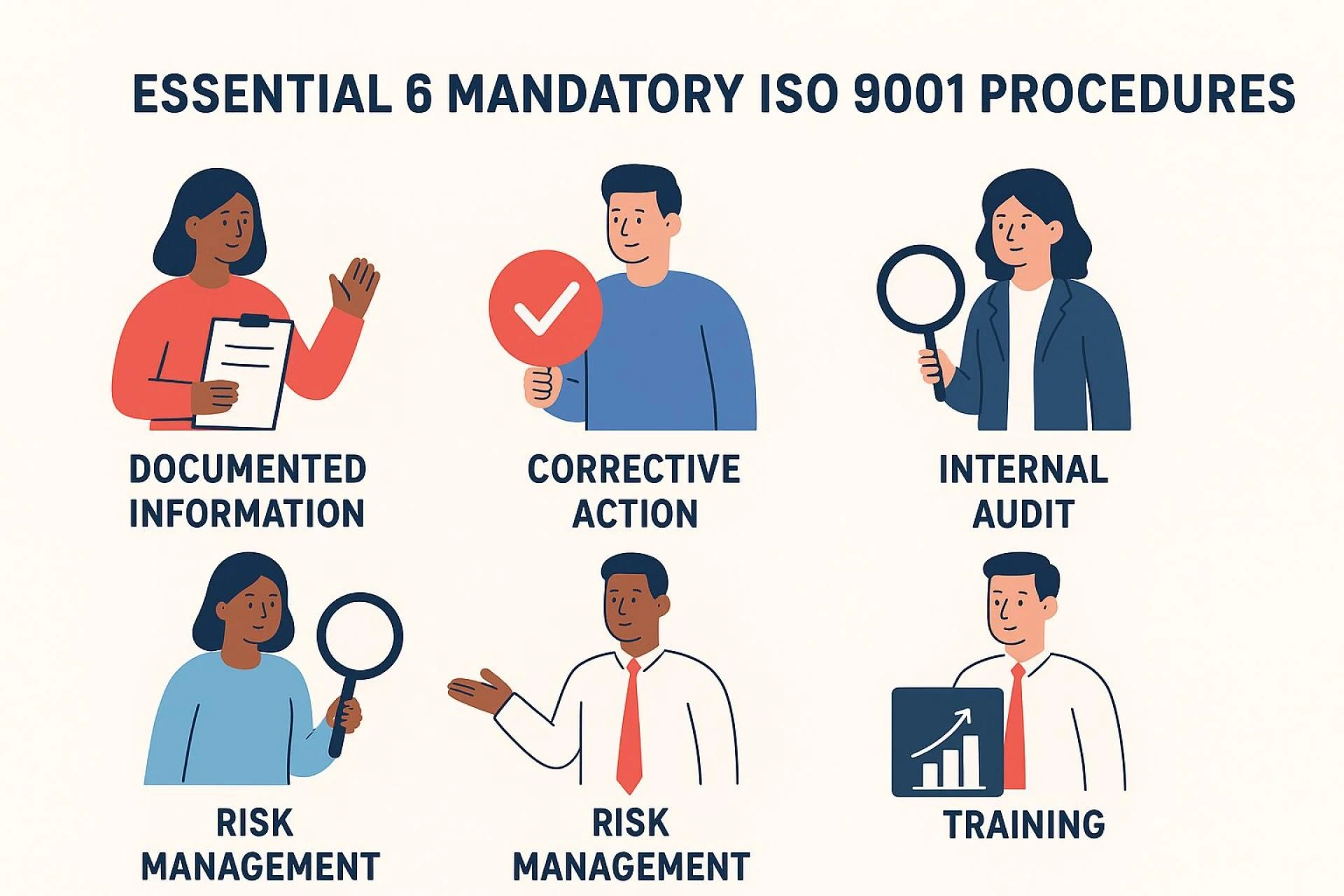
While ISO 9001 emphasizes flexibility in documentation, certification auditors still expect certain procedures to be documented and followed. Among them, six stand out as essential for passing an audit and demonstrating compliance.
Let’s explore the six mandatory ISO 9001 procedures every organization should establish.
1. Procedure for Documented Information
Documented information is the backbone of ISO 9001 compliance. This procedure ensures that all quality manuals, standard operating procedures, forms, and records are properly created, reviewed, distributed, and maintained.
Key aspects include:
- Version control to ensure only current documents are in use.
- Access control to protect sensitive information.
- Retention and disposal guidelines for records.
Without strong control of documented information, organizations risk inconsistencies, errors, and noncompliance during audits.
2. Procedure for Corrective Action
Even the best systems encounter problems. The corrective action procedure ensures that when nonconformities occur, they are corrected at the root cause level to prevent recurrence.
This procedure should include:
- Identifying and recording nonconformities.
- Conducting root cause analysis.
- Implementing corrective actions and assigning responsibilities.
- Reviewing effectiveness of corrective measures.
Auditors pay close attention to this procedure because it reflects the organization’s commitment to continual improvement.
3. Procedure for Internal Audit
Internal audits act as a self-assessment tool to verify that the QMS is functioning effectively. This procedure defines how internal audits are planned, conducted, and reported.
It typically covers:
- Establishing an annual audit schedule.
- Selecting competent, impartial auditors.
- Recording findings and assigning corrective actions.
- Following up to ensure issues are resolved.
A systematic internal audit procedure helps organizations identify weaknesses before external auditors do.
4. Procedure for Management Review
ISO 9001 requires top management to periodically review the QMS to ensure its suitability and effectiveness. The management review procedure provides a structured framework for this requirement.
It usually includes:
- Gathering inputs such as audit results, customer feedback, process performance, and risks.
- Holding regular review meetings.
- Documenting outputs like action items, decisions, and improvement plans.
Auditors look for evidence that leadership is actively engaged in driving quality initiatives.
5. Procedure for Risk Management
Risk-based thinking is a fundamental principle of ISO 9001. The risk management procedure ensures that potential risks and opportunities are identified, assessed, and addressed before they affect quality or customer satisfaction.
Important elements include:
- Risk identification methods across processes.
- Criteria for assessing likelihood and impact.
- Actions to mitigate risks and exploit opportunities.
- Regular reviews and updates of risk registers.
A proactive risk management procedure demonstrates that the organization anticipates problems instead of reacting to them.
6. Procedure for Training
Competence of employees is directly linked to the quality of products and services. The training procedure ensures that all personnel are properly trained and capable of performing their tasks.
This procedure should cover:
- Identifying competency requirements for each role.
- Creating training plans and records.
- Evaluating training effectiveness.
- Updating training needs as processes or technologies change.
During audits, evidence of staff competence and training effectiveness is closely examined.
Conclusion
The journey to ISO 9001 certification is not just about meeting requirements—it is about building a strong, sustainable system that supports continual improvement and customer satisfaction. The six mandatory procedures—documented information, corrective action, internal audit, management review, risk management, and training—form the foundation of an effective QMS.
By establishing and maintaining these procedures, organizations not only increase their chances of passing certification audits but also enhance overall efficiency, reduce risks, and build lasting customer trust.

























Sign in to leave a comment.