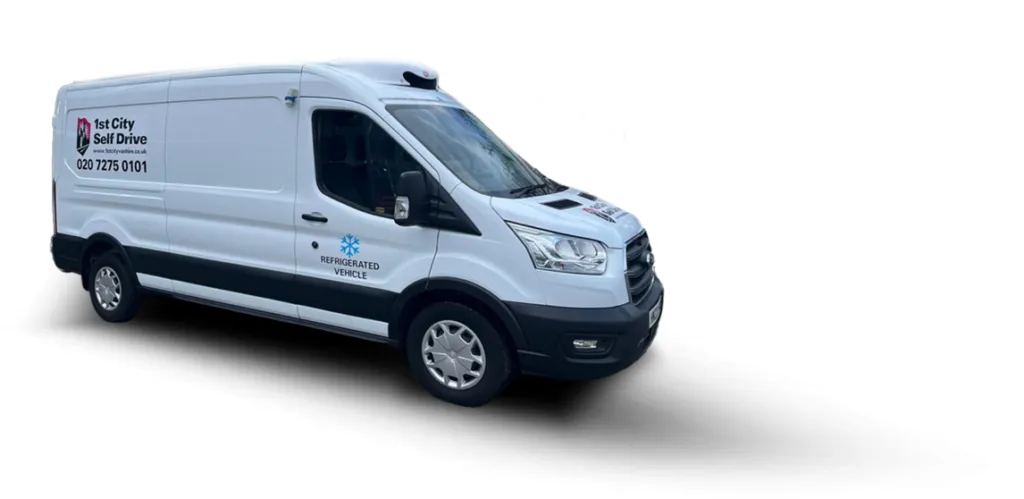

Across the UK, commercial temperature-controlled transport is a highly technical field. If you are specifically considering hiring a refrigerated van in London, the vehicle's technical suitability for its specific urban environment ensures efficiency. You need to strike a balance between the city's strict emissions laws and the physical limits of the cooling units. Here is a guide to help you streamline your logistics.

The Practicalities of Refrigerated Van Hire in London
When you hire a fridge van in London for goods transport, you aren't just paying for the space; you’re paying for the engine's ability to keep that space cold while sitting in traffic.
- The Pull-Down and Recovery: In London, you’re rarely driving at a steady speed. You are constantly stopping, starting, and opening the back doors. Every time those doors open, cold air escapes.
- The nuance: You need a unit with a fast "pull-down" time. This is how quickly the van gets back to the target temperature after you close the doors. A cheap refrigeration unit will struggle to recover the temperature between short drops in Soho or Camden, leading to spoiled goods.
- The spec: For frozen goods below 18 degrees Celsius, look for a "deep freeze". For dairy or flowers, a standard chiller unit works. Request a dual-compartment van with a movable bulkhead if you have both.
- The Electric Standby Feature: This option is often overlooked but critical. You can't leave the engine running if you cater an event or load the van the night before. Not only is it a waste of fuel, but London has strict anti-idling laws.
- The Solution: Make sure the van has an "Electric Standby" plug. This allows you to plug the van into a standard wall socket to keep the fridge running while the engine is off. It essentially turns the van into a temporary cold room.
- Payload Limitations: Refrigeration equipment is heavy. The cooling motor, the thick insulation panels, and the internal lining can easily add 400kg to the vehicle's weight.
- The Risk: If you hire a 3.5-tonne van (the standard size for a car licence), your actual carrying capacity (payload) is much lower than a regular transit van. If you're hauling heavy items like liquids or meat, it is effortless to go over the legal weight limit, which invites massive fines at a roadside check.
Managing London’s Driving Zones
You cannot discuss vans in London without mentioning the fees.
- ULEZ (Ultra Low Emission Zone): Every hire van should be Euro 6 compliant. If it isn't, you’ll pay £12.50 every day you drive. Most hire companies in London have updated their fleets to avoid this penalty, but it’s worth double-checking.
- The Congestion Charge: This is the £15 daily fee for Central London. Unless you hire an electric refrigerated van, you’re paying the charge. Electric vans are becoming more common in London hire fleets because they are exempt from both the ULEZ and the Congestion Charge, which can save a business £27.50 per day.
Parking and Height Restrictions
London was not built for minibuses. Many multi-storey car parks and even some "width-restricted" residential streets in West London will not accommodate a high-roof minibus.
When booking, check the vehicle height. If you're heading into Central London, you need to know if you can actually park the thing once you arrive.
Insurance and Fine Print
In London, the chances of a clipped wing mirror or a scratched bumper are high with standard delivery vehicles. Most vehicle rental companies have an "excess" of £1,000 to £2,000. It is usually worth paying the extra £15–£20 a day for a Collision Damage Waiver (CDW) to bring that excess down to zero.
Breakdown recovery is an essential part of the logistics. For a fridge van, a breakdown is an emergency because the stock is rotting. Only hire from companies that offer 24/7 breakdown assistance and, specifically, a "like-for-like" replacement. A standard tow truck is useless if you have £5,000 worth of frozen seafood in the back.
Some London hires come with "unlimited mileage", but many have a cap (e.g., 100 miles per day). If you’re just doing local deliveries, it’s fine. If you’re heading out to the Home Counties, the "pence per mile" overage charges can get expensive fast.
Conscious Choices For Minibus Hire Self-Drive In London
Hiring in London is about matching the tool to the task. Don’t just look for the cheapest daily rate. Check the payload to make sure you can actually carry your stock, ensure you have the right license for a minibus, and always confirm the van has a standby plug if you aren't planning to drive 24/7.






















Sign in to leave a comment.