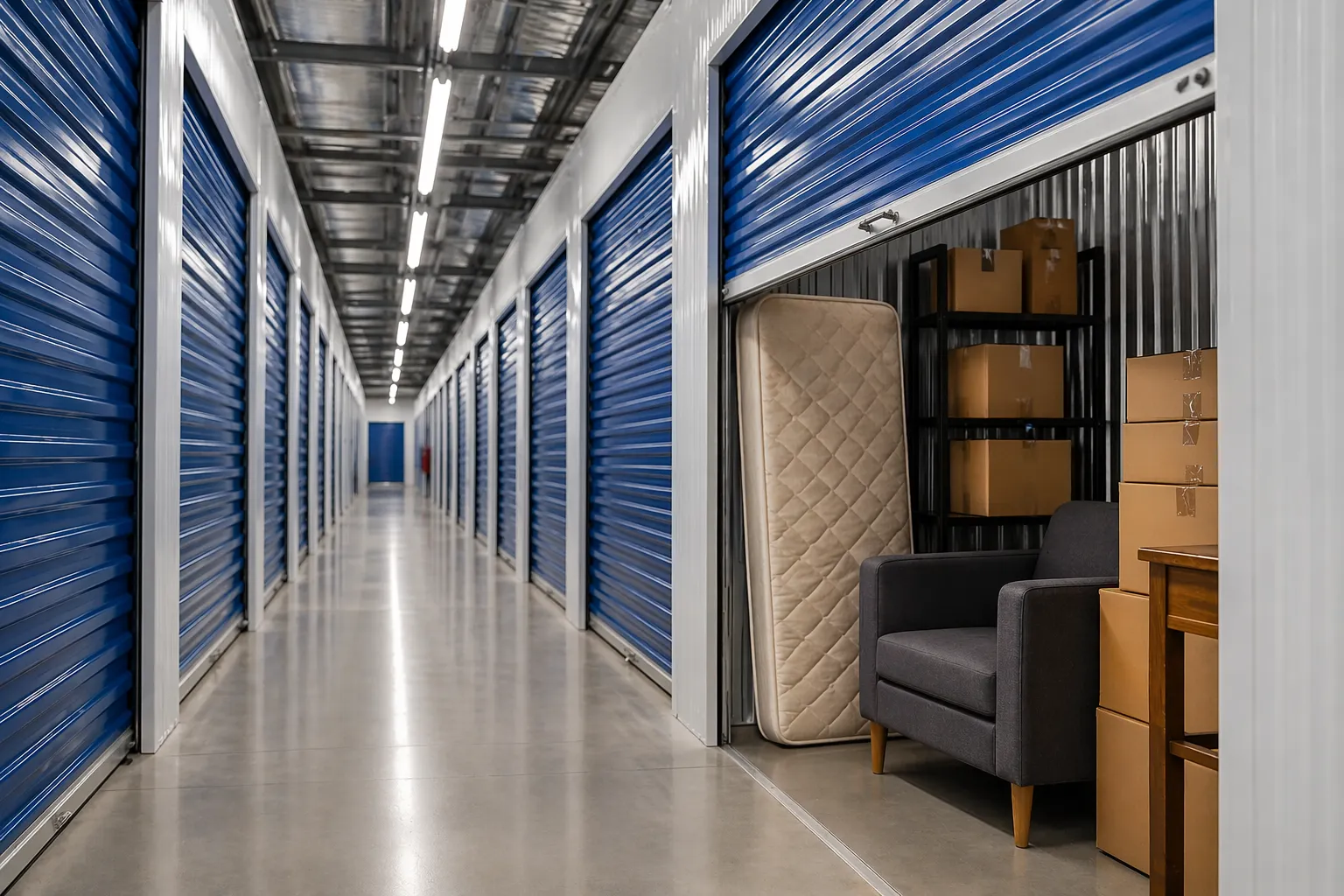

Between the fine print, hidden fees, and questions nobody thinks to ask, renting a storage unit can get complicated fast. Here's everything you need to know before signing on the dotted line.
Life has a funny way of generating more stuff than space to put it. Maybe a move is in progress, a home renovation has taken over the living room, or years of accumulated belongings have finally run out of places to hide.
Whatever the reason, a self-storage unit is one of those practical solutions that makes immediate sense until the fine print doesn't. And in coastal areas especially, where humidity and heat are real concerns, finding the right climate controlled storage in Corpus Christi (or wherever home happens to be) isn't just about convenience.
It's about making sure belongings actually come back out in one piece. Knowing what to look for before signing anything makes the whole experience significantly less stressful.
Figure Out What You're Actually Storing First
Before comparing facilities or scrolling through prices, take a real inventory. Most people underestimate how much their own boxes stack, furniture spreads out, and the "miscellaneous pile" always grows.
Walk through the home with a phone camera and note everything that's going into storage. This also tends to surface a useful question: does all of it actually need to be stored, or is some of it clutter that could be donated or sold?
Trimming the list before renting means paying for a smaller unit, which adds up fast over several months.
Pro Tip: Most facilities offer a free sizing consultation. Use it. Online calculators give a baseline, but a staff member who hears the full list can often suggest something more precise.
Choosing the Right Storage Unit Size
Getting the storage unit size right is genuinely trickier than it sounds, and it's one of the most common places people go wrong. Too small, and things get crammed in ways that cause damage. Too large, and money gets spent every month on empty air.
| Unit Size | Roughly Fits | Best For |
| 5×5 ft | Small closet's worth | Seasonal items, boxes, small furniture |
| 5×10 ft | Studio apartment contents | College moves, short-term overflow |
| 10×10 ft | 1–2 bedroom apartment | Home renovations, relocations |
| 10×20 ft | 3–4 bedroom house | Full household moves, vehicles |
| 10×30 ft | Large home or vehicle + goods | Long-term storage, boats, RVs |
One thing that often gets overlooked: most units have ceilings between 8 and 10 feet. Stacking strategically with sturdy bins and a few shelving units can shave an entire size tier off the rental, and that's real money saved month after month.
Climate Control Isn't Optional for Certain Items
A standard storage unit is essentially a metal or concrete box that reflects whatever the weather is doing outside. In places with high humidity or sharp temperature swings, that's a problem.
Moisture warps wood, destroys electronics, and turns documents and photographs into casualties. Heat does similar damage over time.
Items that should always go into climate-controlled storage:
- Wood and leather furniture: both crack and warp under moisture and heat
- Electronics: condensation is quietly destructive to circuit boards and screens
- Artwork, photographs, and documents: humidity causes mold and irreversible warping
- Antiques and collectibles: environmental damage can significantly reduce their value
- Musical instruments, wine, and fine textiles: all require temperature stability
Climate-controlled units typically run 25–50% more than standard ones. For anything with real monetary or sentimental value, that cost is worth it without much debate. For patio furniture, garden tools, or sports gear, standard storage is usually perfectly fine.
"Climate-controlled storage isn't a luxury for certain items; it's the difference between retrieving belongings in excellent condition or discovering irreparable damage months later."
Here's the rewritten version of both sections:
Security: Look Beyond the Padlock
Here's something worth knowing not every storage facility takes security as seriously as their brochure suggests. A padlock on the door is the bare minimum, and a good facility goes well beyond that. Before committing, actually visit in person and look around with fresh eyes.
What to pay attention to:
- Perimeter fencing with gate access that uses a unique PIN per tenant not one shared code for everyone
- Surveillance cameras covering entry points, hallways, and outdoor areas and cameras that actually look maintained, not dusty relics from 2009
- Consistent lighting throughout, especially in indoor corridors. Dim or flickering lights aren't just inconvenient, they're a sign of how much the facility invests in upkeep
- Individual unit alarms that alert the facility the moment a specific unit is breached
- Actual staff on-site during access hours, not just a phone number on a wall
One question worth asking point-blank: has the facility had any break-ins or security incidents in the past year? A good facility will answer that honestly. One that gets evasive or suddenly vague? That reaction tells you something too.
Read the Contract
Nobody enjoys reading the fine print. But storage rental contracts are exactly where the unpleasant surprises like to hide, and the monthly rate you saw advertised is rarely the full picture.
A few things that tend to catch renters off guard:
- Move-in administrative fees that nobody mentioned upfront can sometimes as high as a full month's rent
- Mandatory insurance that has to be purchased through the facility itself, often at rates higher than what you'd find elsewhere
- Rate increase clauses buried mid-contract that allow the facility to raise your monthly price after an initial lock-in period, sometimes with very little notice
- Late payment penalties that kick in within five days, which is significantly faster than a typical apartment lease
- Auction rights that allow the facility to sell everything in your unit after a set number of missed payments
Before signing, ask directly about price-lock guarantees and the amount of advance notice given before any rate changes. Also worth asking: what discounts are available. Military, first responder, long-term rental, and prepaid discounts are genuinely common facilities just don't tend to lead with them.
Some Items Can't Be Stored - Know the List
Every legitimate facility has a prohibited items list, and violating it can mean immediate lease termination. The standard restrictions exist for good reasons, chief among them safety, pest control, and liability.
Universally prohibited:
- Flammable liquids and compressed gases, such as fuel, propane, and solvents
- Perishable food attracts pests and affects neighboring units
- Firearms, explosives, and hazardous chemicals
- Living things: plants, animals, people
- Stolen goods
Gas-powered equipment like lawnmowers can usually be stored after all fuel and oil have been fully drained. When in doubt, just ask staff to know the prohibited list and will give a straight answer.
Check What Your Insurance Actually Covers
Many renters assume their homeowners or renters insurance automatically covers items in storage. It often does, but with limits. Most standard policies extend personal property coverage to off-site locations, but cap it at around 10% of the total policy limit.
For someone storing basic household goods, that may be enough. For high-value items like electronics, jewelry, fine art, or antiques, it almost certainly isn't.
Before renting, call the insurance provider, confirm the coverage details, and get it in writing. If there's a gap, a standalone storage insurance policy often available through the facility itself fills it for a modest monthly cost.
Location and Access Hours Are Easy to Underestimate
Two facilities with identical pricing can offer completely different day-to-day experiences. Location matters most to anyone who accesses the unit regularly. A place that's 40 minutes away is fine for a once-a-year retrieval; it becomes a real inconvenience for anything more frequent.
Access hours deserve equal scrutiny. A facility marketing "extended hours" might still lock gates at 8 PM. Most places distinguish between office hours when staff are present and gate access hours, when the grounds can be entered. These aren't always the same window, and that difference matters to anyone who might need to address an issue during an evening visit.
Well-regarded local options like Island Self Storage, for example, are worth considering specifically because proximity and reliable access hours can make the difference between a unit that works for daily life and one that becomes logistically awkward over time.
Ready to Store Smarter? Find the Right Climate-Controlled Storage in Corpus Christi Today
Renting a storage unit requires a little patience. The people who walk in prepared with a rough inventory, a sense of what their items need, and a few pointed questions ready, almost always walk out with a better deal and fewer regrets than those who sign on the spot because the price looked right.
Corpus Christi's heat and coastal humidity aren't gentle on furniture, electronics, or anything left in an unregulated space for months at a time. The right climate-controlled storage in Corpus Christi doesn't just keep things out of the way, it keeps them in the same condition they left your home in.
So take the extra hour. Visit the facility. Ask the uncomfortable questions about price increases and security. Pick the right unit size the first time. Small decisions made upfront have a way of paying off quietly every single month right up until the day you unlock that unit and everything inside looks exactly the way you left it.






















Sign in to leave a comment.